The Postcard Rack
A wire spinner by the counter, loaded with home-town views, Bluegrass tracks, a whiskey complaint from 1905 and a few cards nobody should have mailed. 87 cards on the rack so far, and more are coming.
- Paris, KY
- Lexington & the Bluegrass
- Greetings from Kentucky
- “In Old Kentucky”
- Kentucky Wonders
- Louisville & Churchill Downs
- Around Kentucky & Beyond
- Family Mail
- Mailed
- Comic Cards
Tap a card to enlarge it. Cards stamped ↻ have a back you can flip to.
Paris, KY
25 cardsHome. Courthouse, Main Street, churches, schools, the creek and the motels out on the highway.
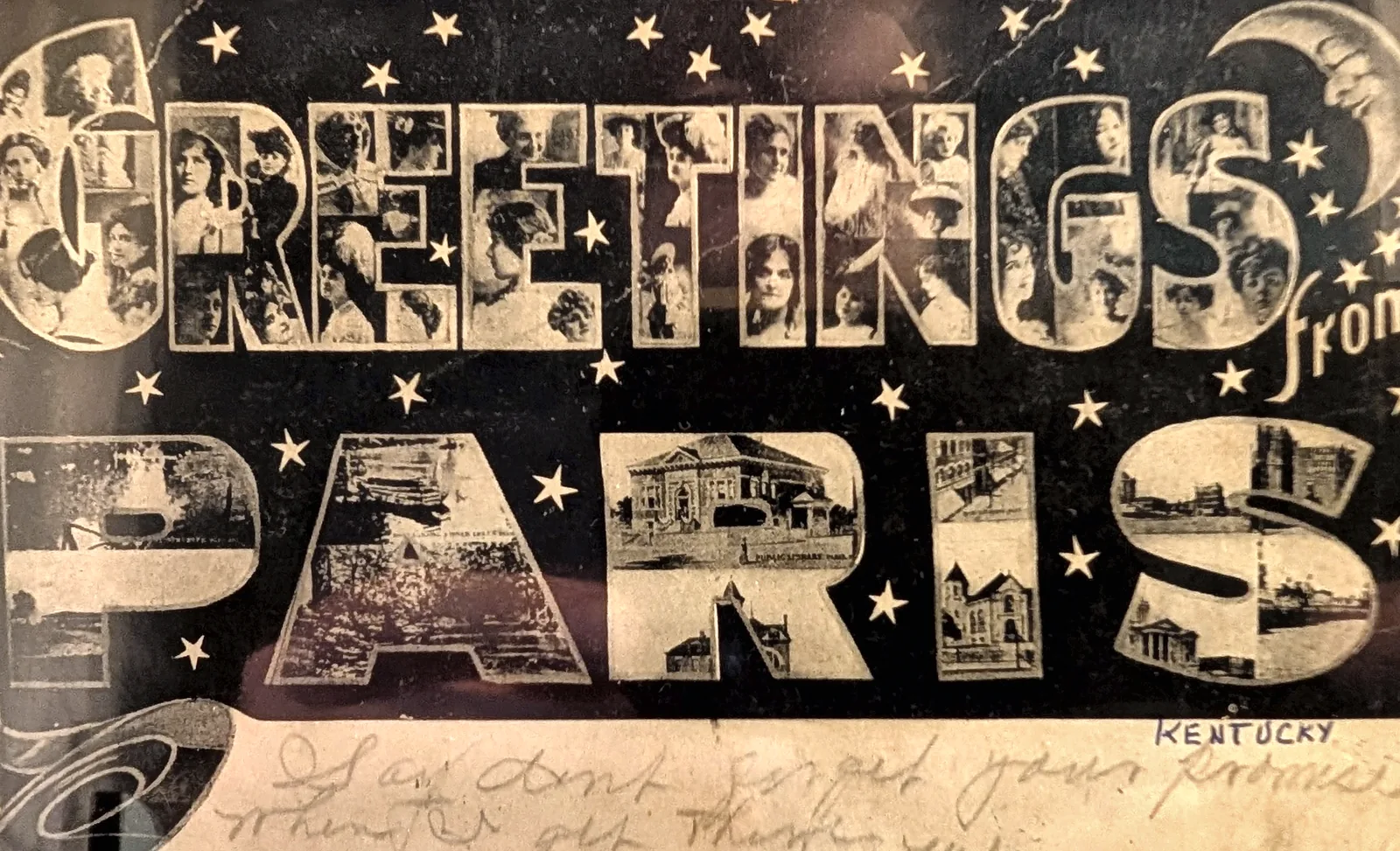
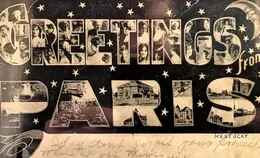
Little views of town tucked inside each letter, under a sky full of stars. Somebody penciled across the bottom: “Say don’t forget your promise…” The rest has faded out.
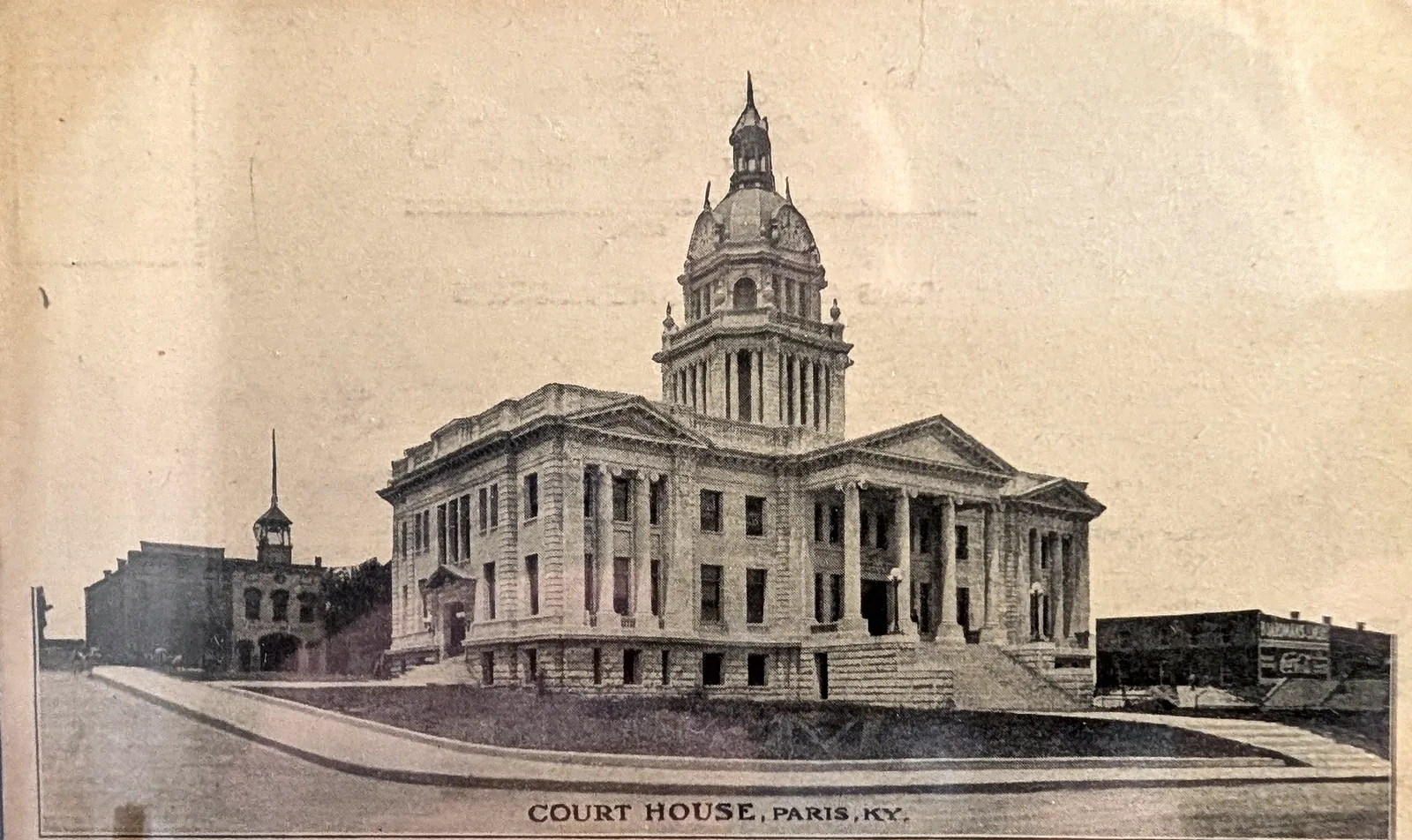
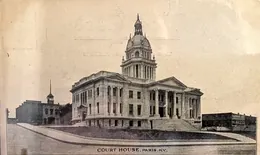
An early black-and-white view of the domed Bourbon County courthouse, with nobody around.
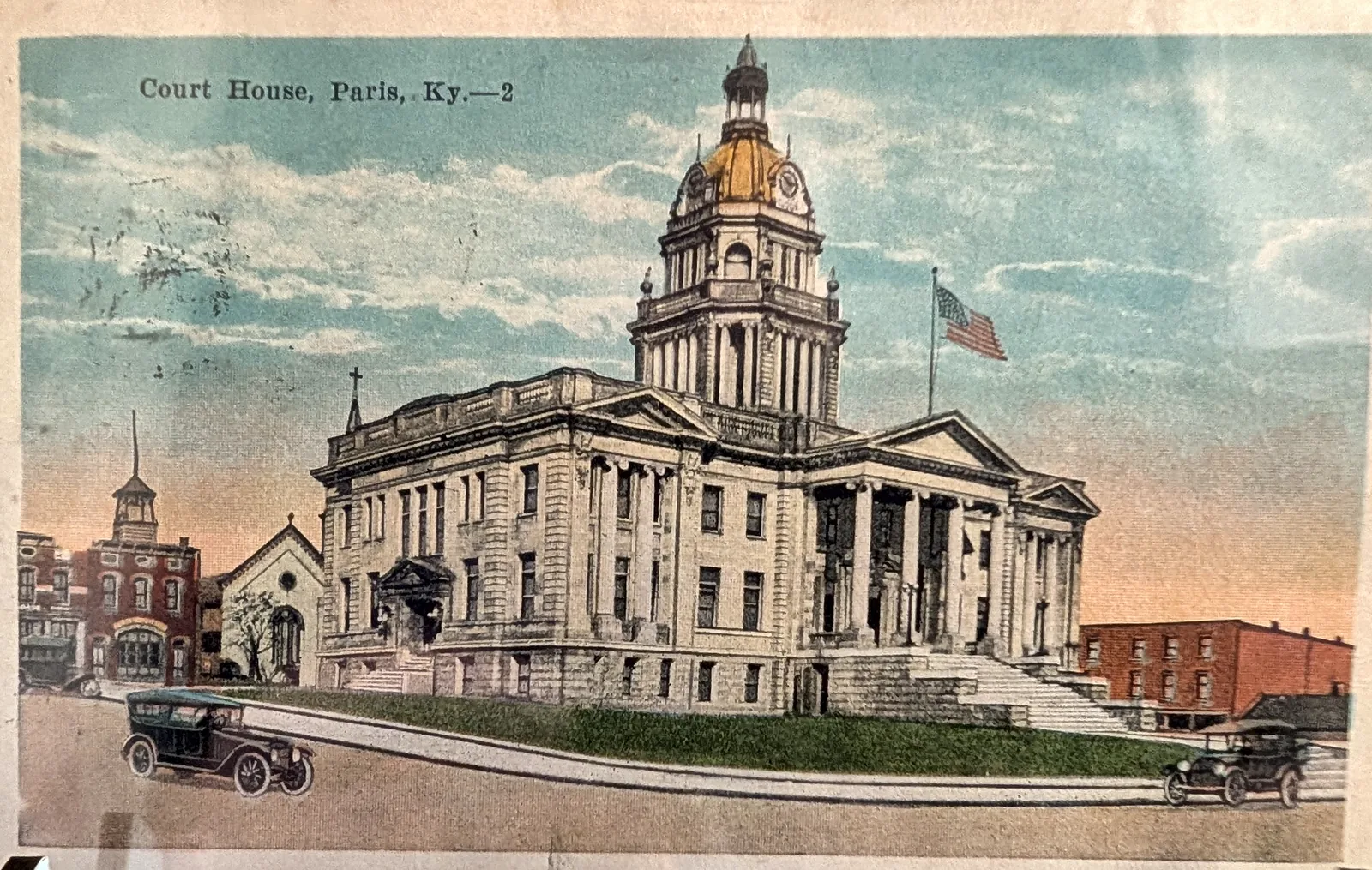
The same courthouse in color, flag up, with a couple of early motorcars parked out front.
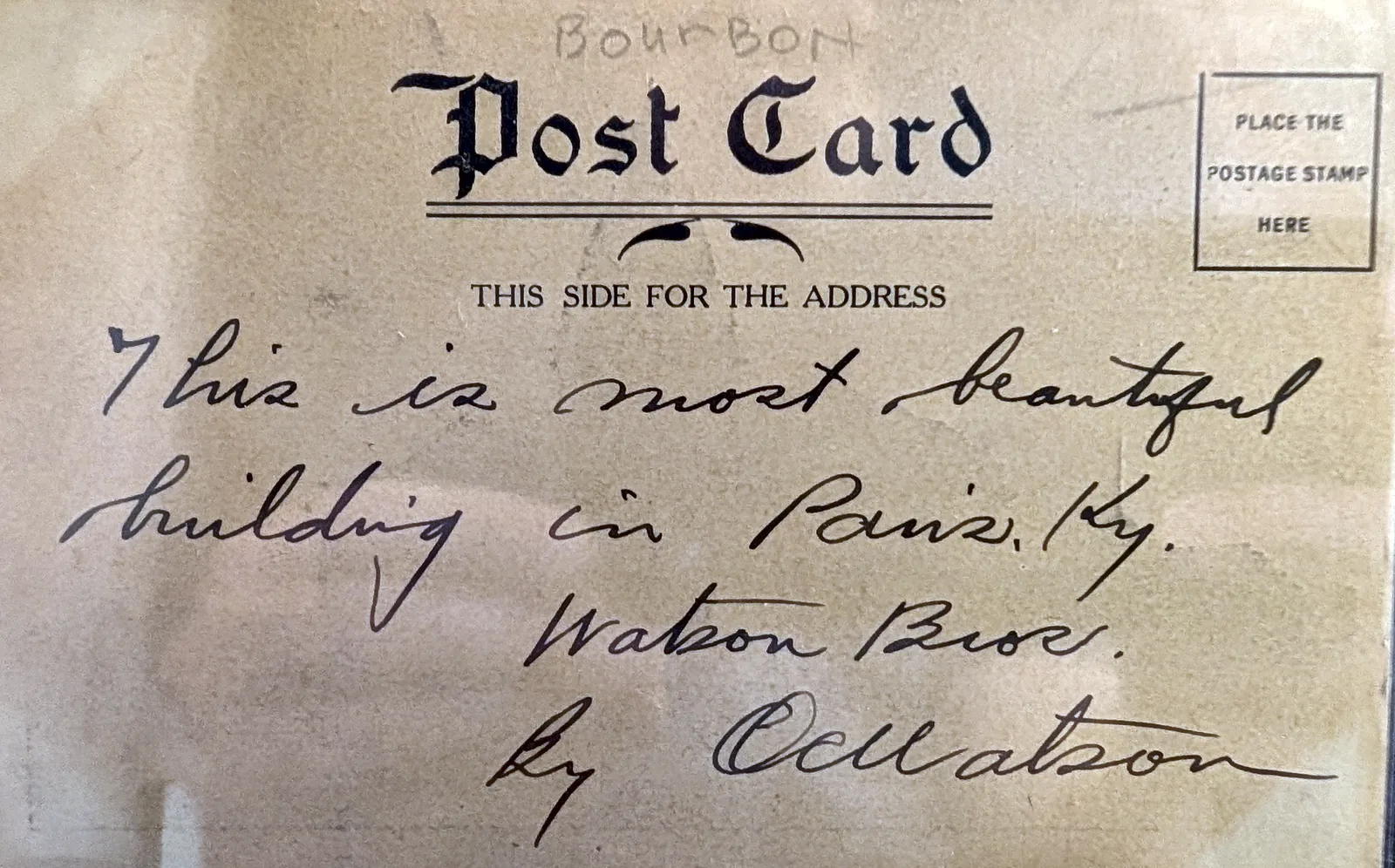
A note in ink: “This is most beautiful building in Paris, Ky.” It’s signed Watson Bros., and someone penciled “Bourbon” at the top. The front it belonged to isn’t in the pile.
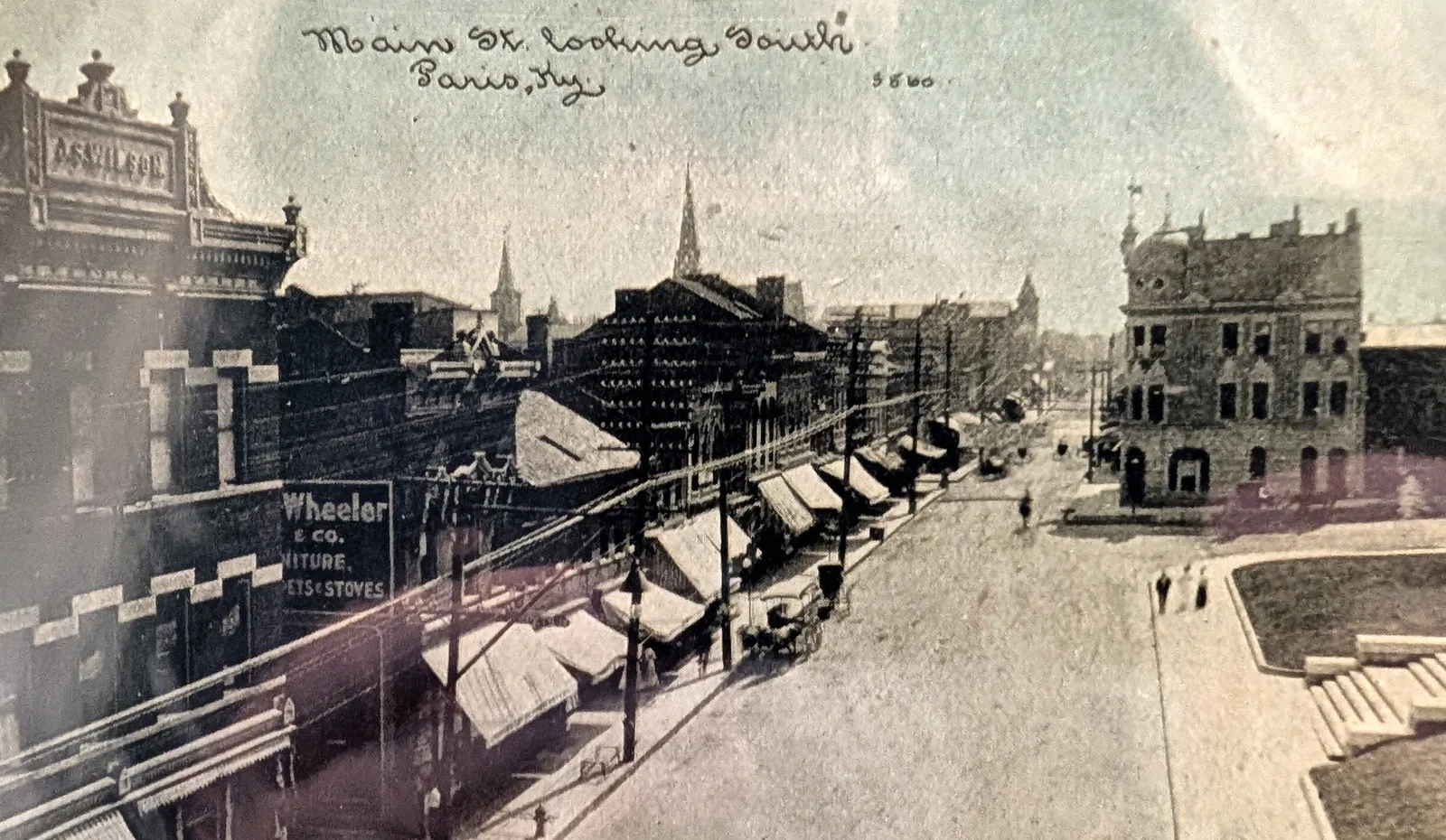
Looking down Main Street from up high, past striped awnings and a “Wheeler & Co.” sign.
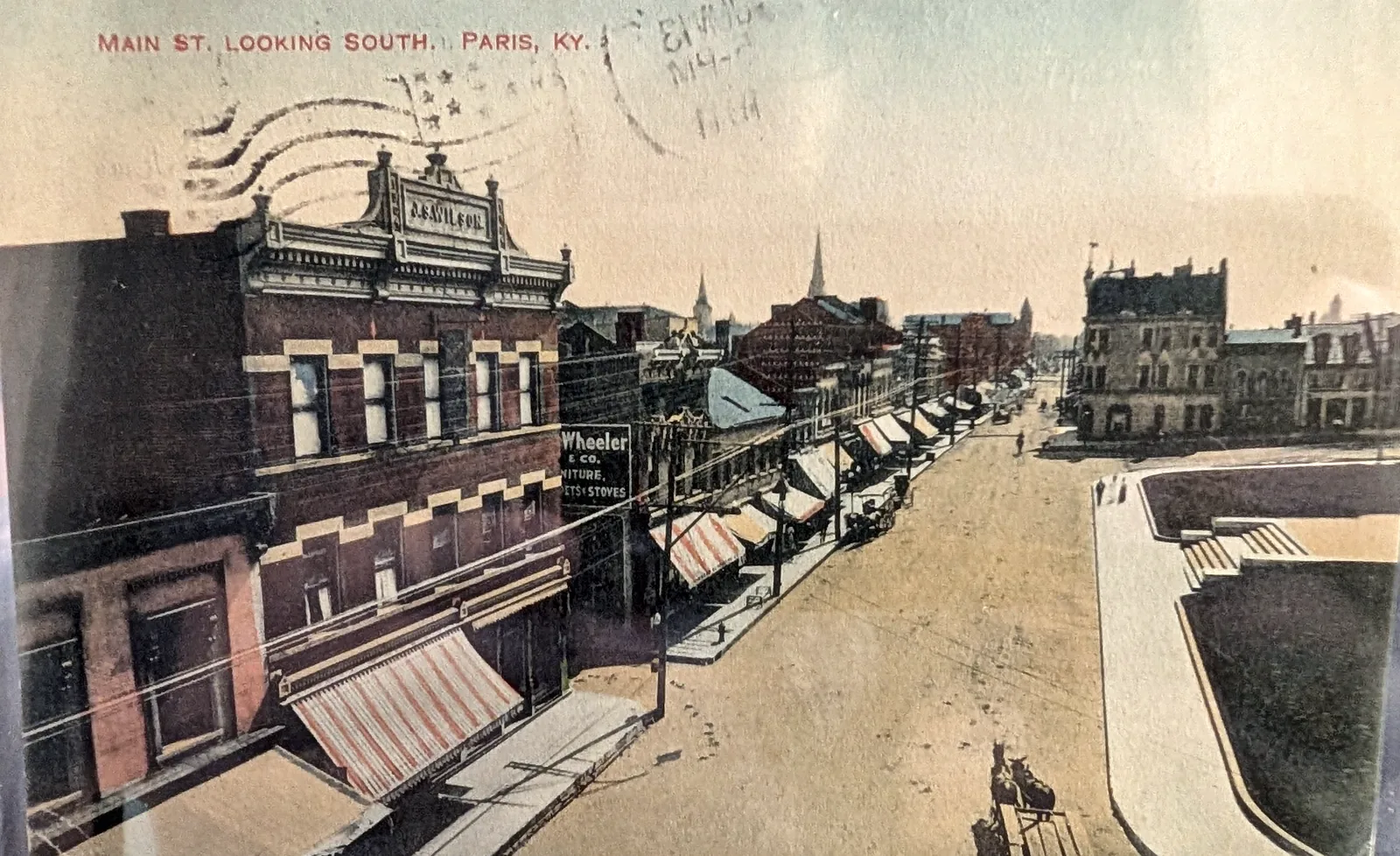
The same view from about the same spot, with a cancellation stamped across the sky.
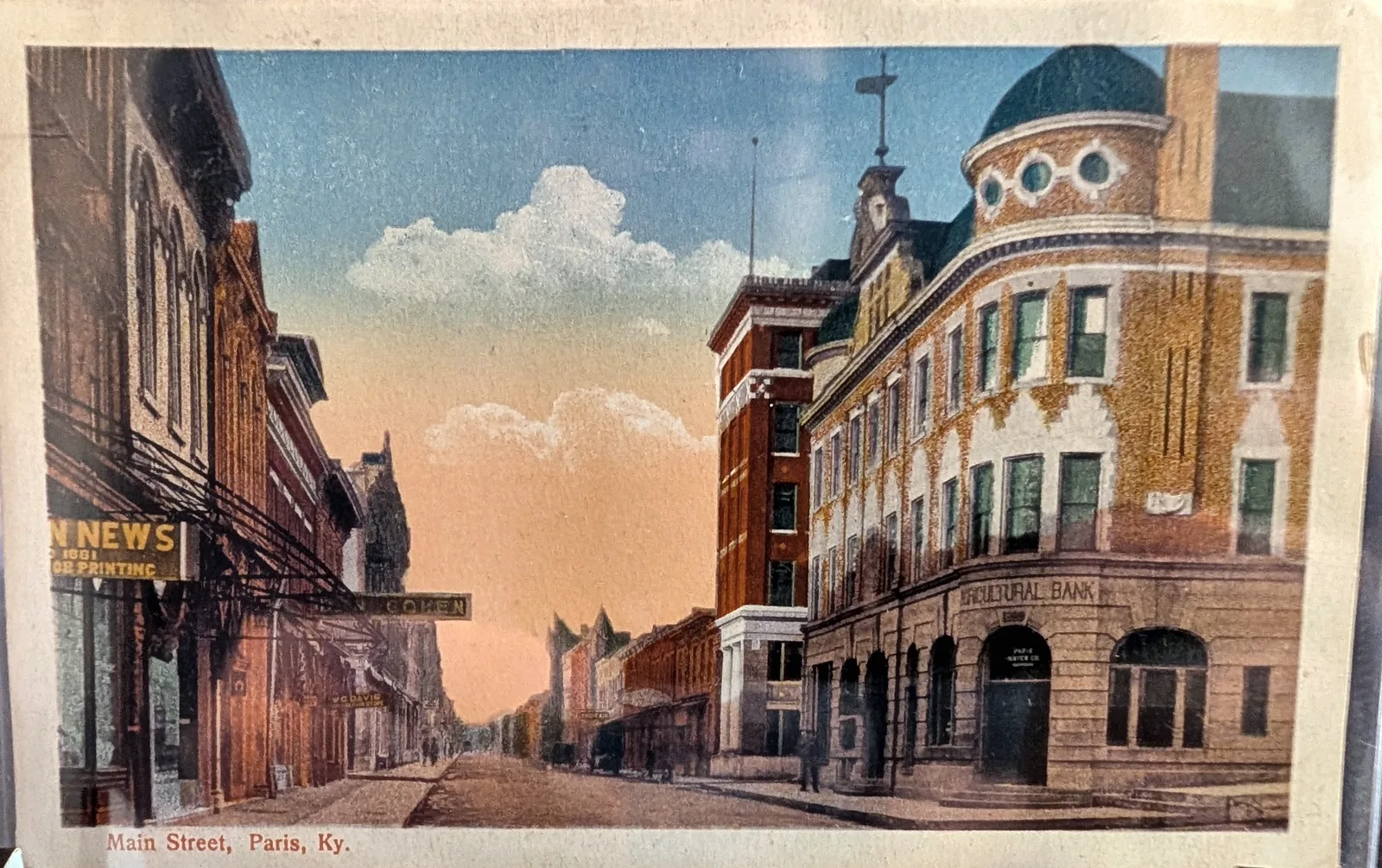
A street-level view under a corner building with a dome. The signs read “…N NEWS · 1881 · JOB PRINTING” and “…COHEN”.
Manor lore · unverified: the newspaper sign is probably The Bourbon News.
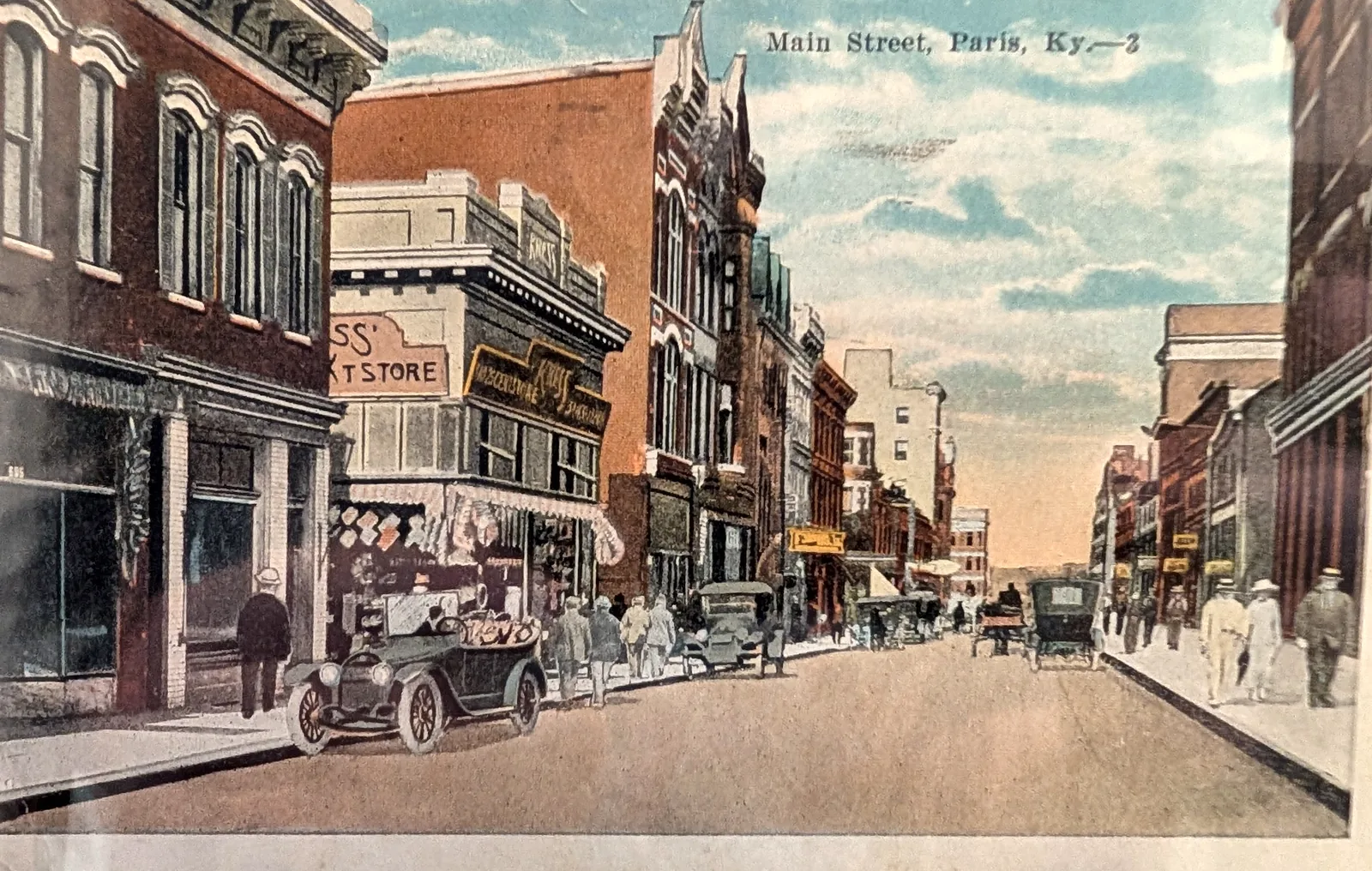
Motorcars, shoppers and painted wall signs, including a half-hidden “…SS’ …T STORE”.
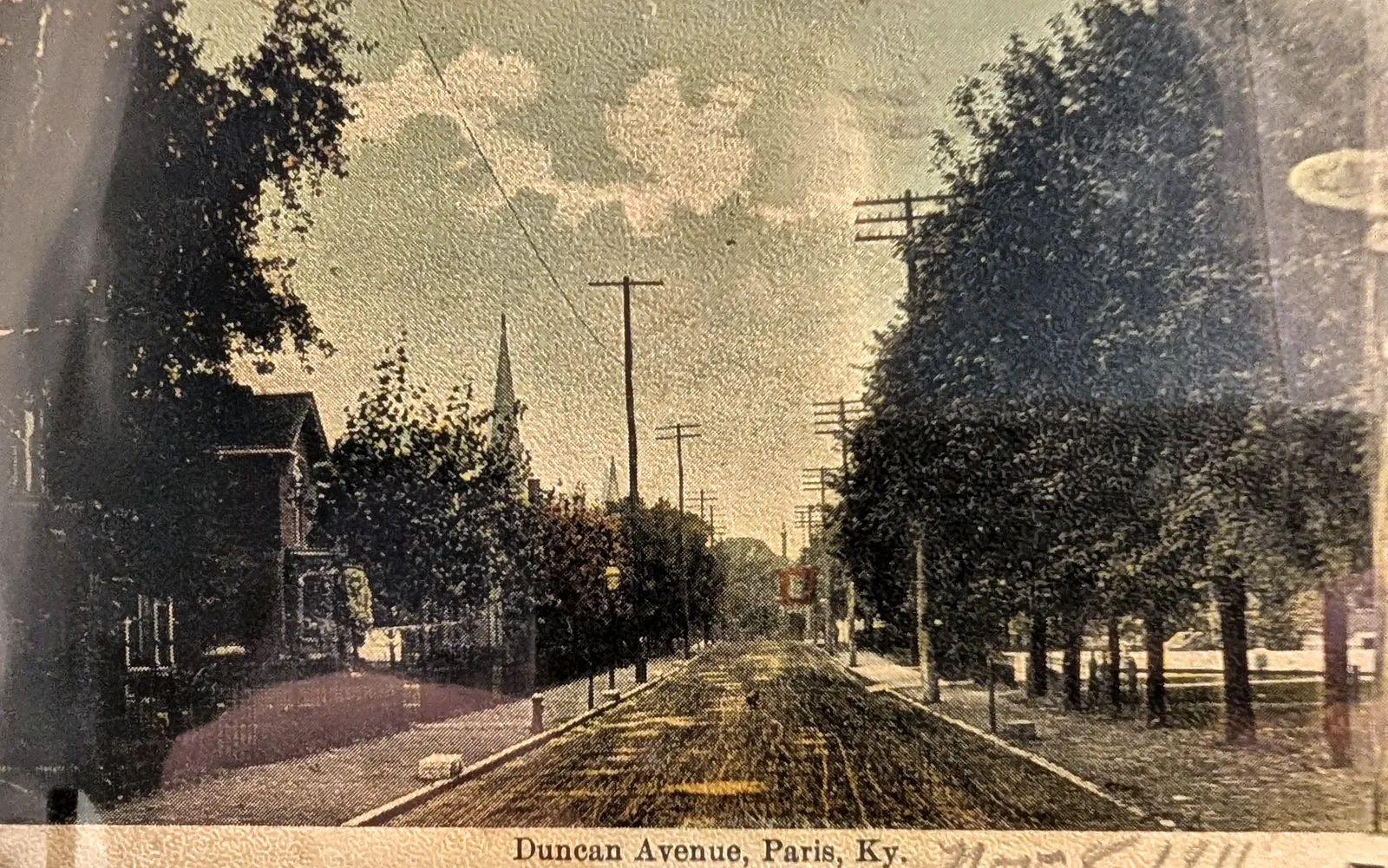
A quiet tree-lined street with a church steeple at the end.
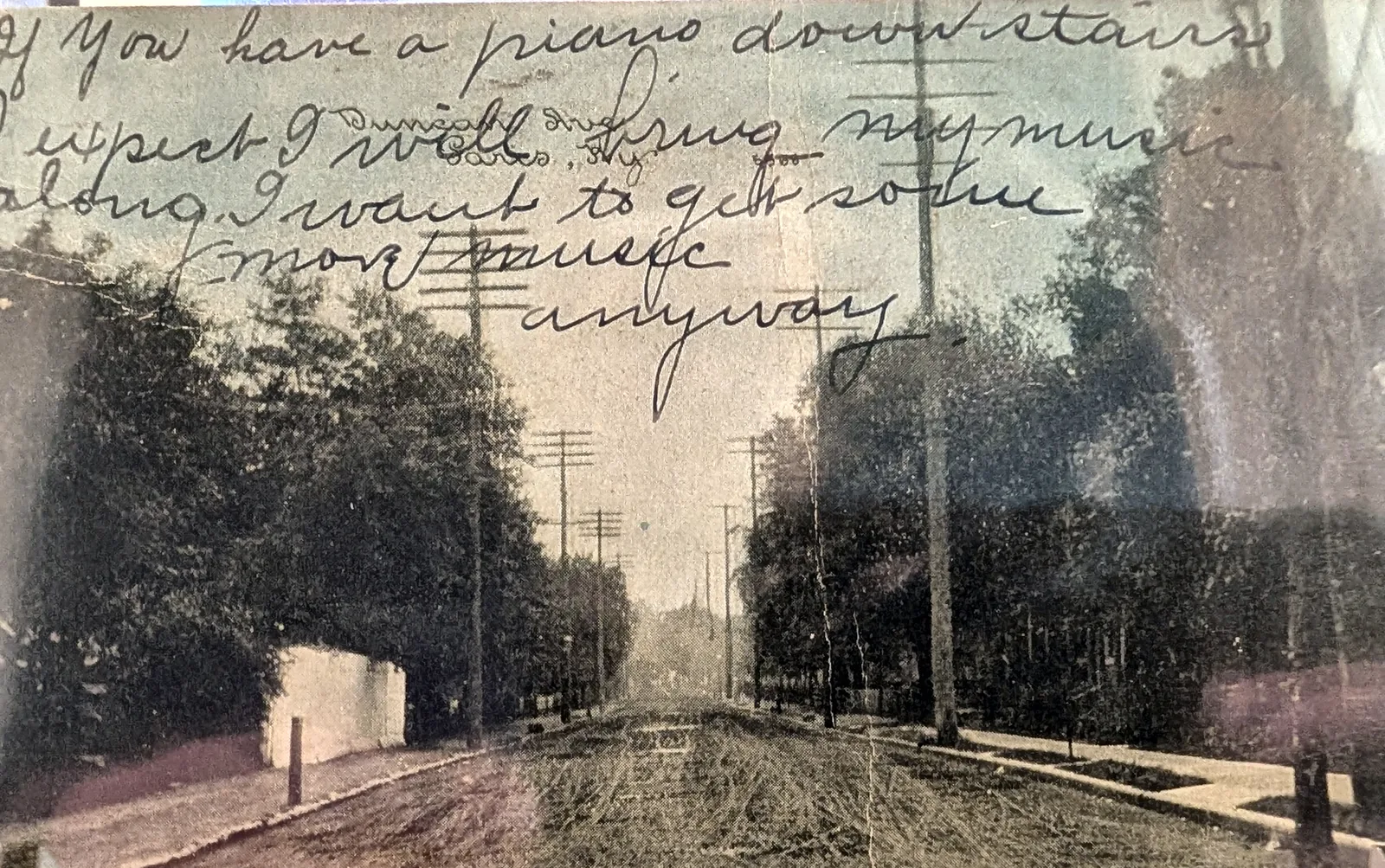
Somebody wrote right across the picture: “If you have a piano down stairs I expect I will bring my music along. I want to get some more music anyway.”
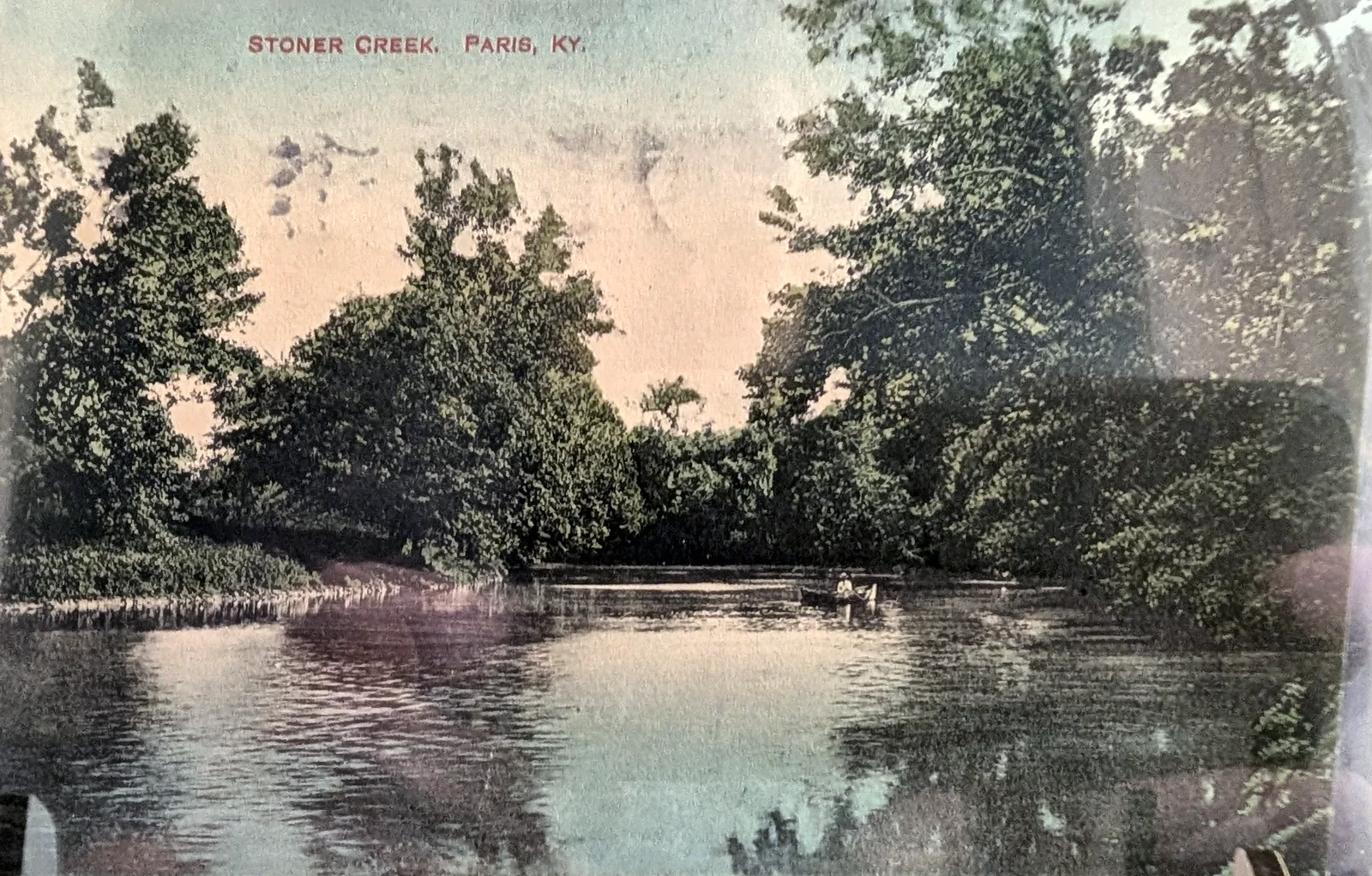
Still green water with trees crowding the banks.
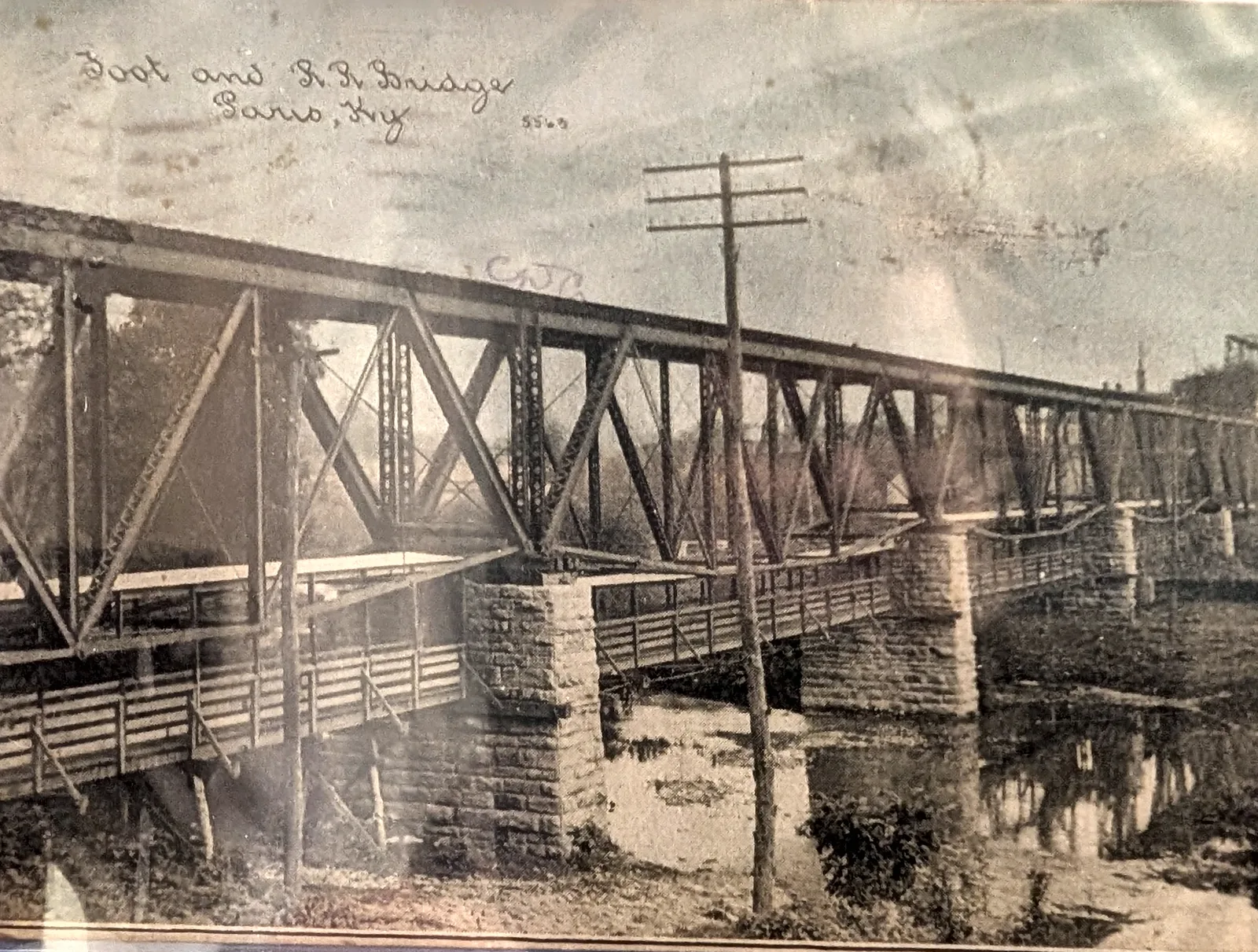
An iron railroad truss on stone piers, with a footbridge alongside it.
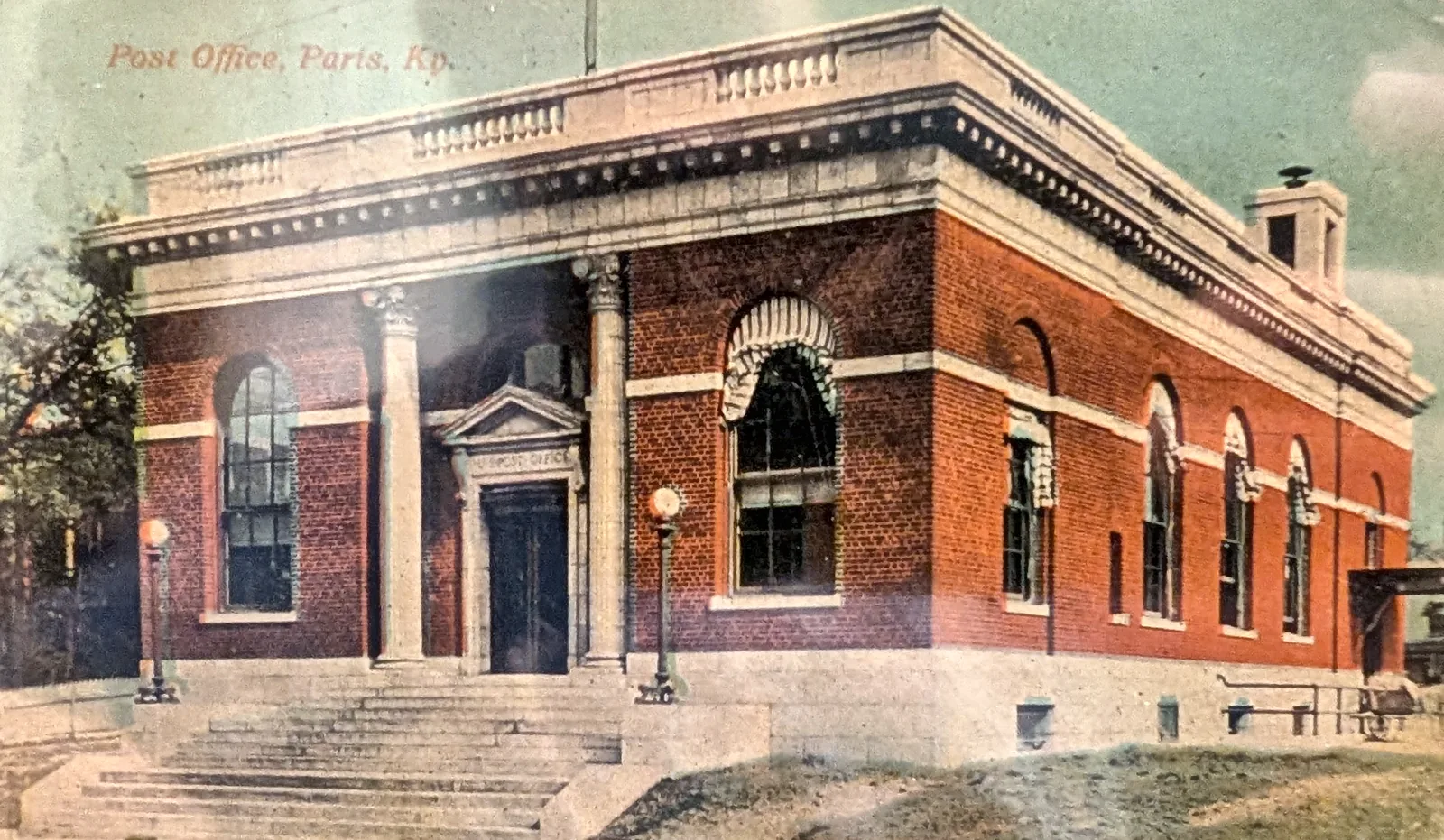
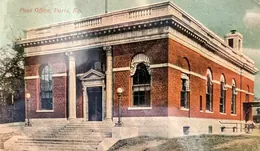
The brick post office with its arched windows and lamp posts. It’s fitting, since this rack hangs in the Post Office.
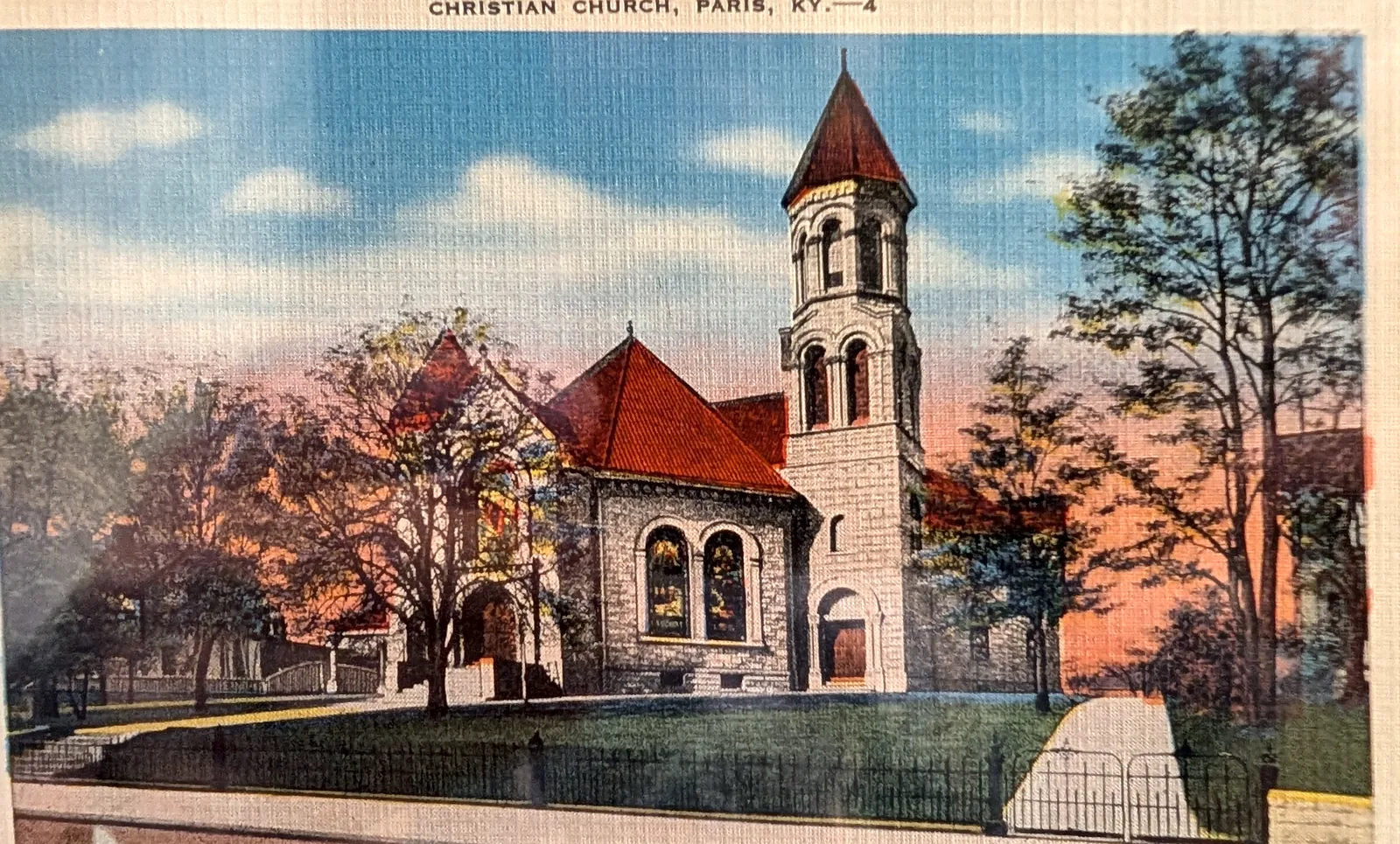
A red roof, a stone tower and a pink sky.
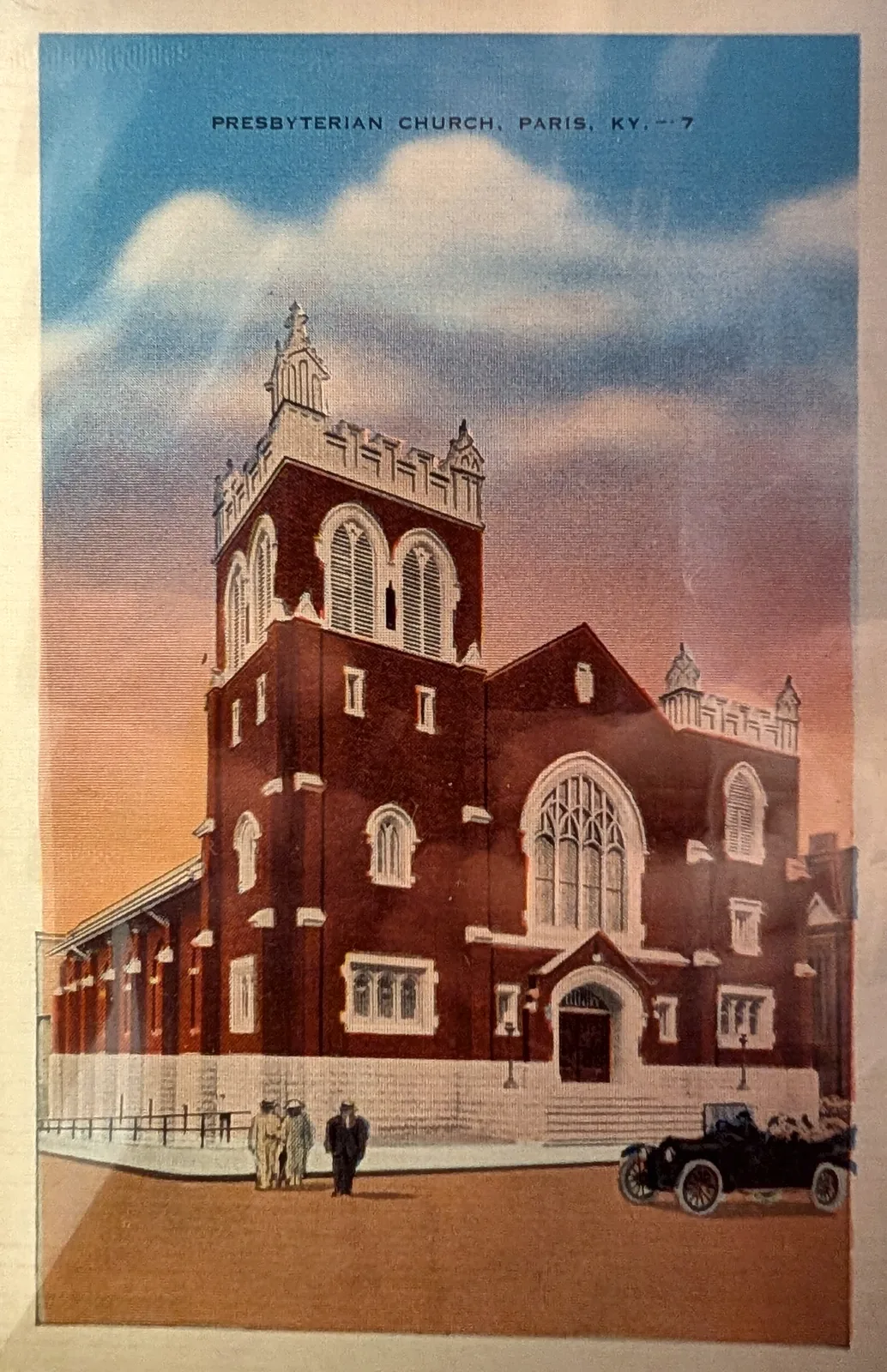
A brick church with a square tower, standing on a corner.
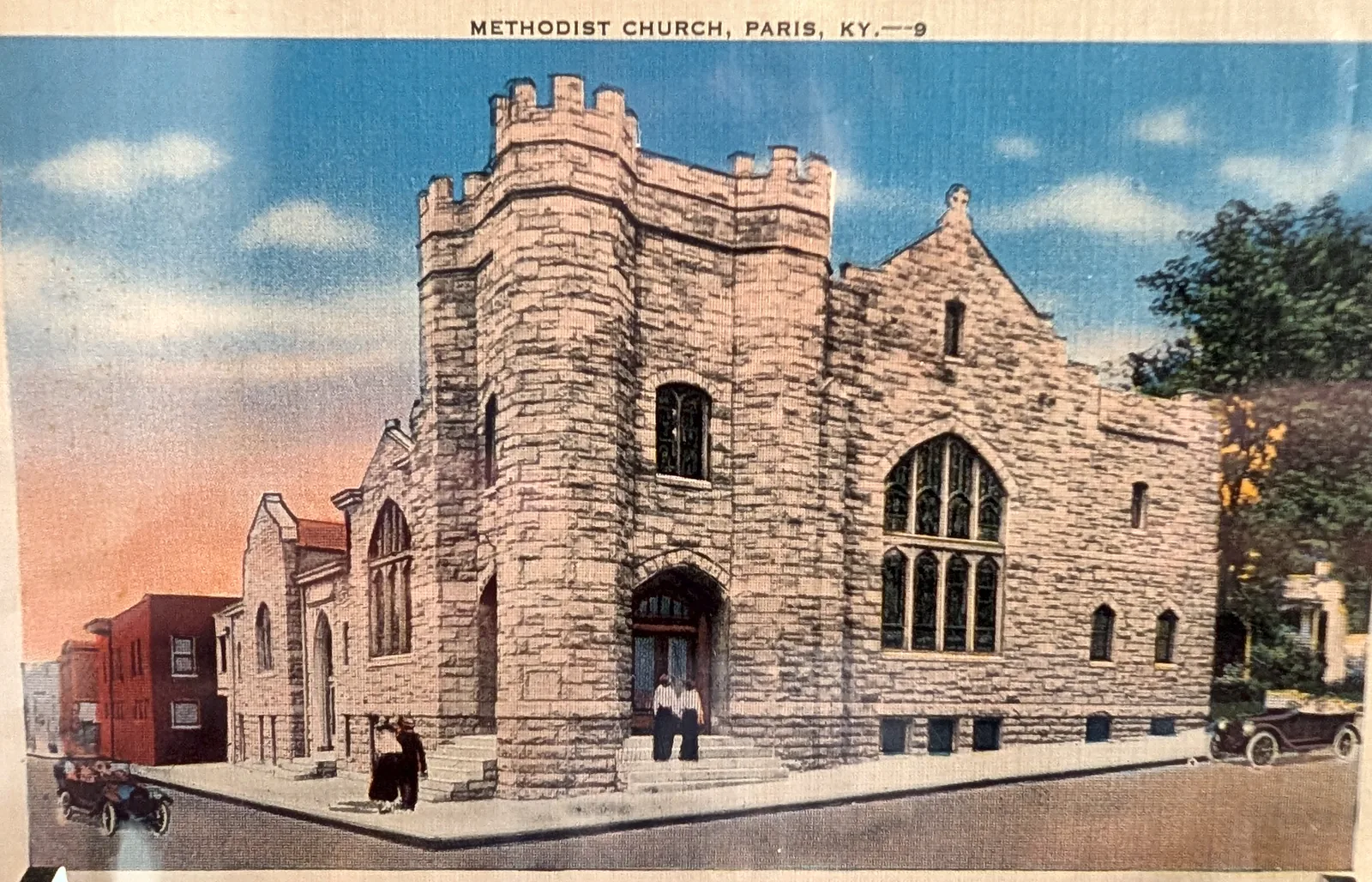
Rough-cut stone and a castle-style tower.
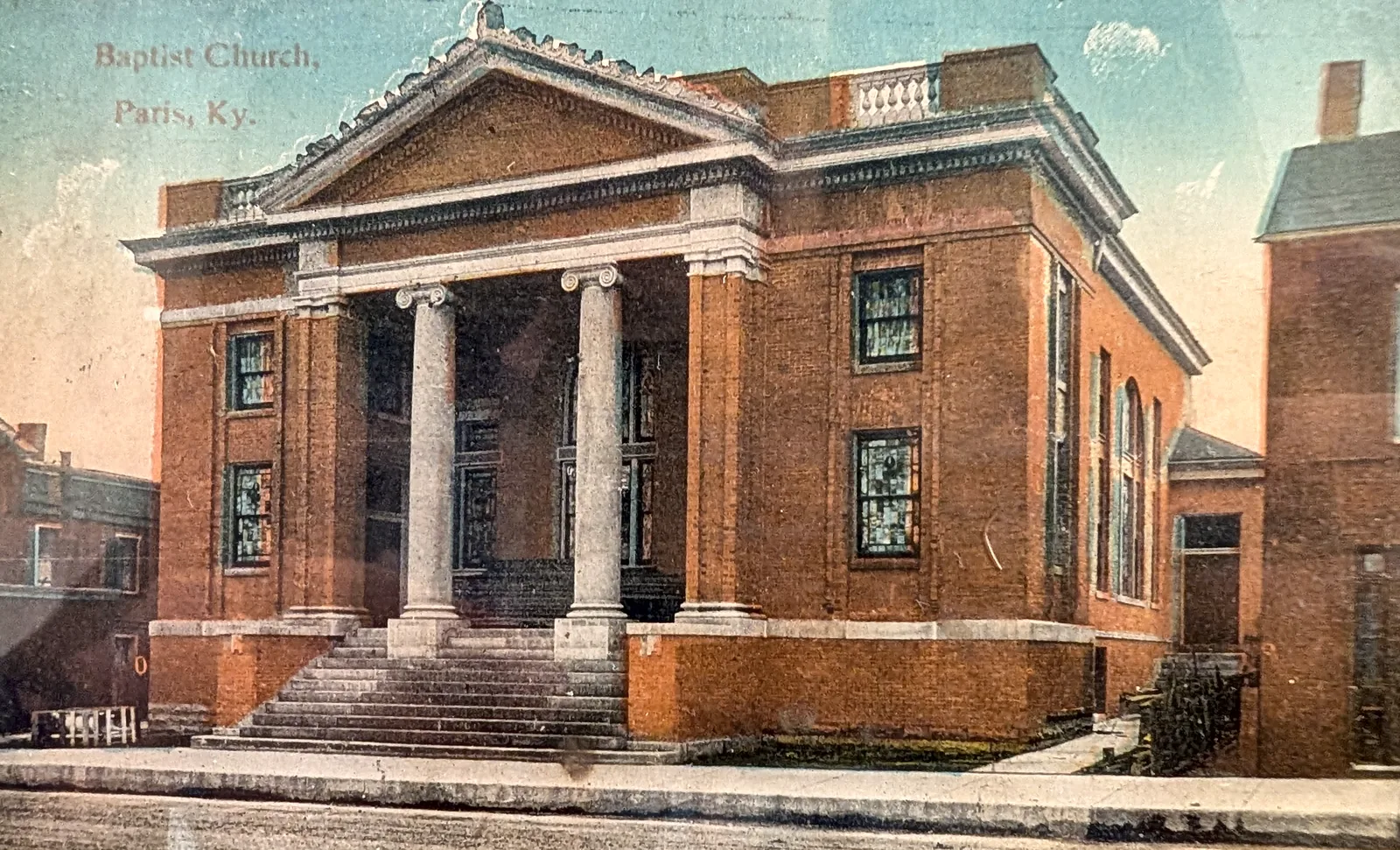
A brick front with tall white columns.
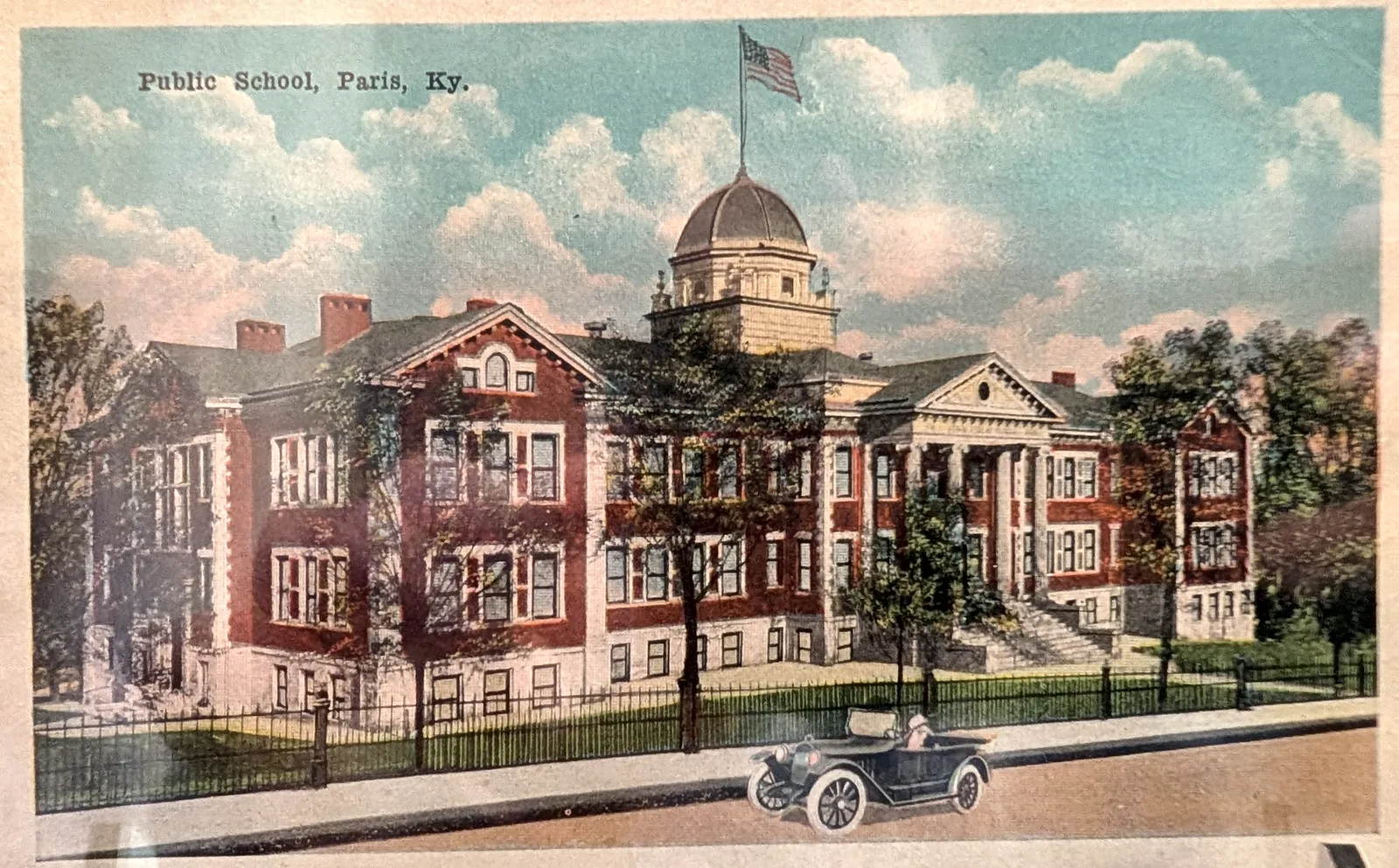
A brick school with a dome, a flag on top and a touring car going by.
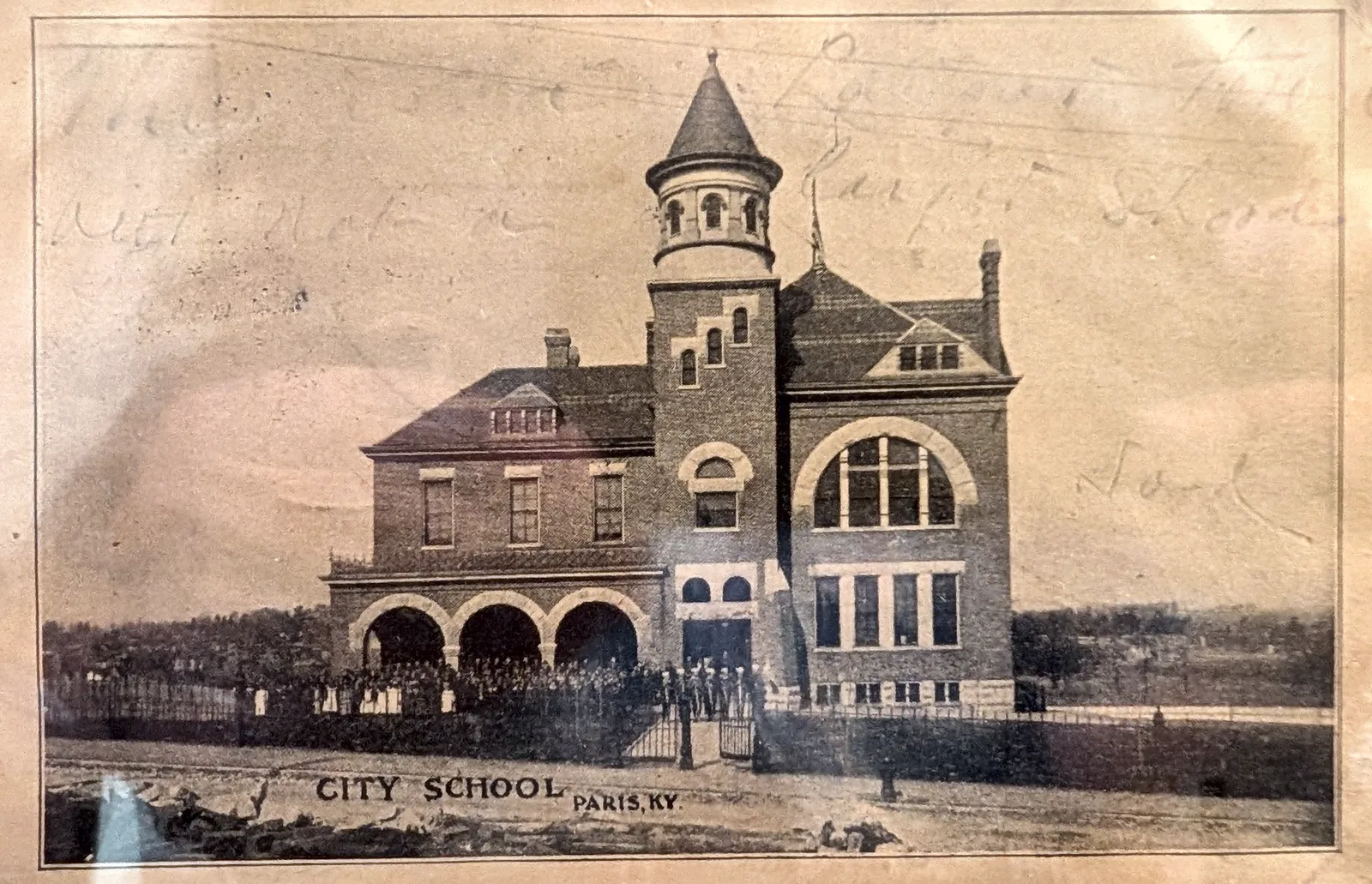
An older school building with a turret, in black and white.
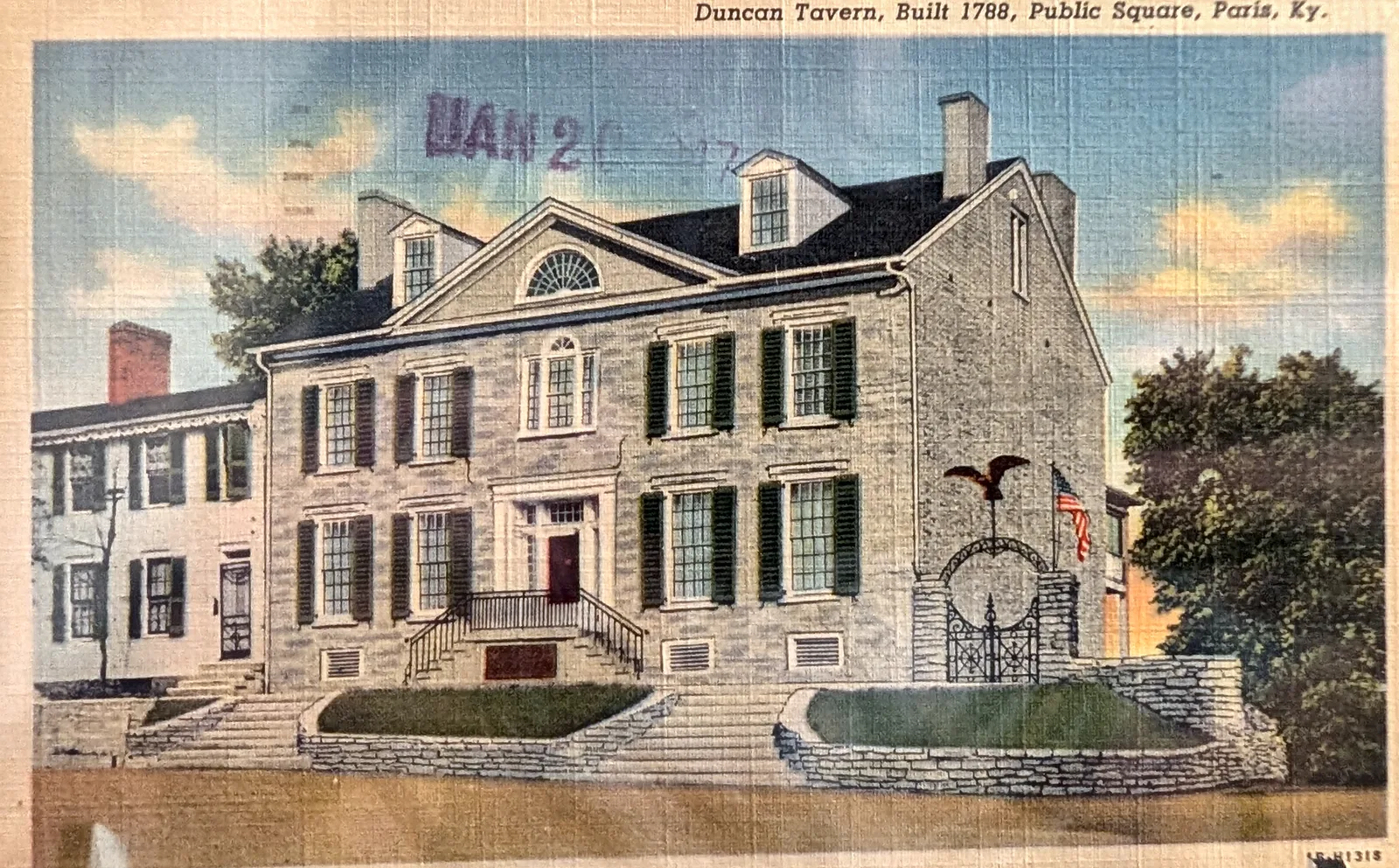
The stone tavern on the square. The back you can flip to comes from a Duncan Tavern card in the same pile. Its printed text says the tavern “was built by Major Joseph Duncan before the town of Hopewell (Paris) was established.” It was mailed from Louisville on Jan. 15, 1947, and the message starts: “Grandpa is much better. We were so glad to get your card. Write when you can.” It’s signed “Love Albert & Henrietta.”
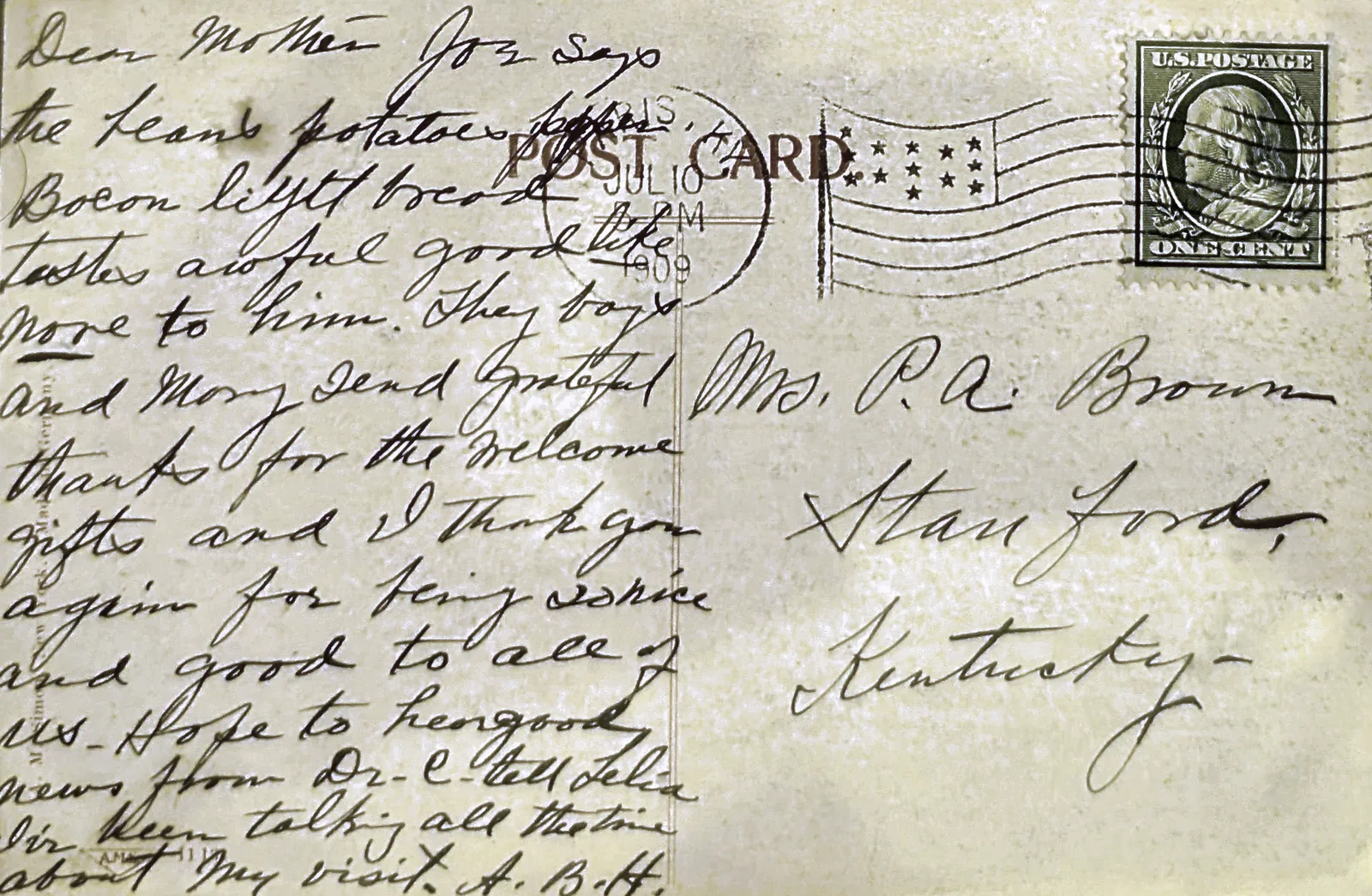
The picture side is missing, but the letter survived: “…tastes awful good… The boys and Mary send grateful thanks for the welcome gifts and I thank you again for being so nice and good to all of us.” It’s signed A. B. H. and was mailed to Stanford, Kentucky.
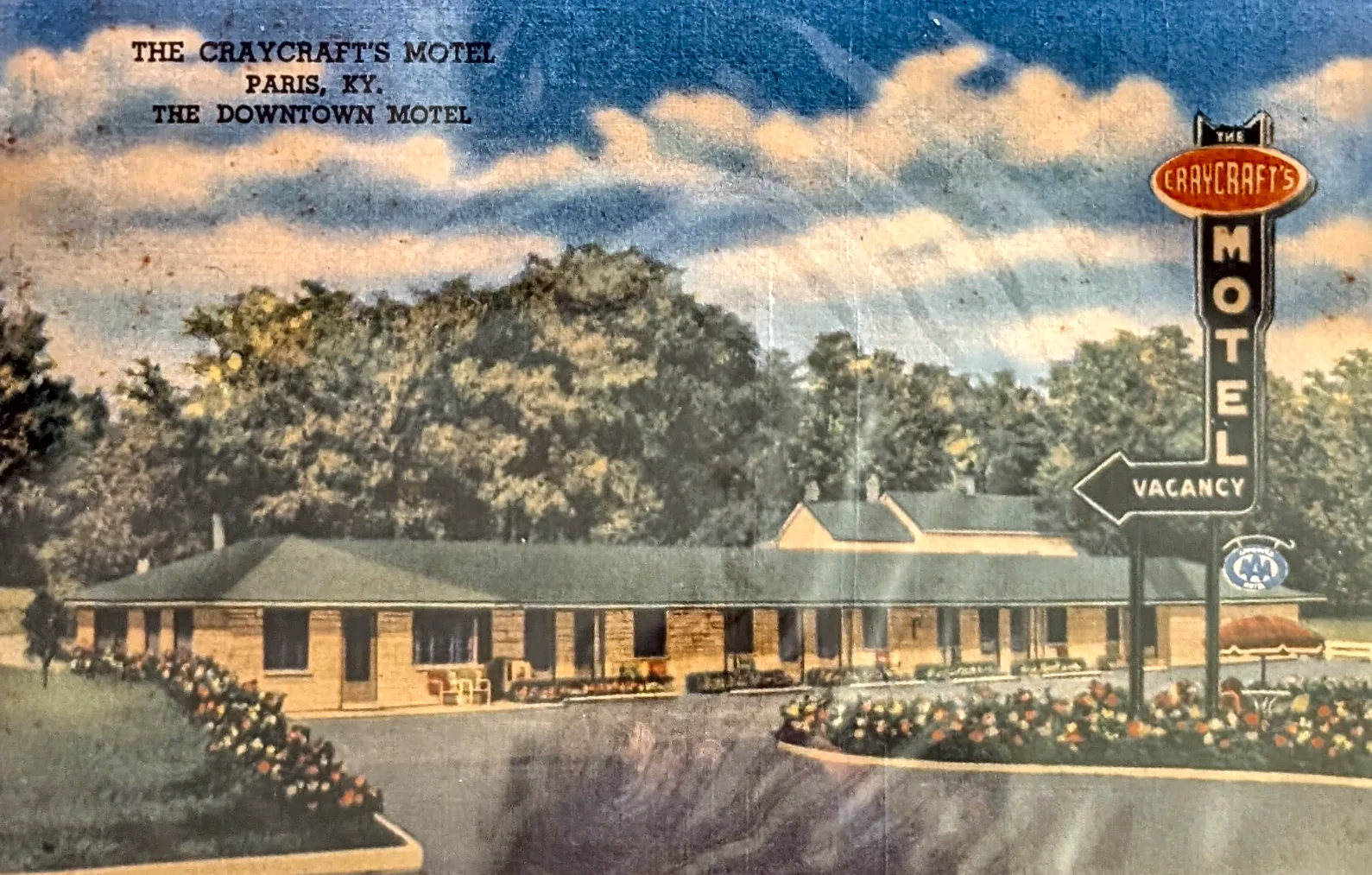
A long, low motel with a neon MOTEL sign shaped like an arrow and VACANCY lit up.
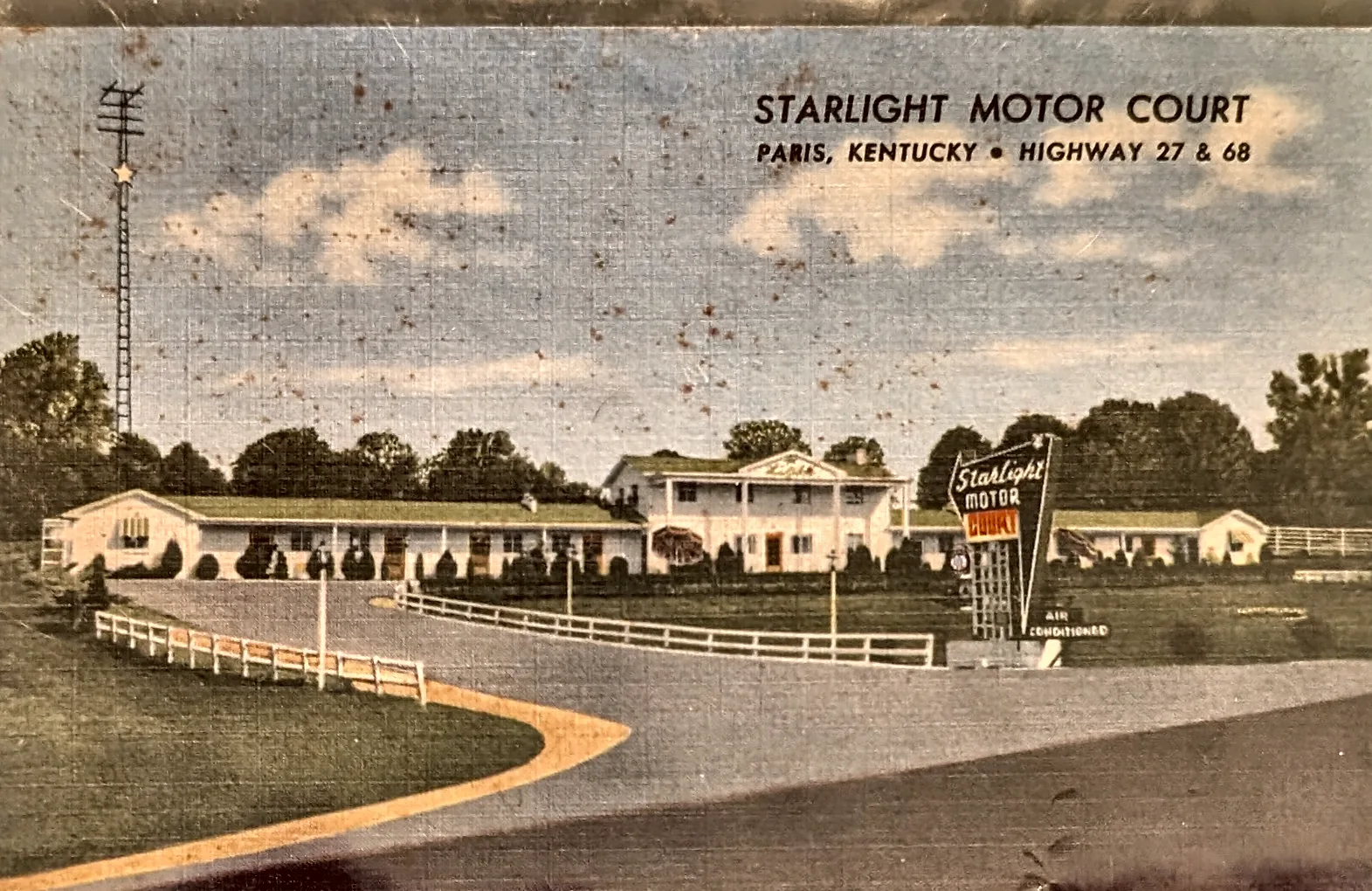
A row of motor-court rooms with a white fence out on the highway.
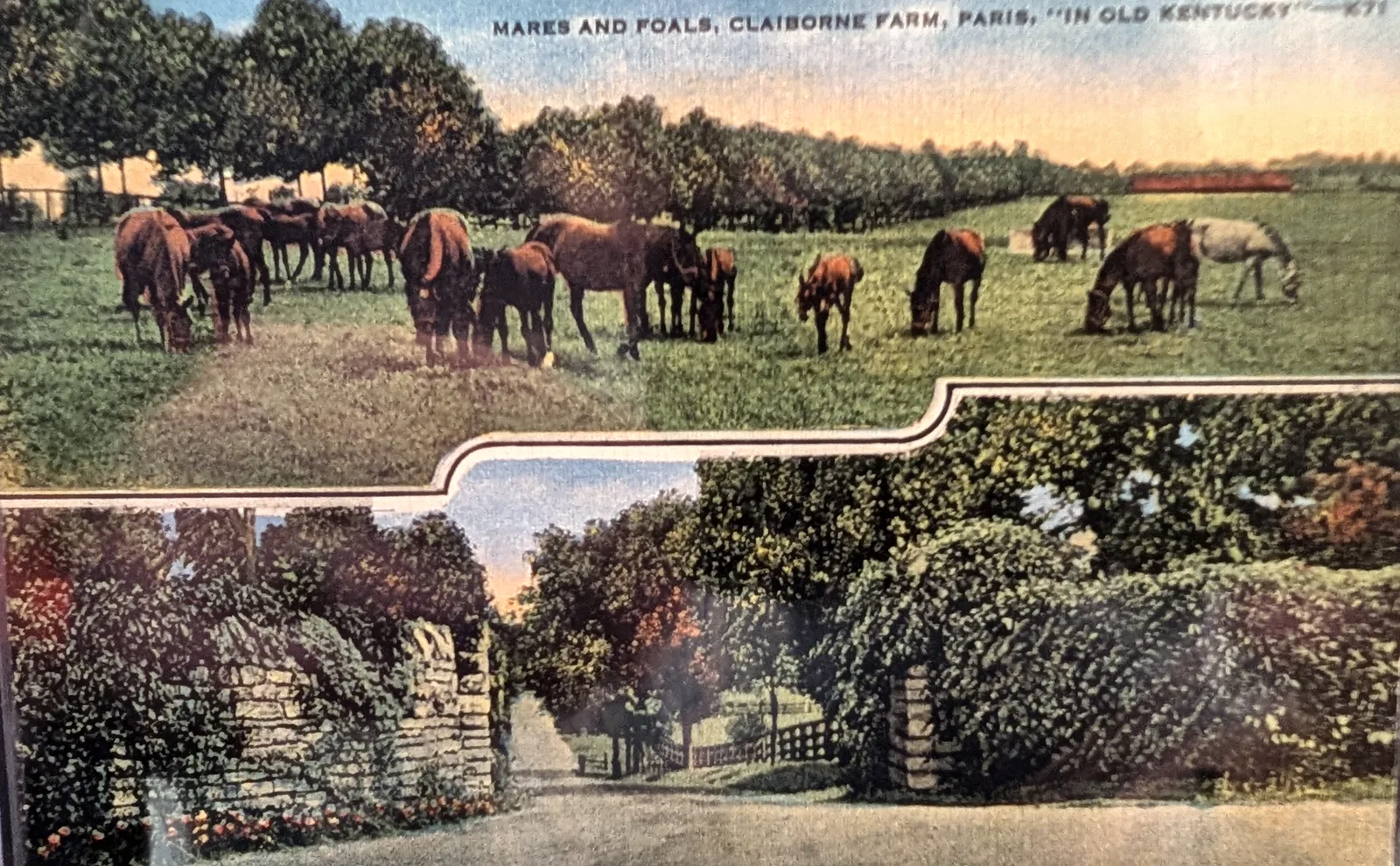
Two views on one card: mares and foals grazing, then a stone wall and a gate. Claiborne is the farm where Sir Gallahad III stood at stud (see the wooden nickel).
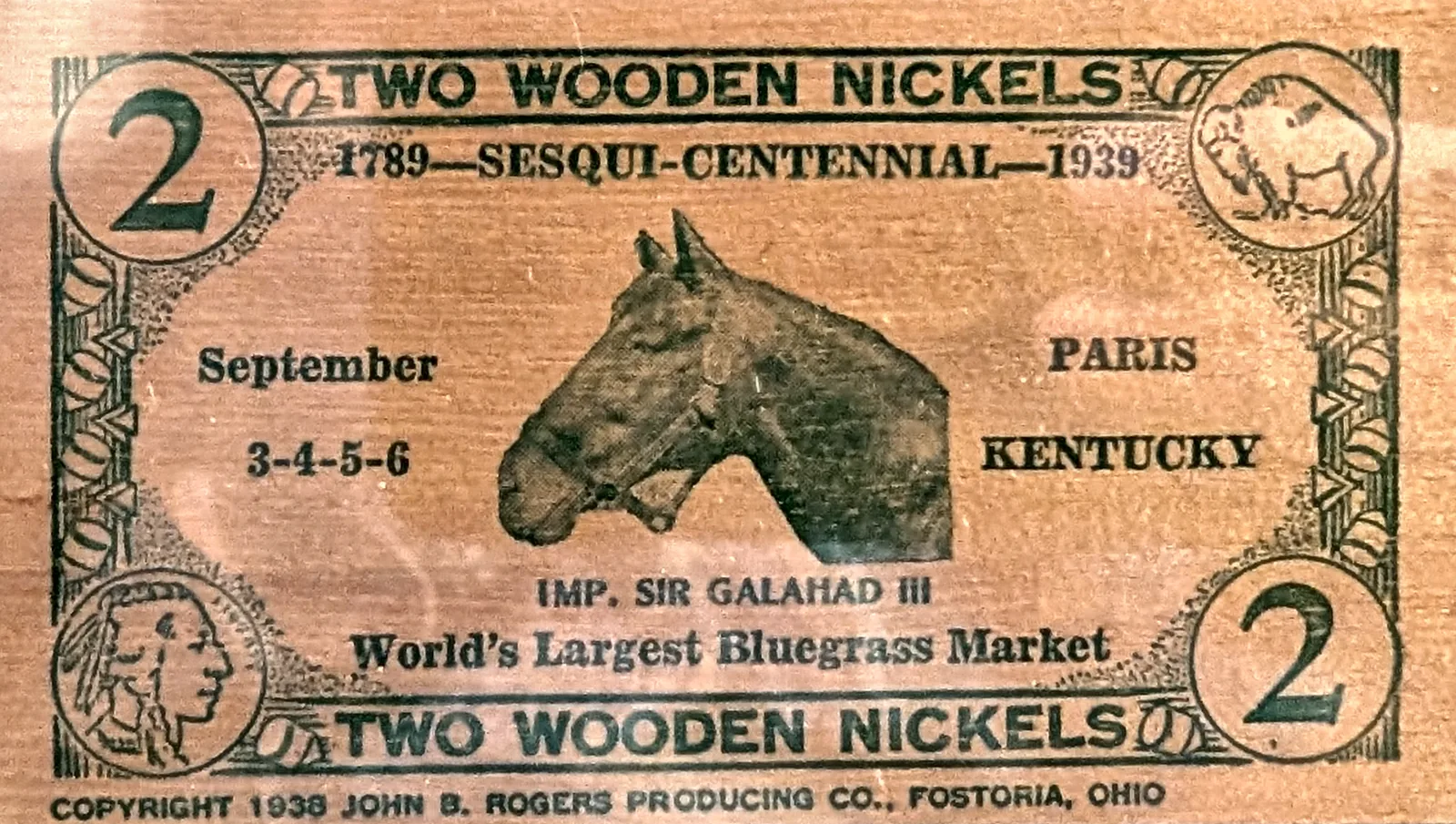
It’s wood, not a postcard, but it was too good to leave out. Paris turned 150 in 1939, and the nickel’s front reads: “September 3-4-5-6 · Paris, Kentucky · Imp. Sir Galahad III · World’s Largest Bluegrass Market.” Flip it to read the certificate, which says it could be spent at “any store or bank in Paris” until noon on Sept. 5, 1939. Sir Gallahad III (that’s the official spelling) was the French stallion imported in 1925 and kept at Claiborne. He sired Gallant Fox, the 1930 Triple Crown winner. Claiborne history
Lexington & the Bluegrass
15 cardsUp the road: the courthouse, Main Street, the University of Kentucky and the tracks.
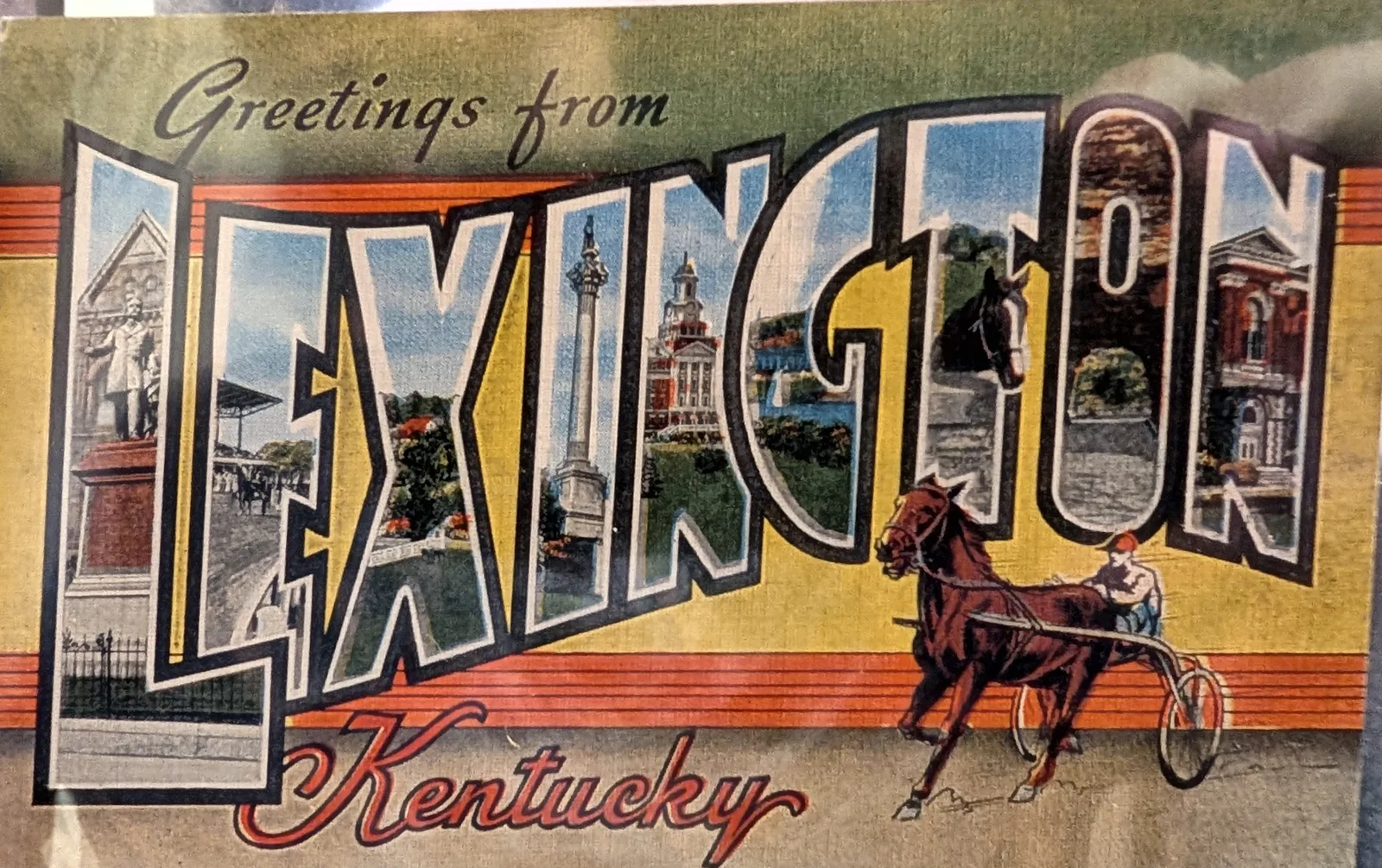
A harness horse and driver trot across the front of the letters.
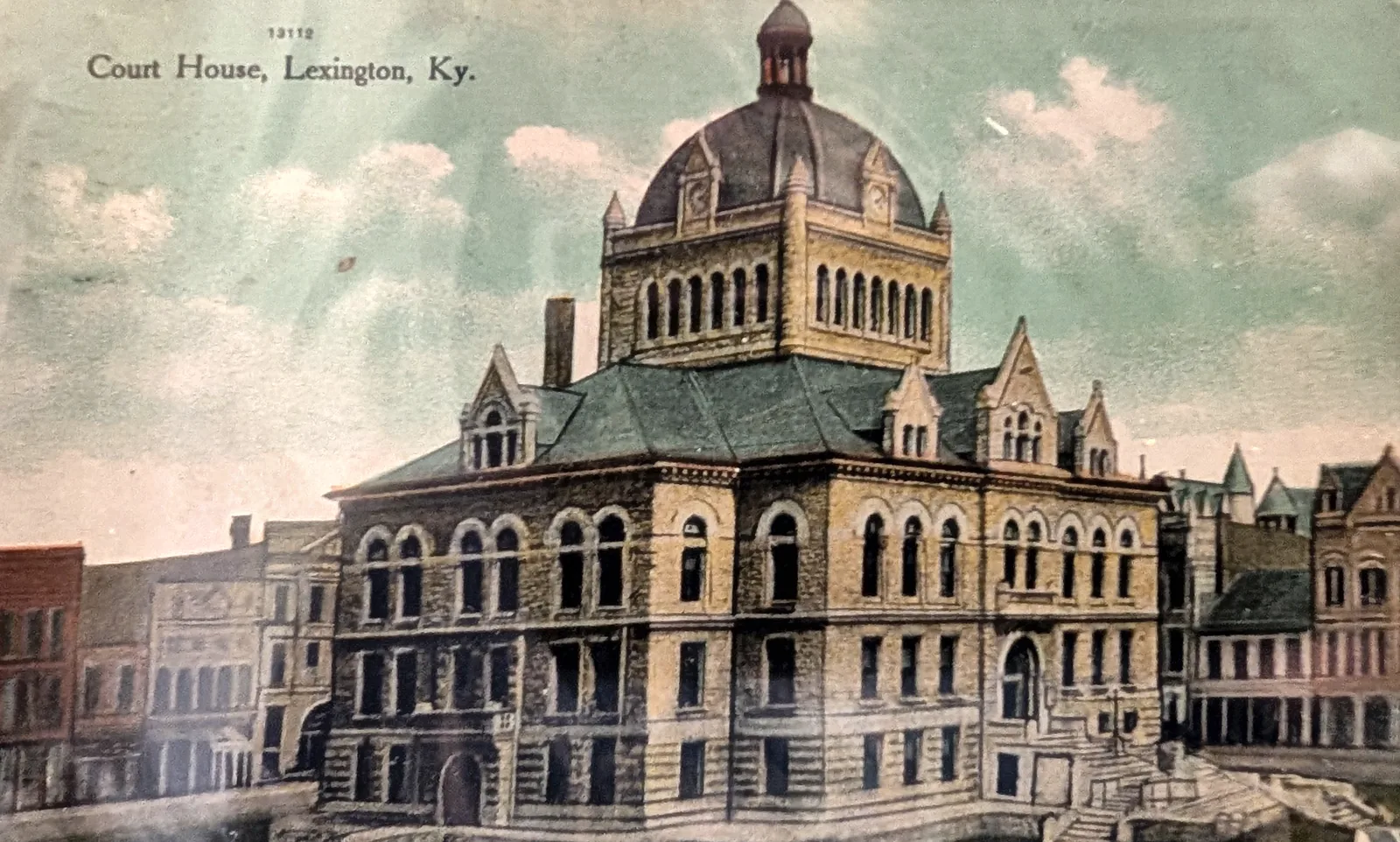
A stone courthouse with a big dome over downtown.
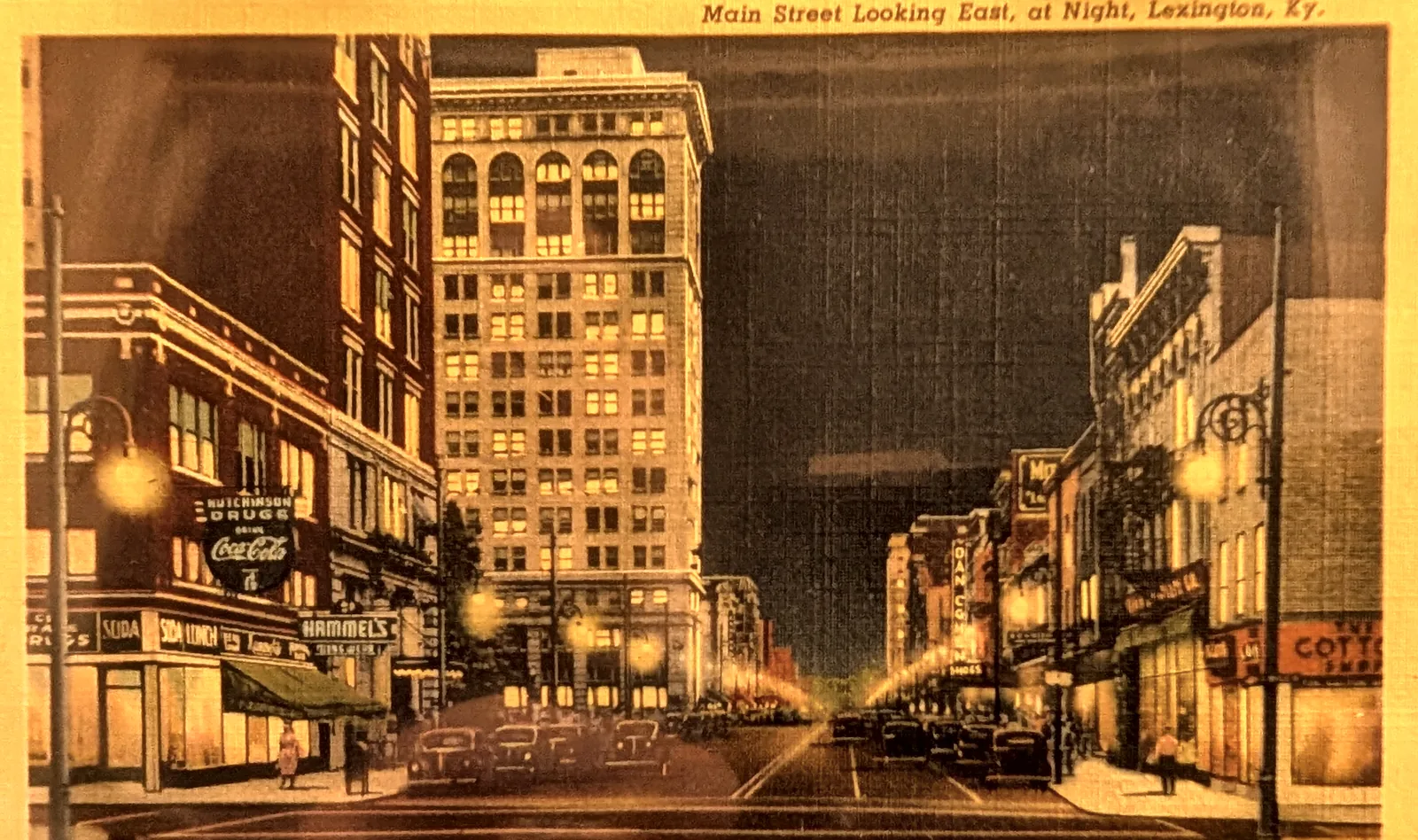
Street lamps, lit windows and headlights. There’s another copy pinned in the Post Office.
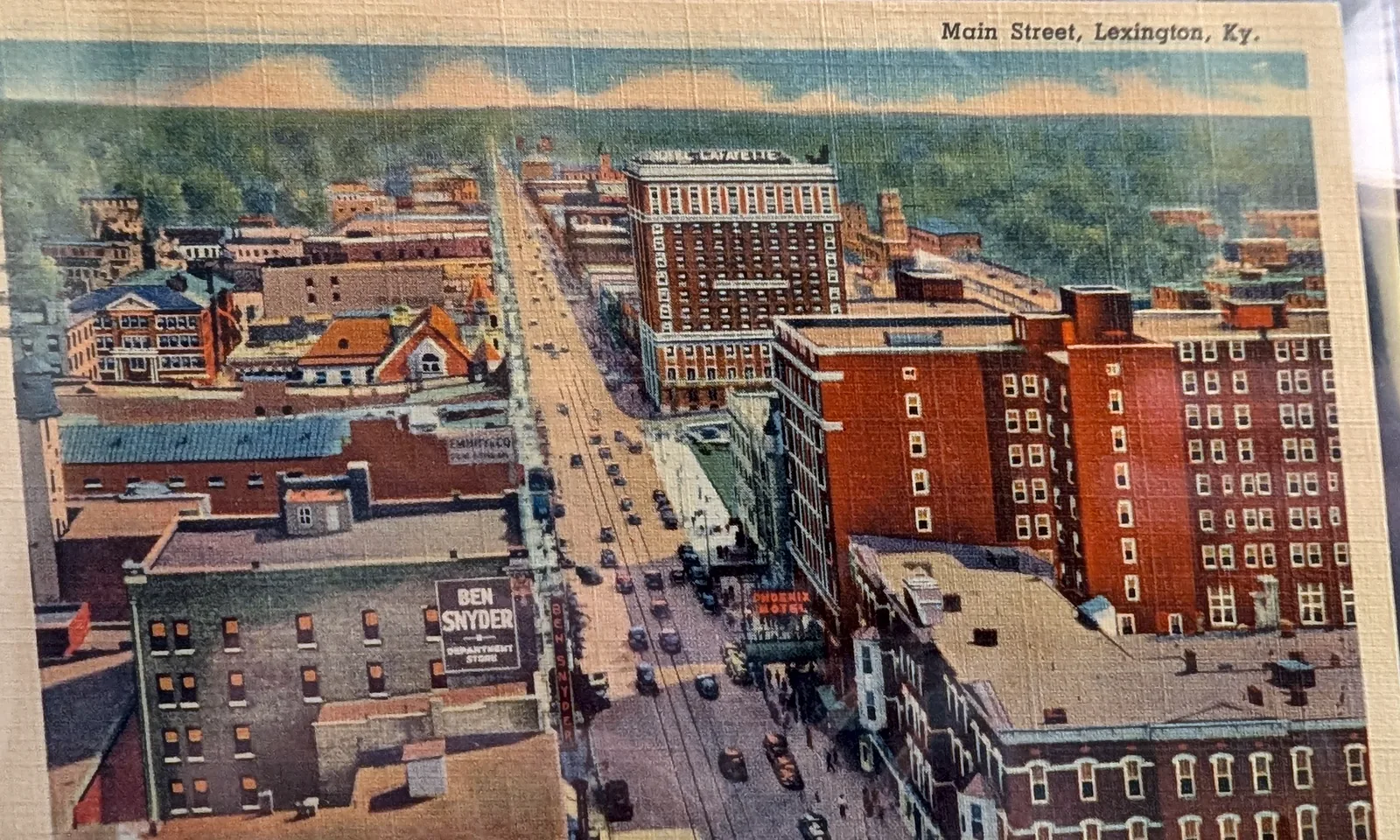
Looking down Main Street from above, hotels on the right.
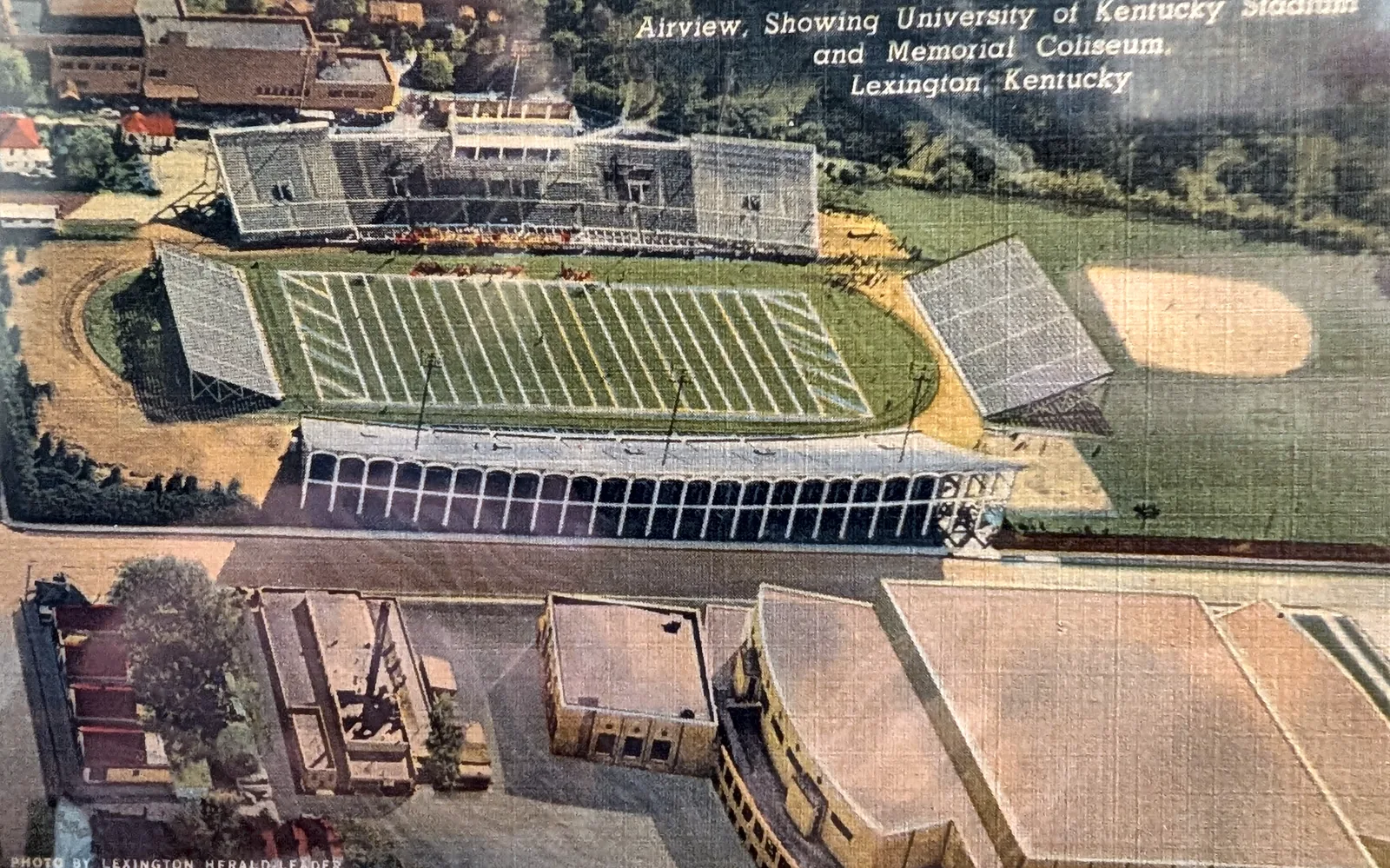
The football stadium with Memorial Coliseum next to it. The Coliseum opened in 1950.
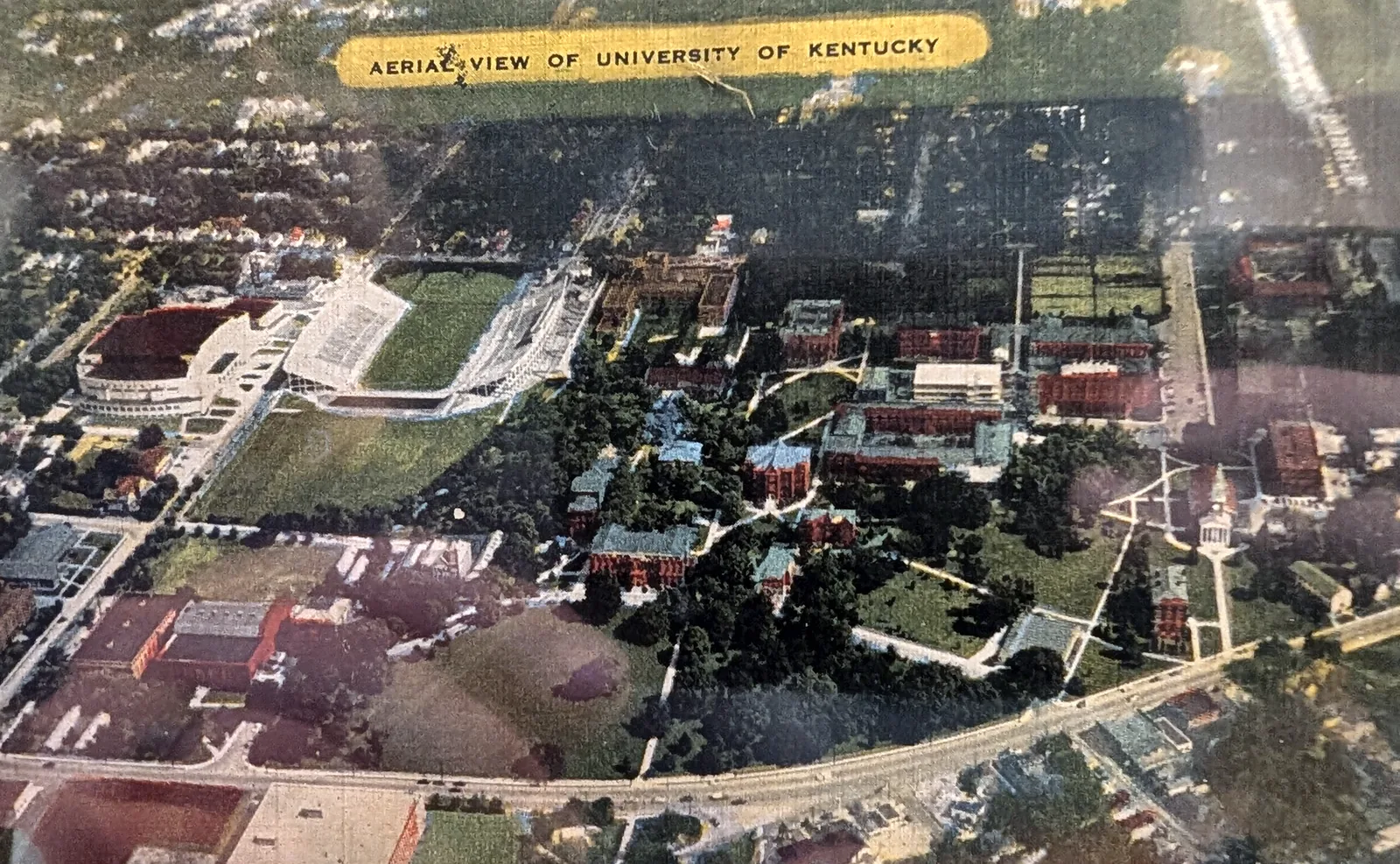
The campus from the air, with the stadium at the left.
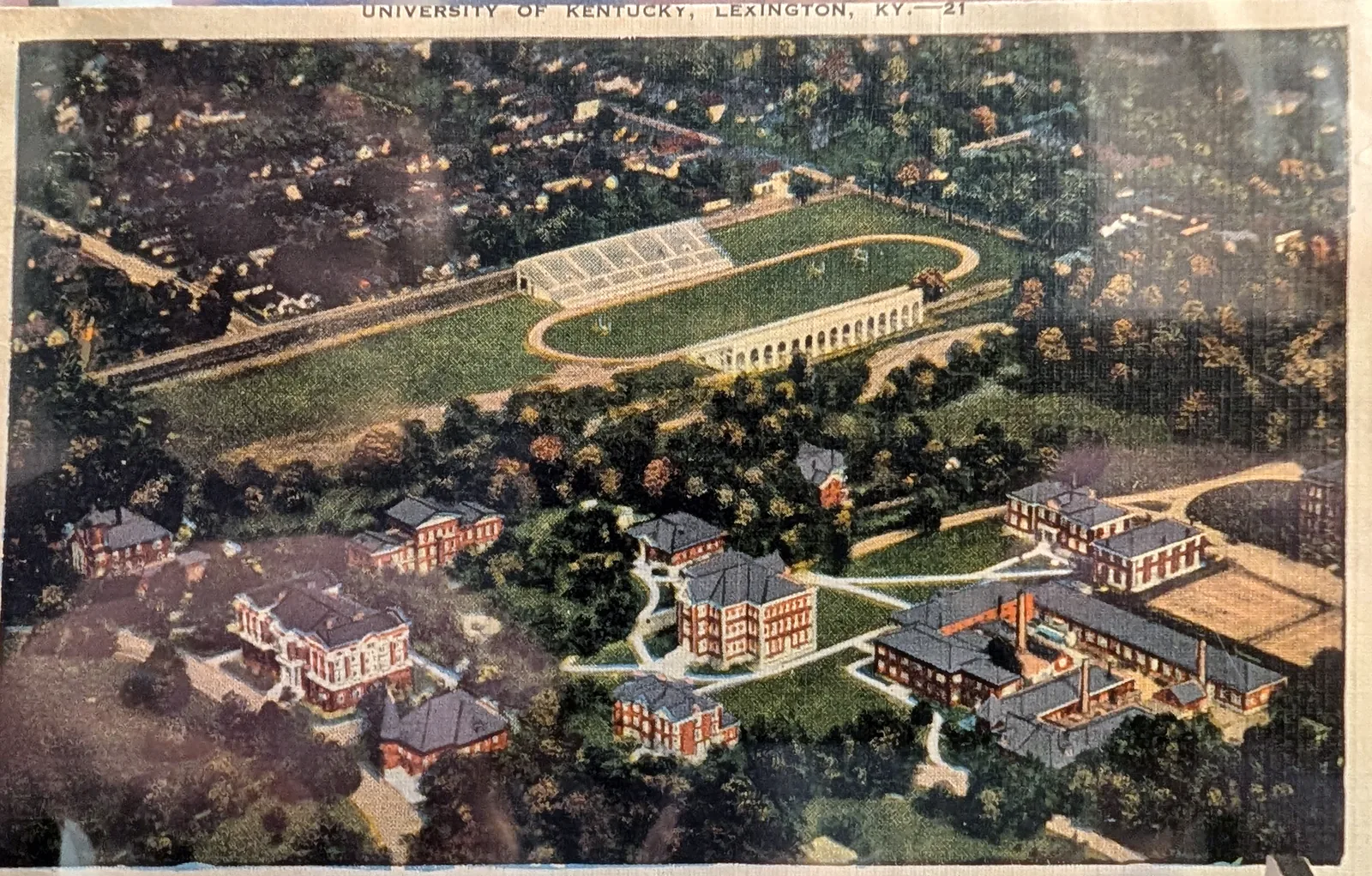
Another view from the air, with the track oval and the old halls.
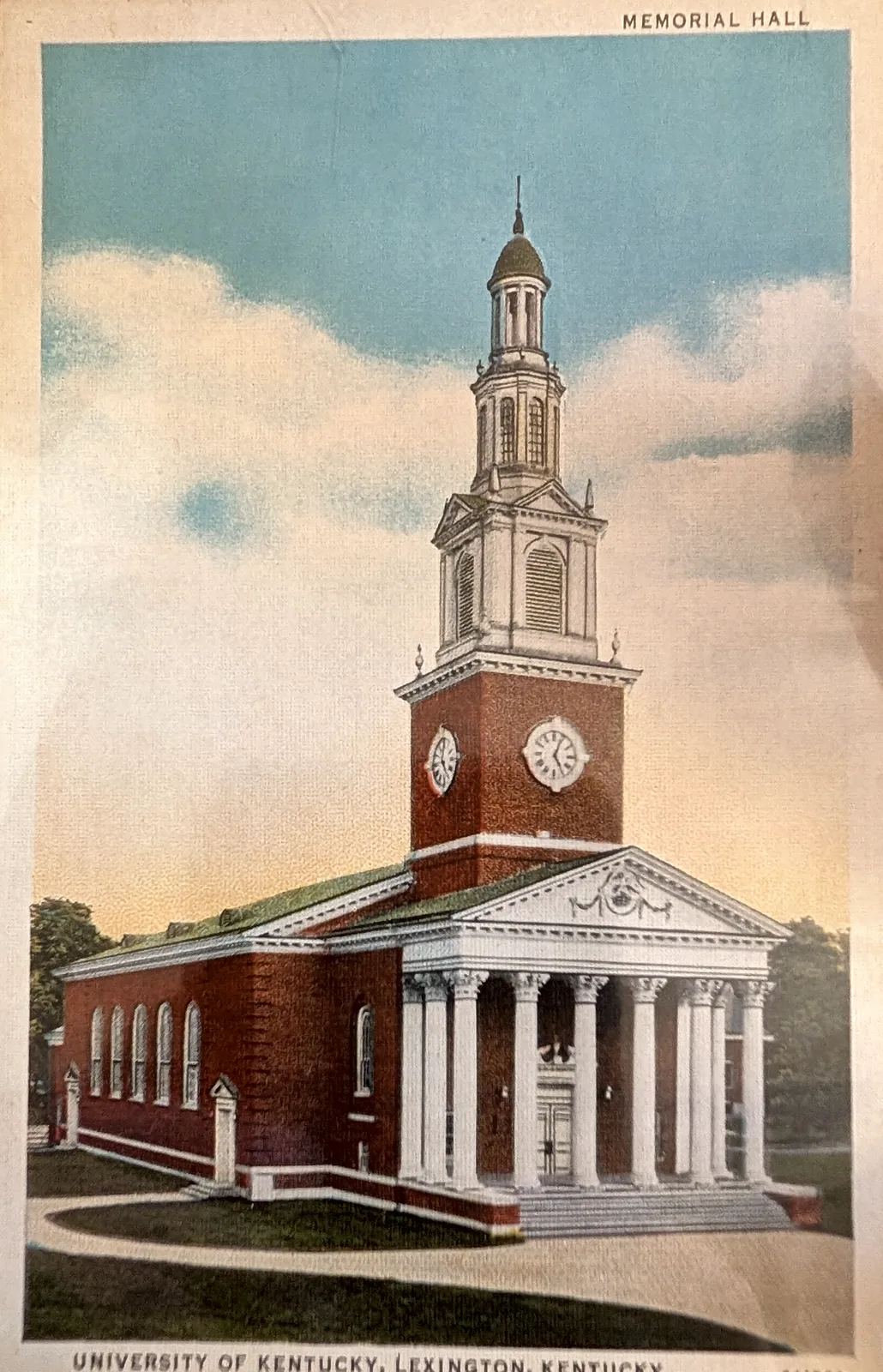
The white steeple over red brick.
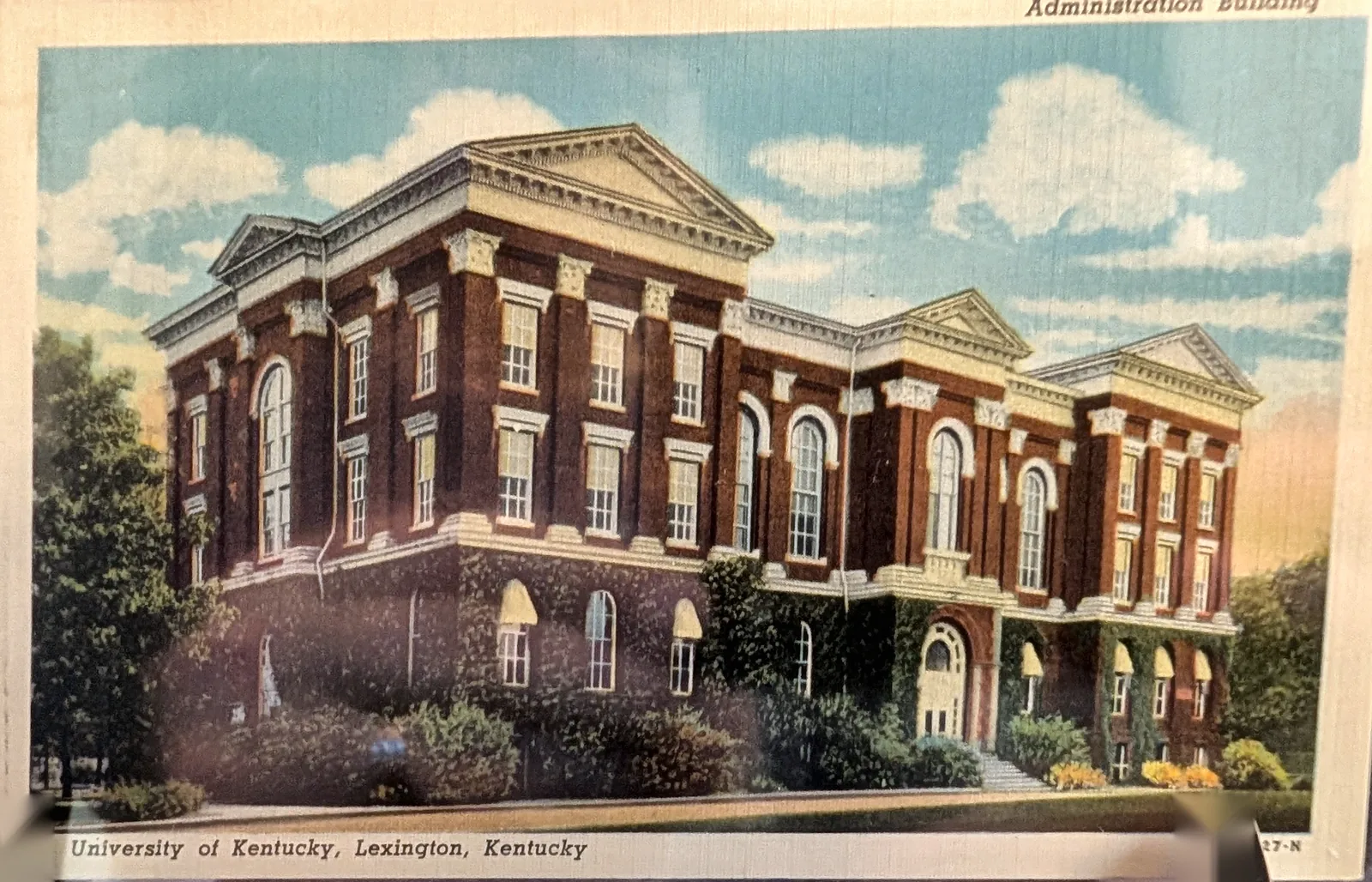
Brick, ivy and a lot of tall windows.
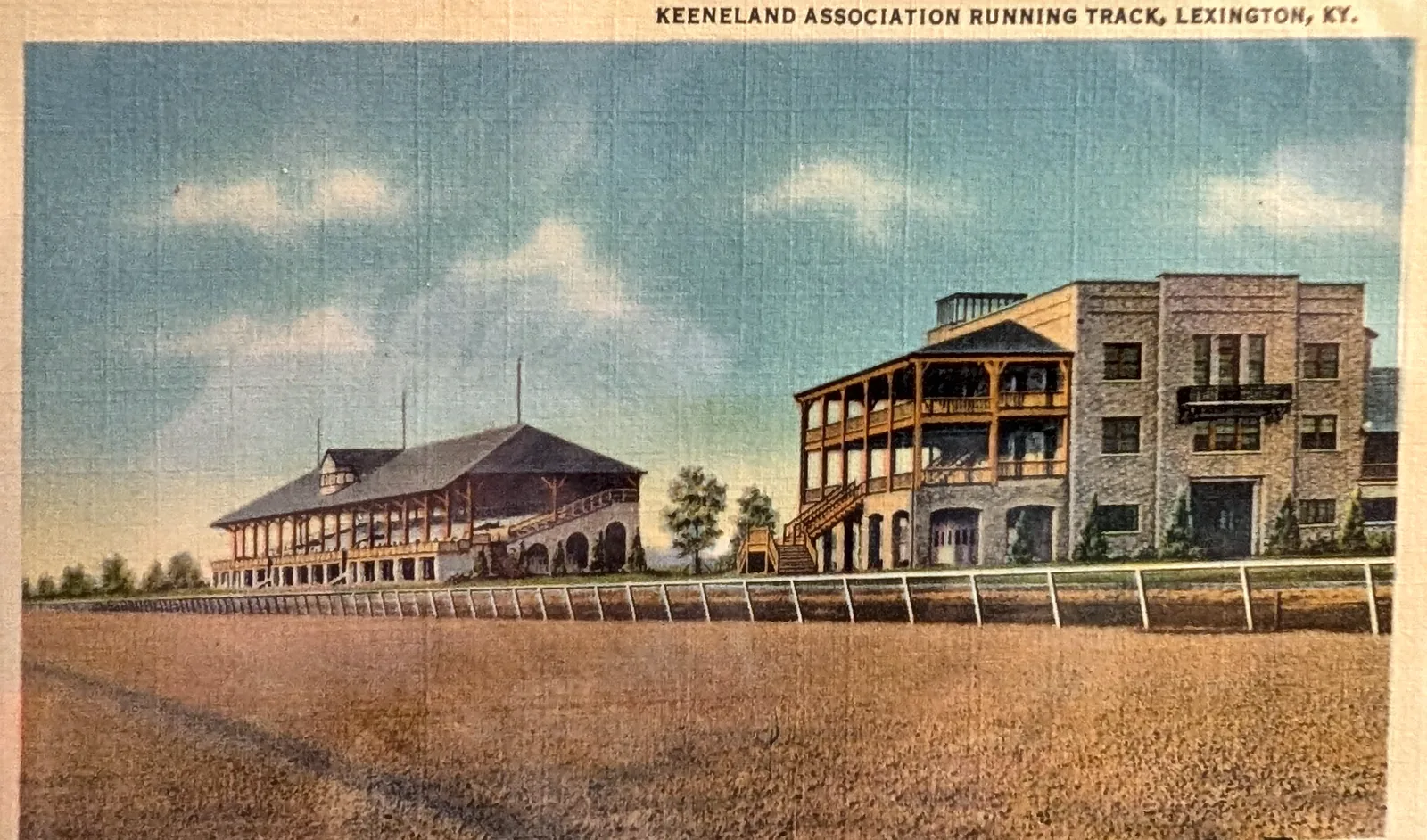
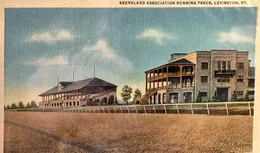
The limestone stands behind an empty track. Keeneland ran its first meet on Oct. 15, 1936. Keeneland
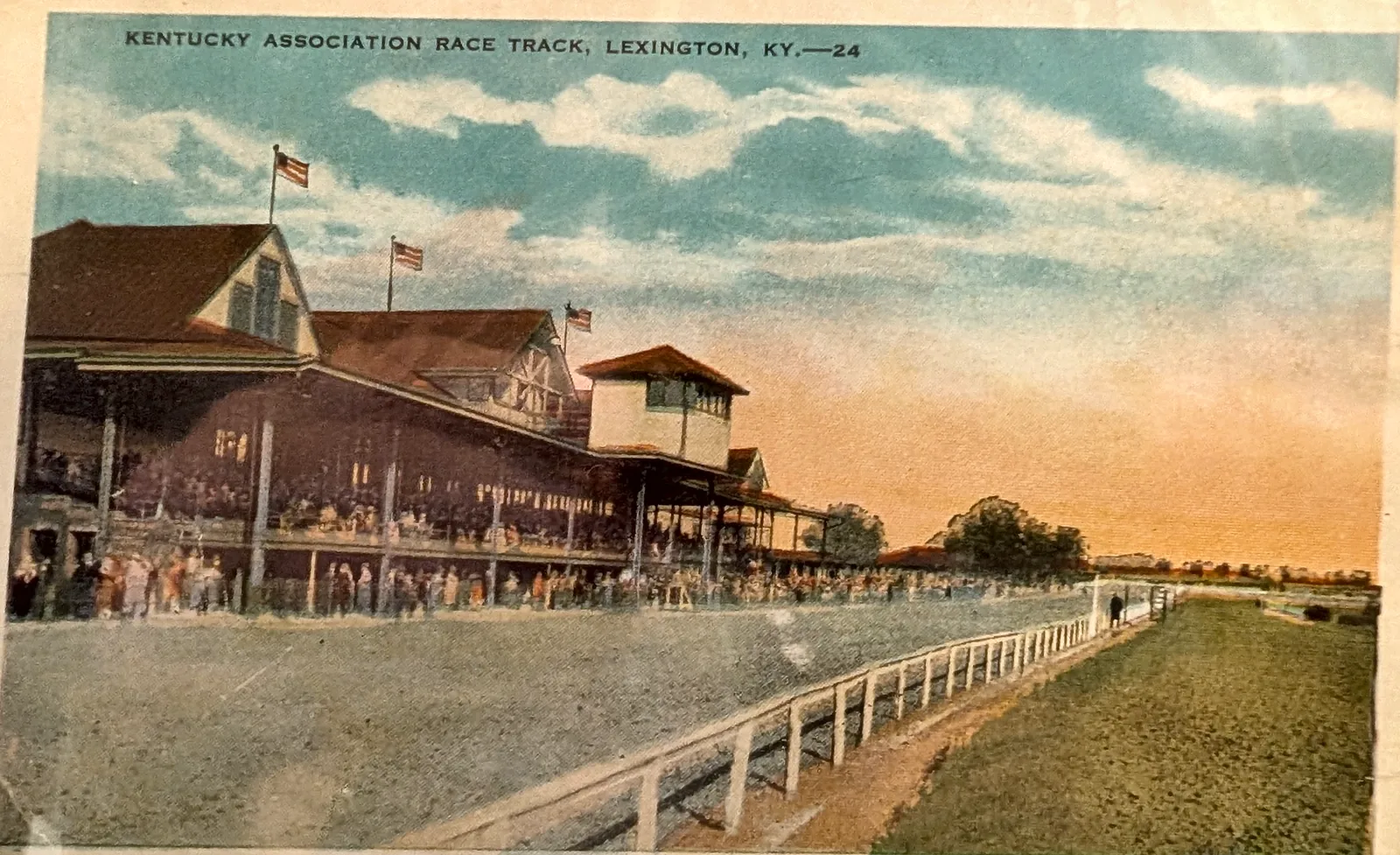
The old downtown track. Its last meet was in the spring of 1933, after more than a hundred years of racing. Keeneland
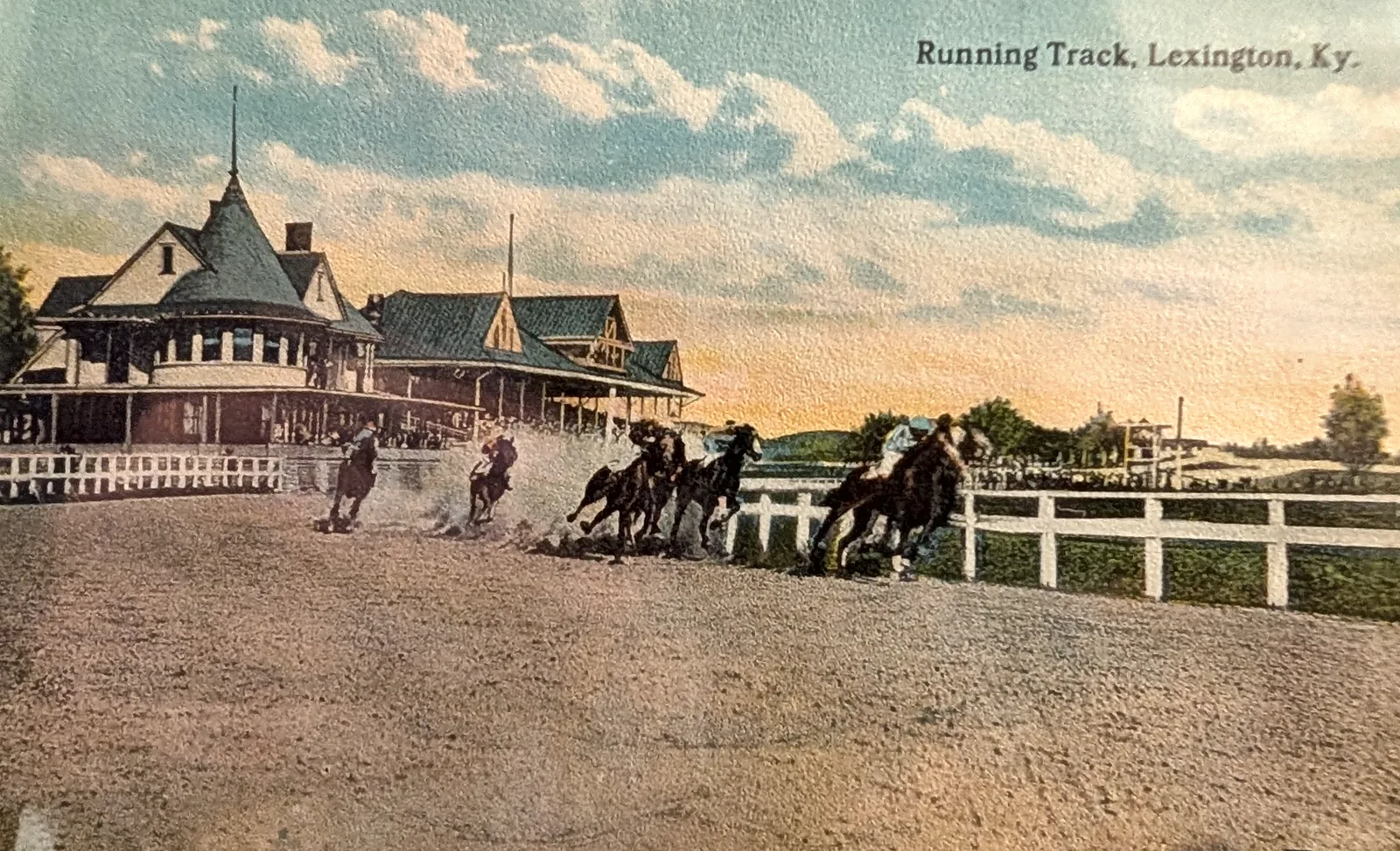
Thoroughbreds coming down the stretch past a clubhouse with a pointed roof.
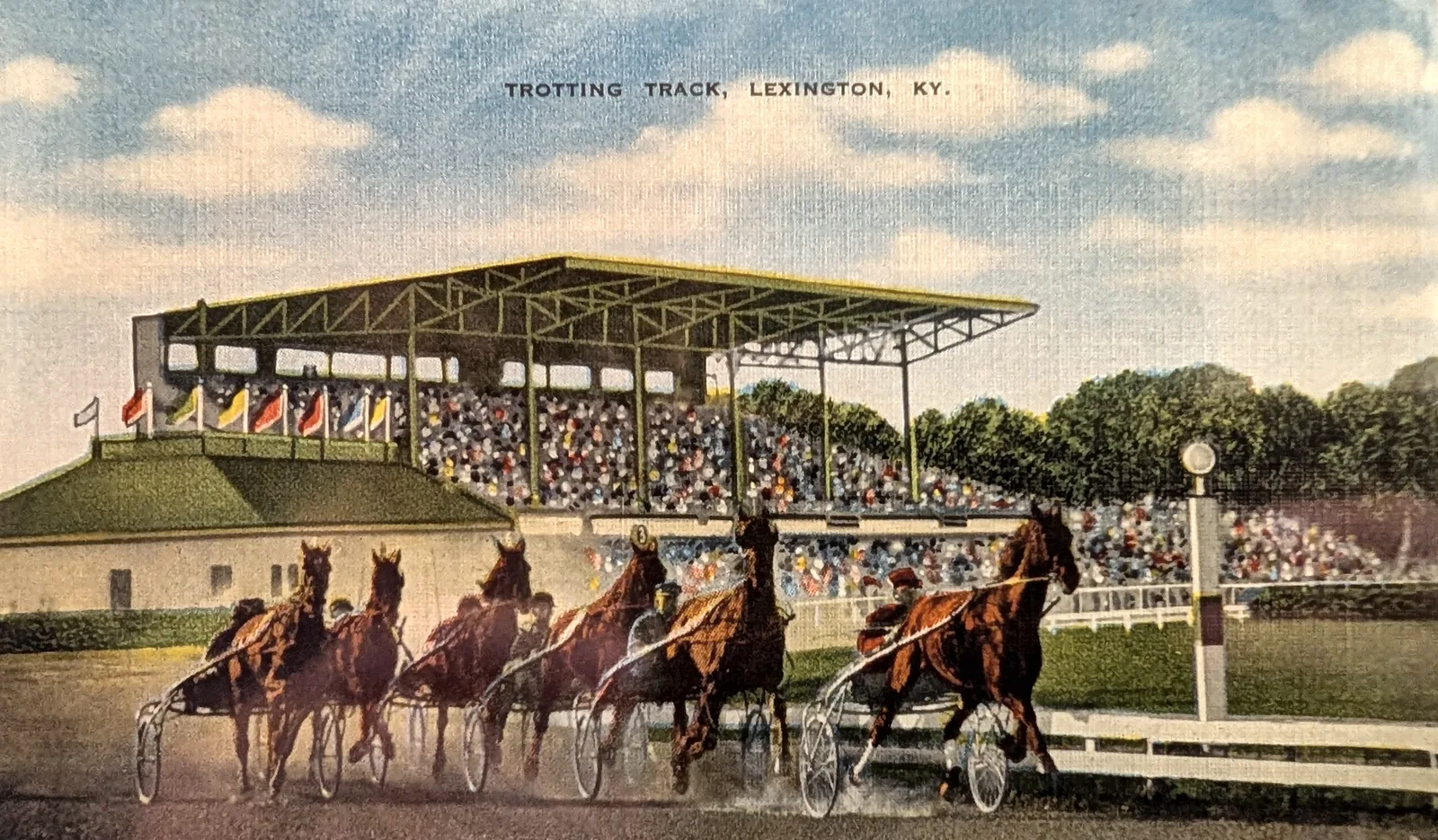
Five sulkies abreast in front of a packed grandstand.
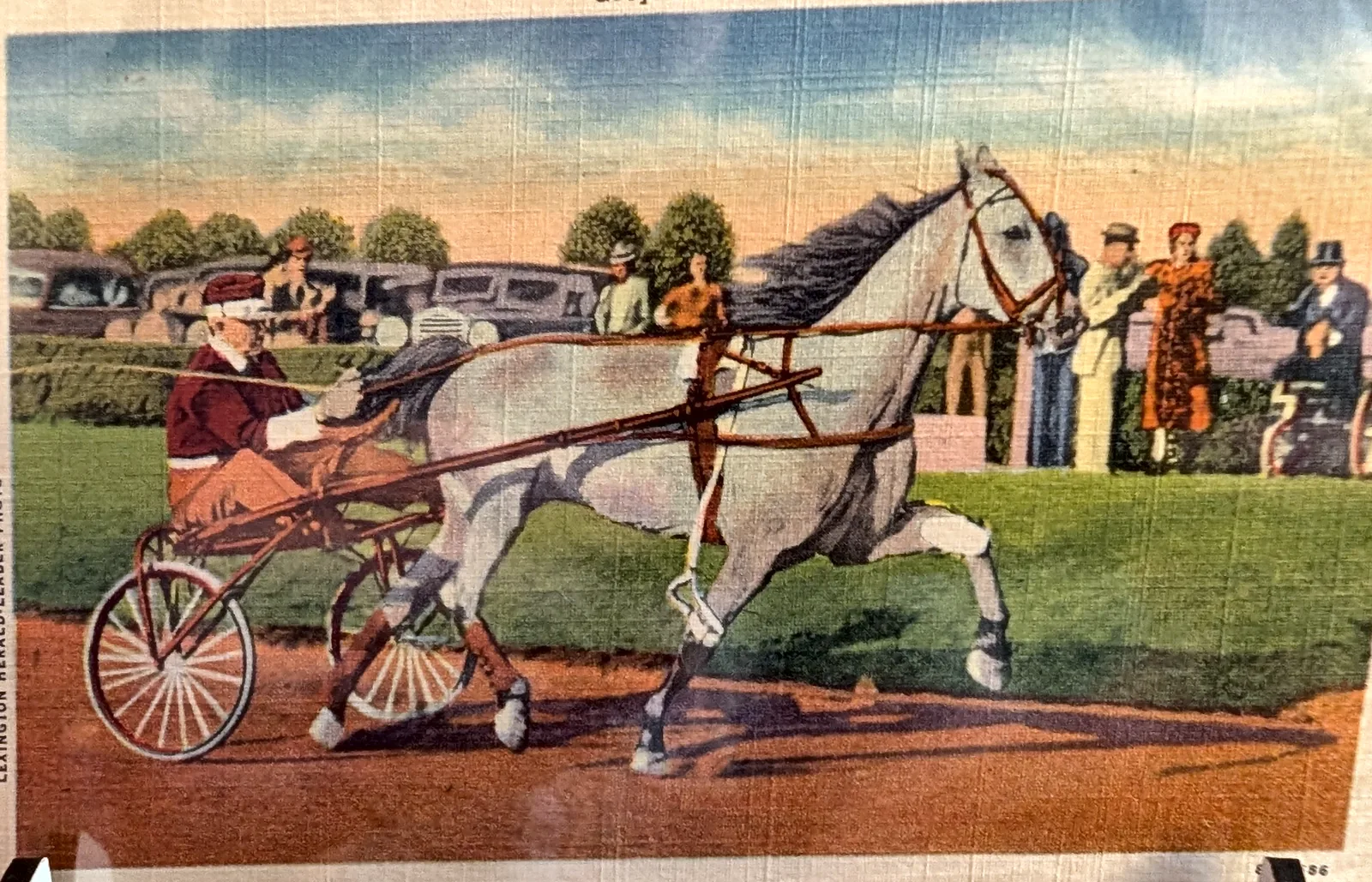
A grey trotter in full stride, with the driver in red and a crowd along the rail.
Manor lore · unverified: it could be Greyhound, the great grey trotter. Nothing on the card says so.
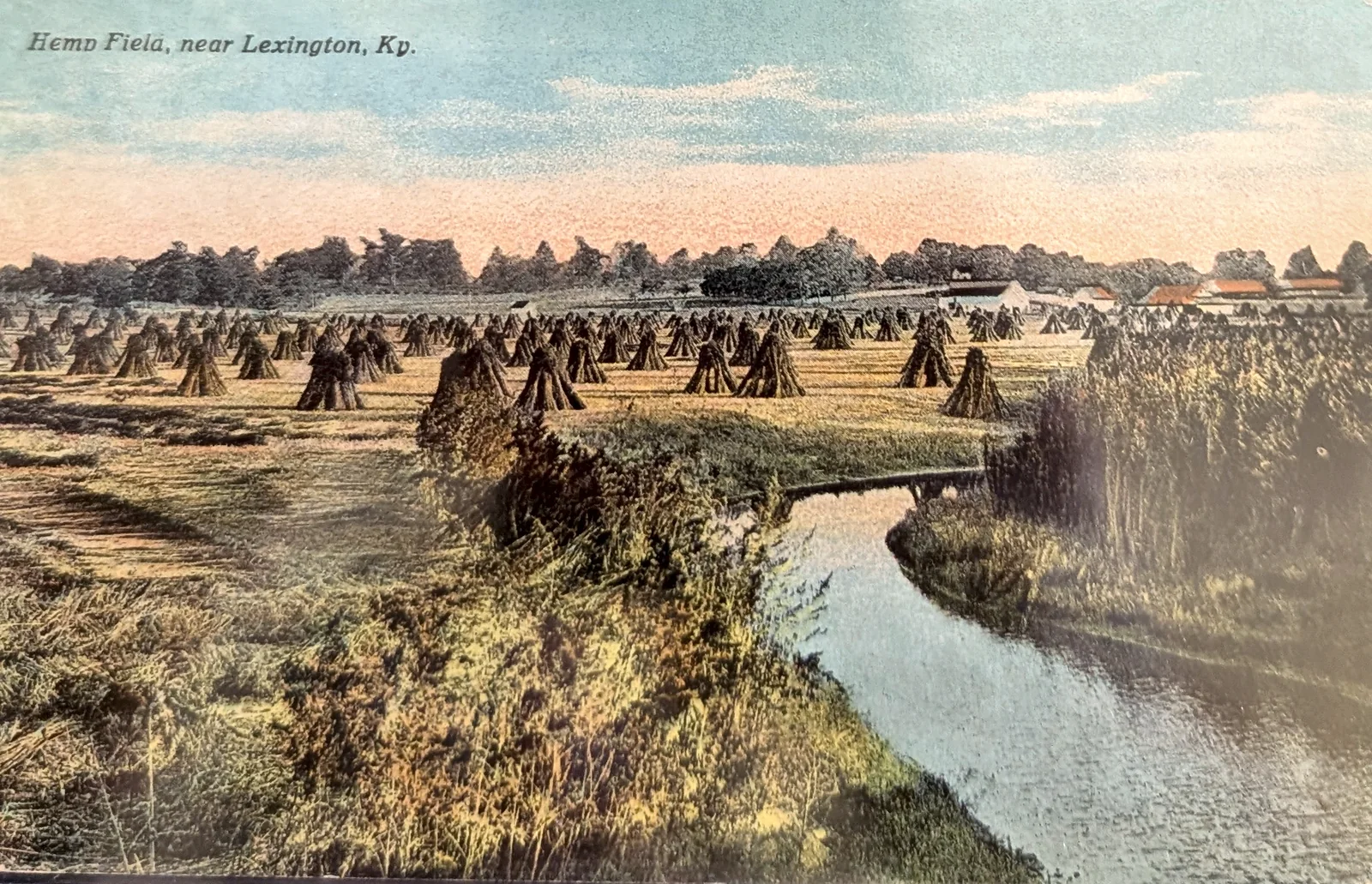
Another hemp field card, this one titled for Lexington.
Greetings from Kentucky
5 cardsBig letters, little views. Every letter holds its own picture.
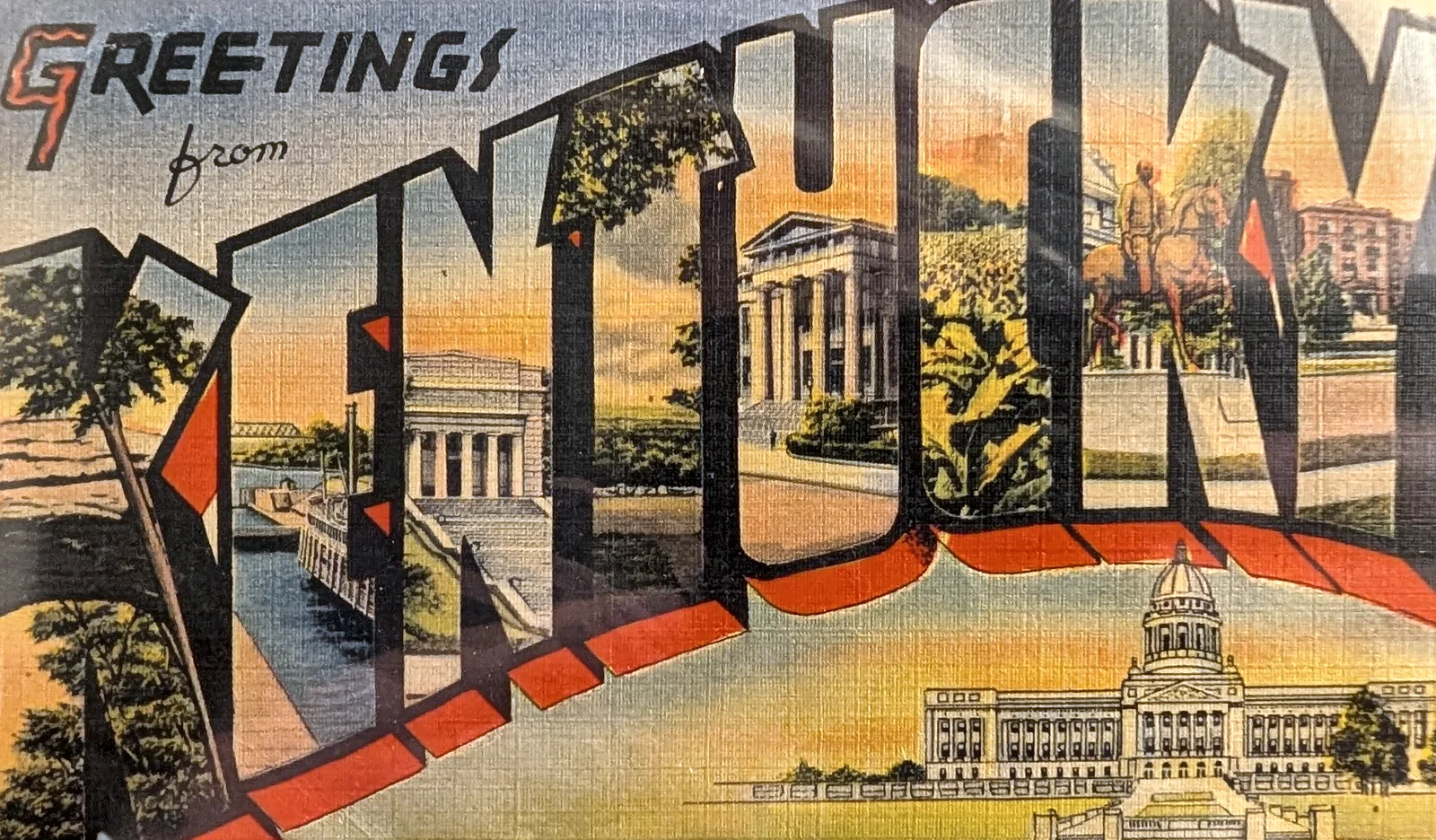
Dark block letters trimmed in red, each one filled with its own Kentucky view, and the State Capitol along the bottom.
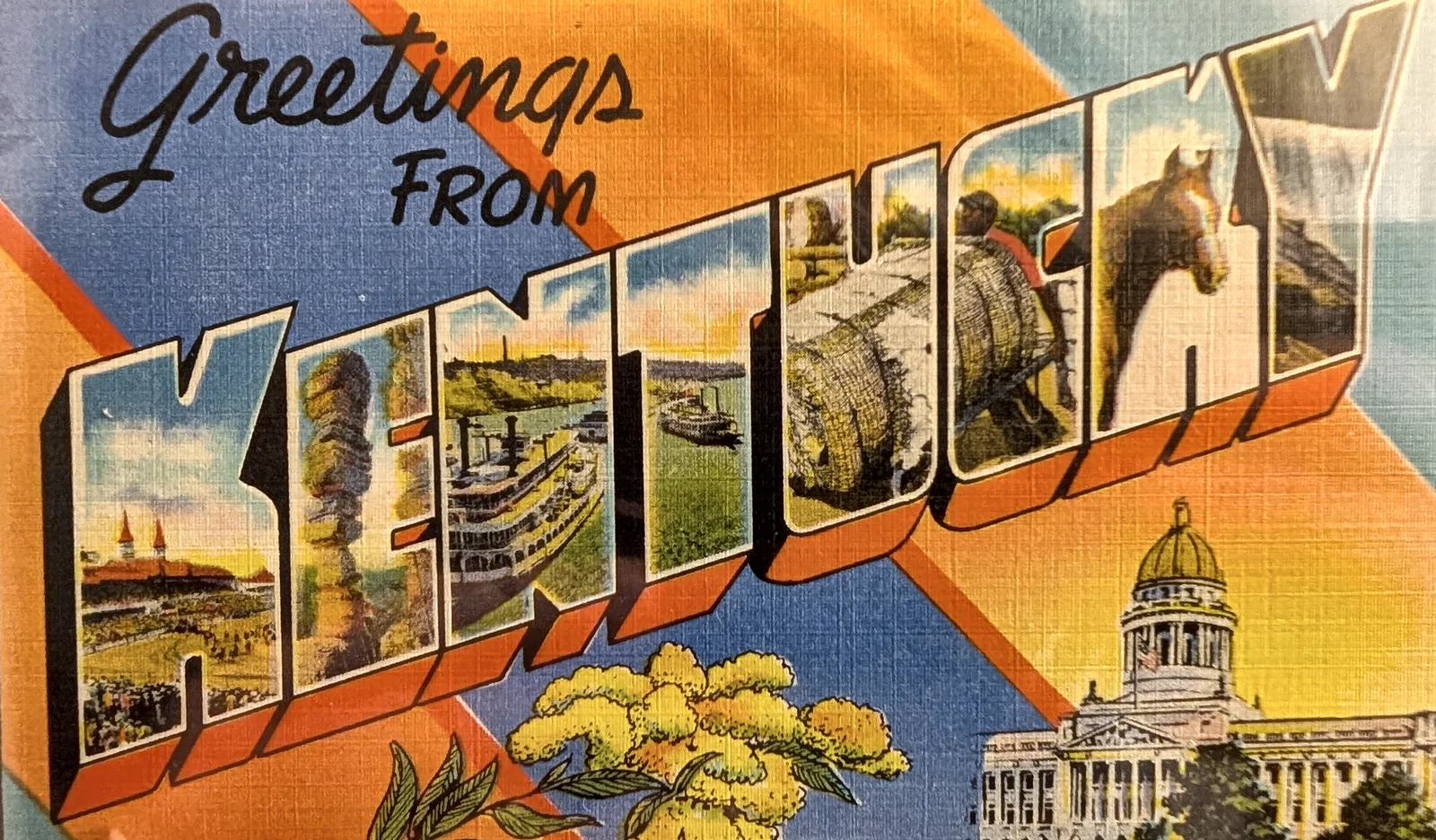
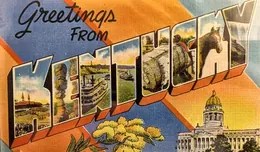
Blue and orange, with a steamboat and a horse inside the letters, goldenrod in the corner and the Capitol dome on the right.
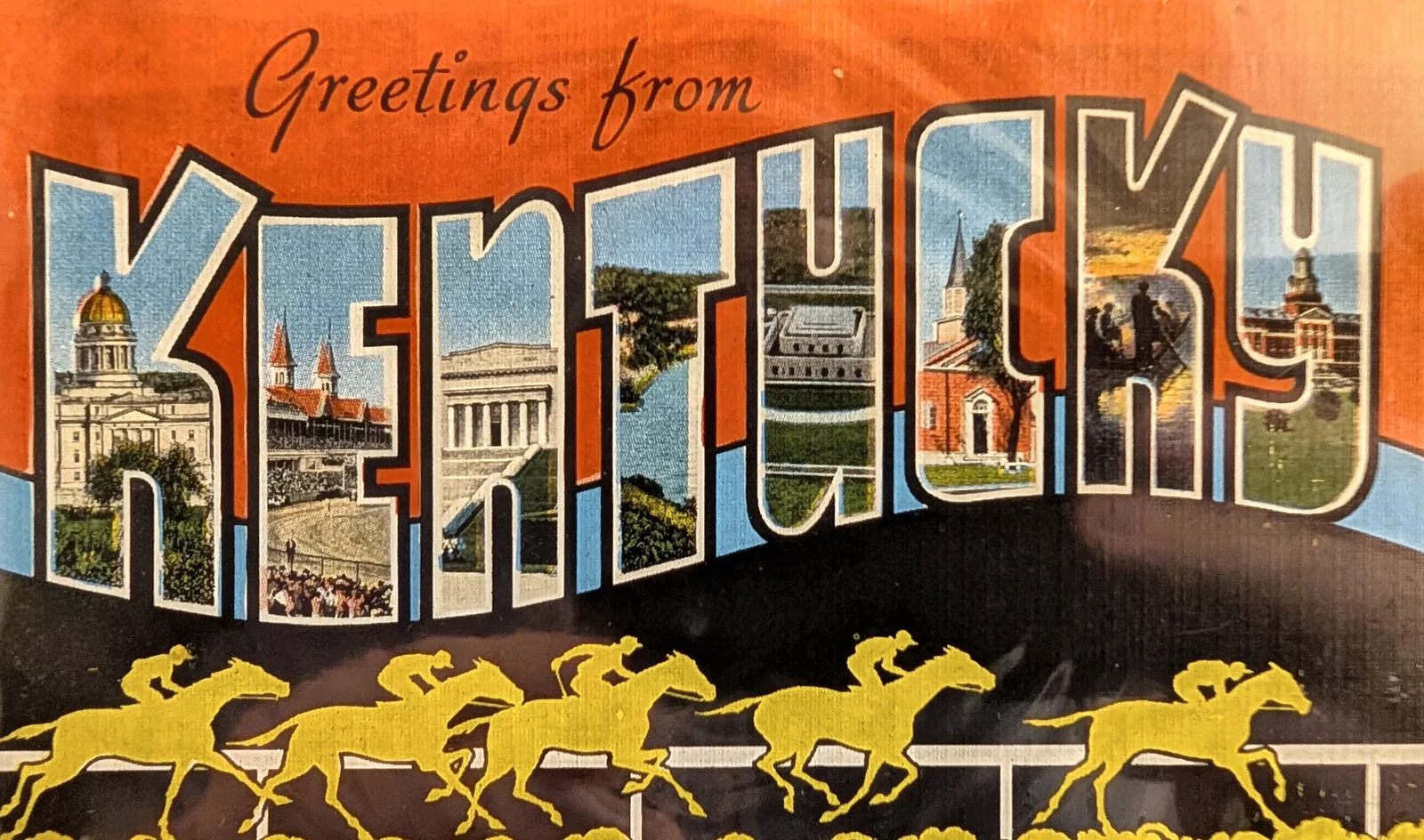
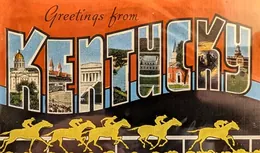
An orange sky, Kentucky views in the letters and a line of racehorses running in silhouette along the bottom.
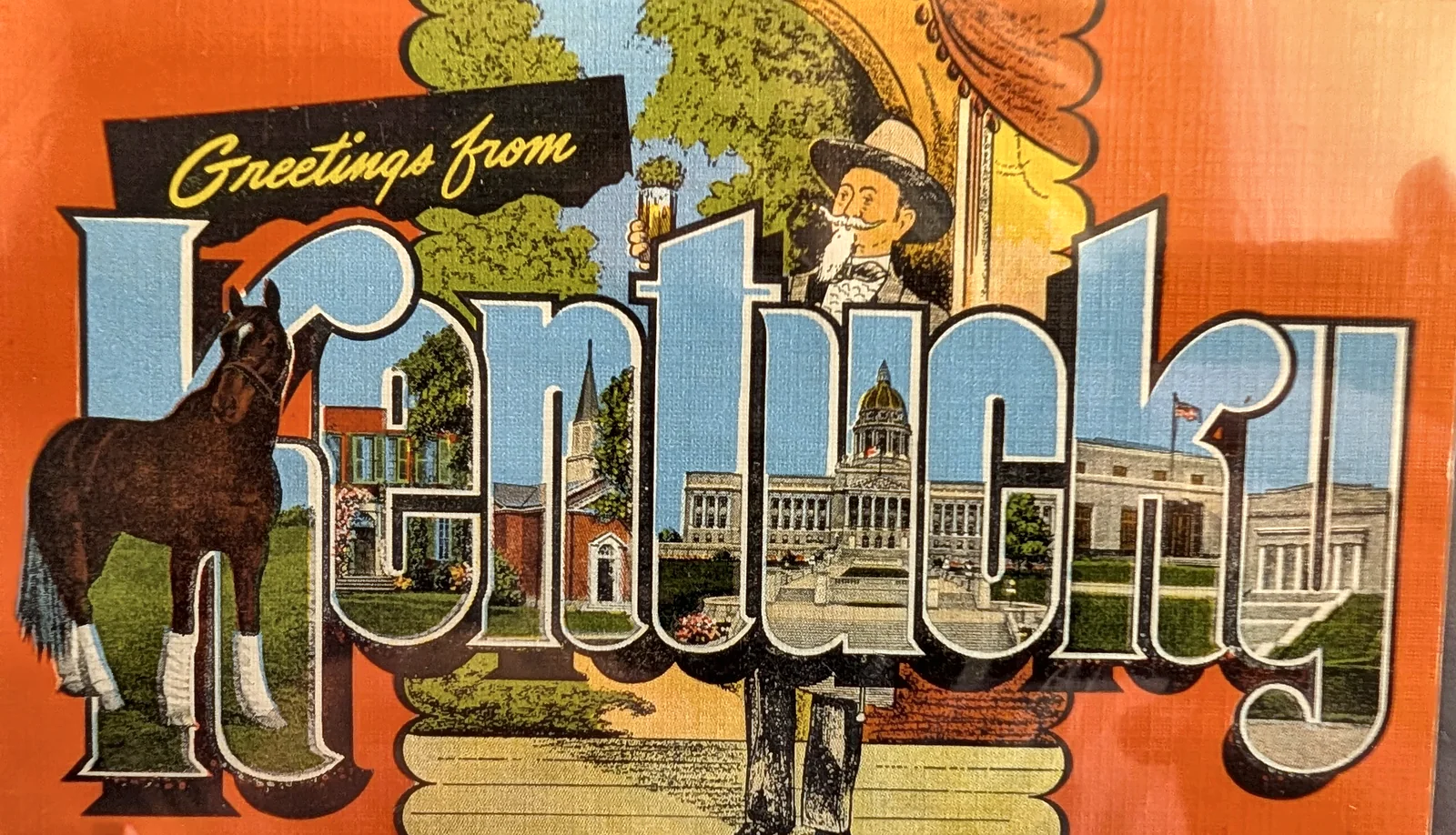
A colonel with a julep stands behind the letters, with a horse on the left.
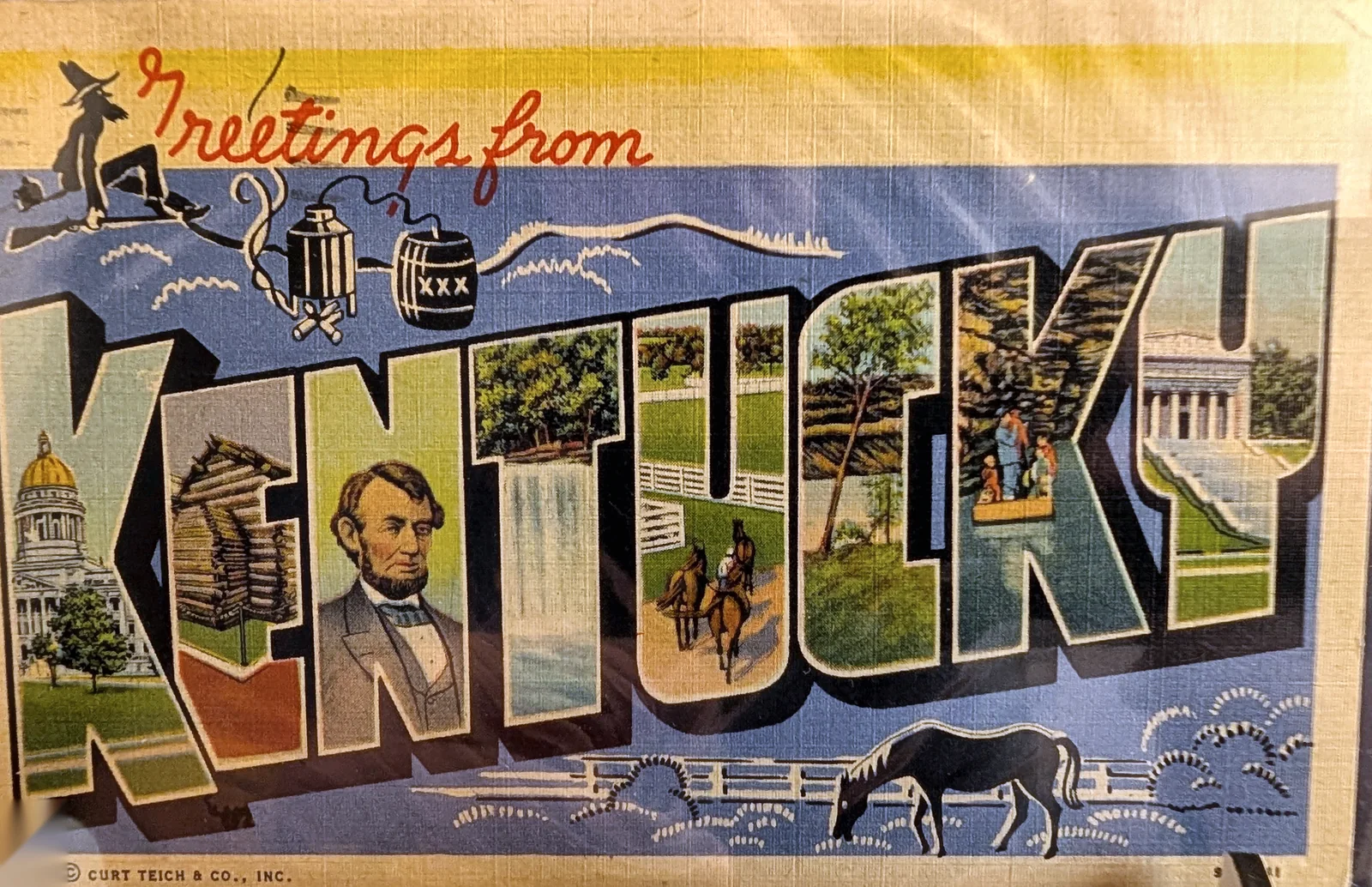
Lincoln, a log cabin, horses and a waterfall fill the letters. Up top, a moonshiner tends his still beside a barrel marked XXX.
“In Old Kentucky”
14 cardsColonels and juleps, moonshine stills, tobacco and hemp, log cabins and dialect poems: Kentucky the way the card printers liked to sell it.
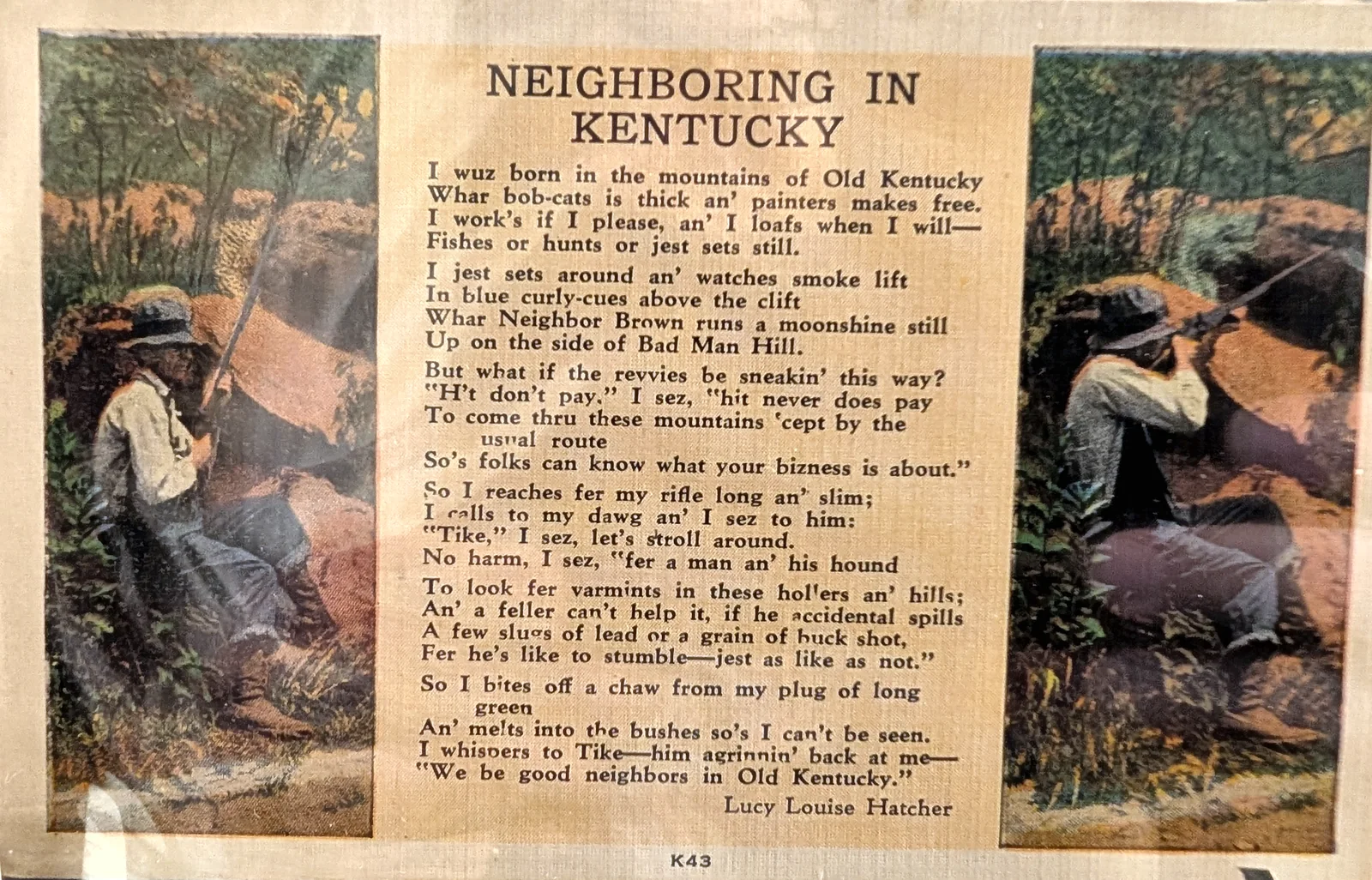
A mountain poem in dialect, framed by two pictures of a man with a rifle in the woods. It opens: “I wuz born in the mountains of Old Kentucky …”
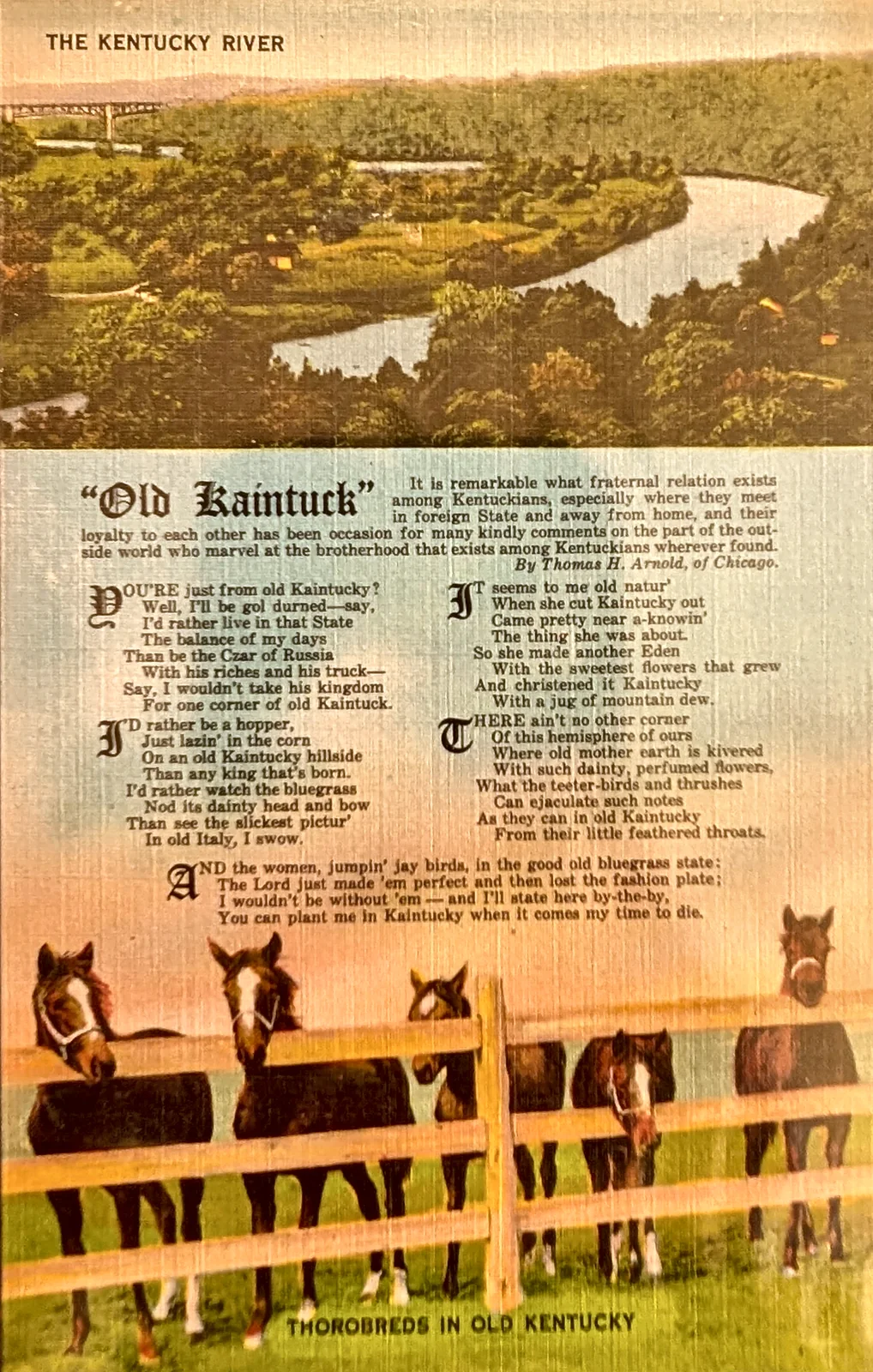
A bend of the Kentucky River at the top, “Thorobreds in Old Kentucky” grazing by a fence at the bottom, and the poem in between.
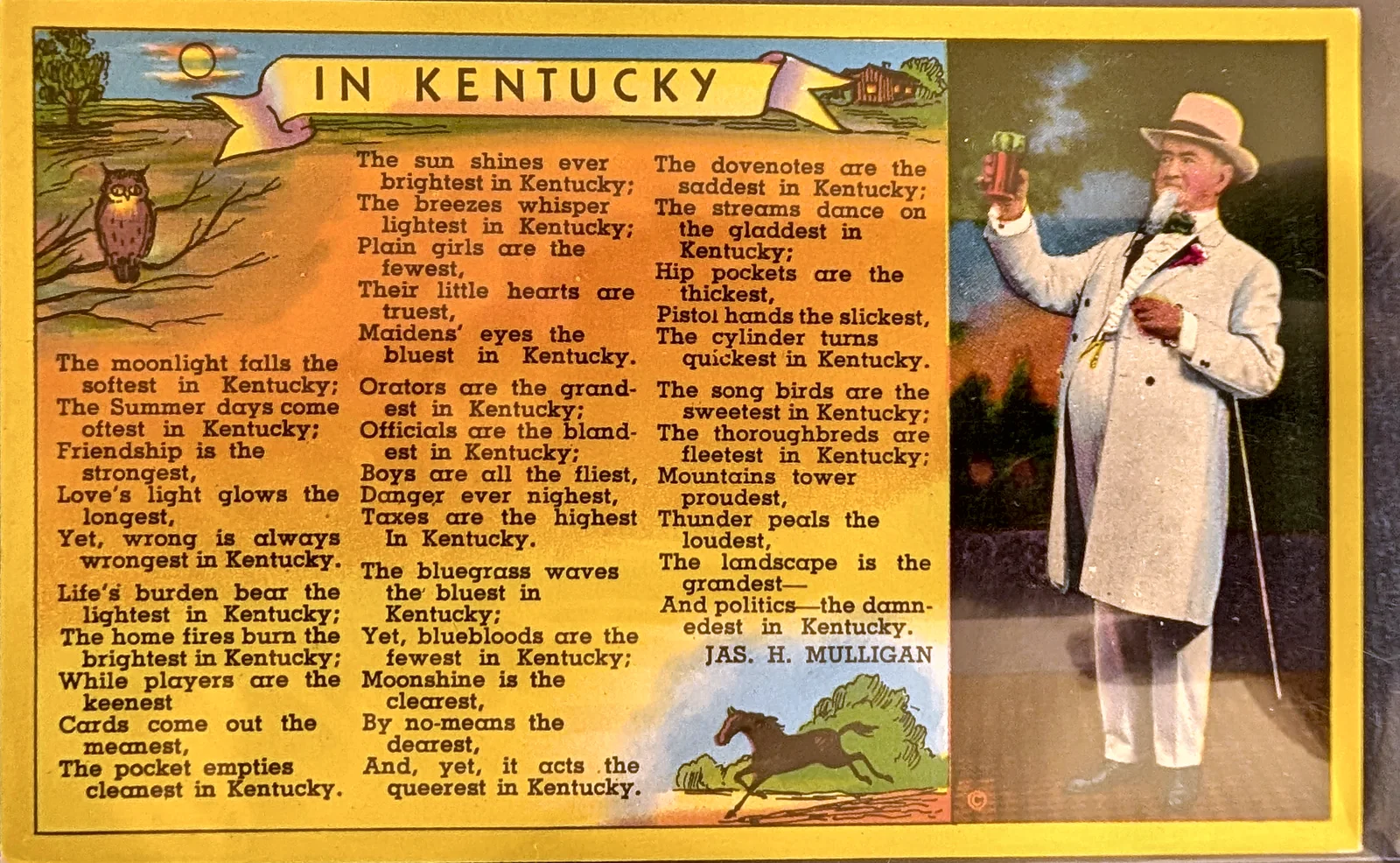
A white-suited colonel raises a glass beside the poem, which runs from “The moonlight falls the softest in Kentucky” to the famous last line about politics.
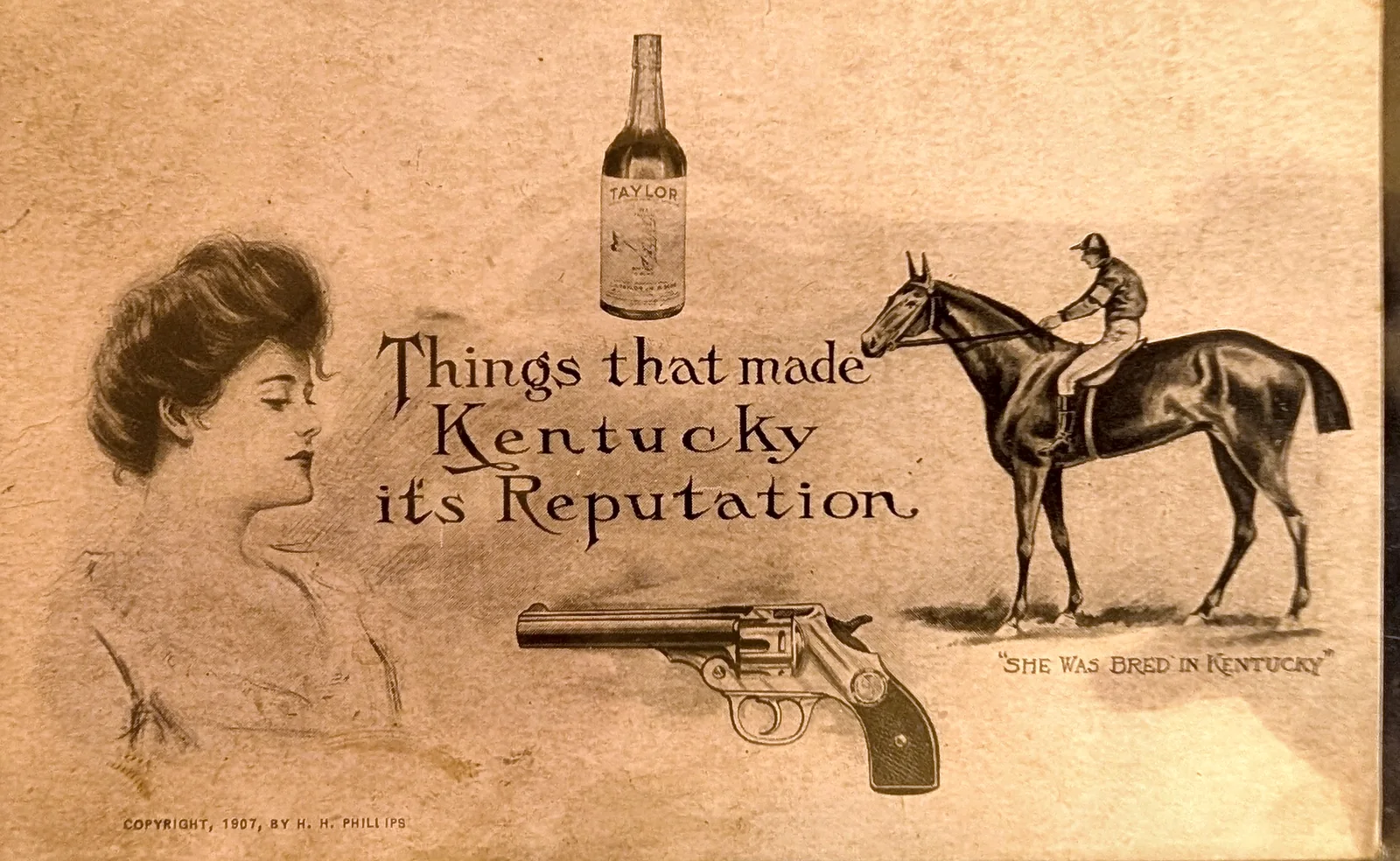
A pretty face, a bottle of Taylor whiskey, a revolver and a racehorse, with “She was bred in Kentucky” under the horse.
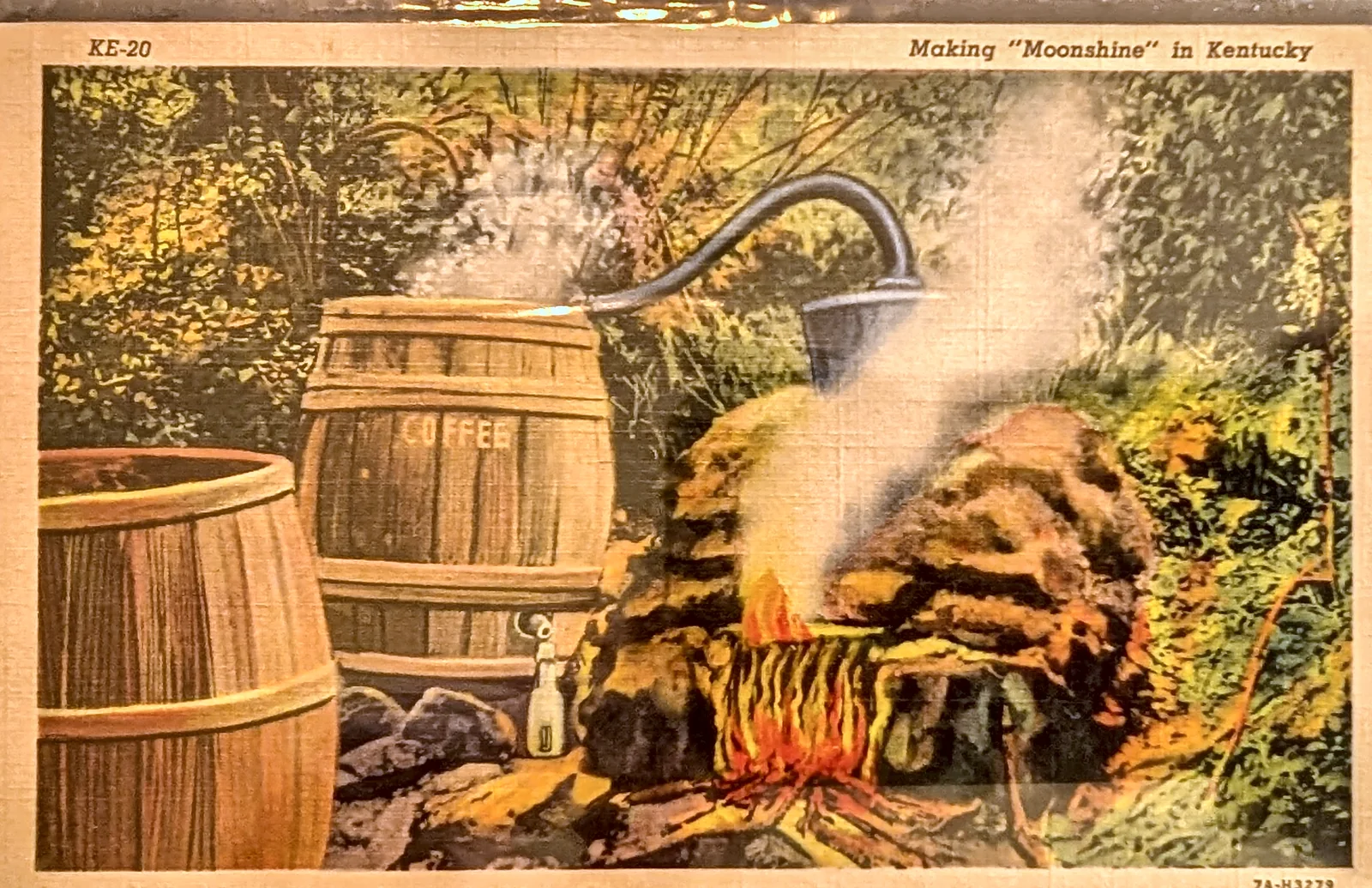
Barrels, a copper coil and smoke from a fire, back in the woods.
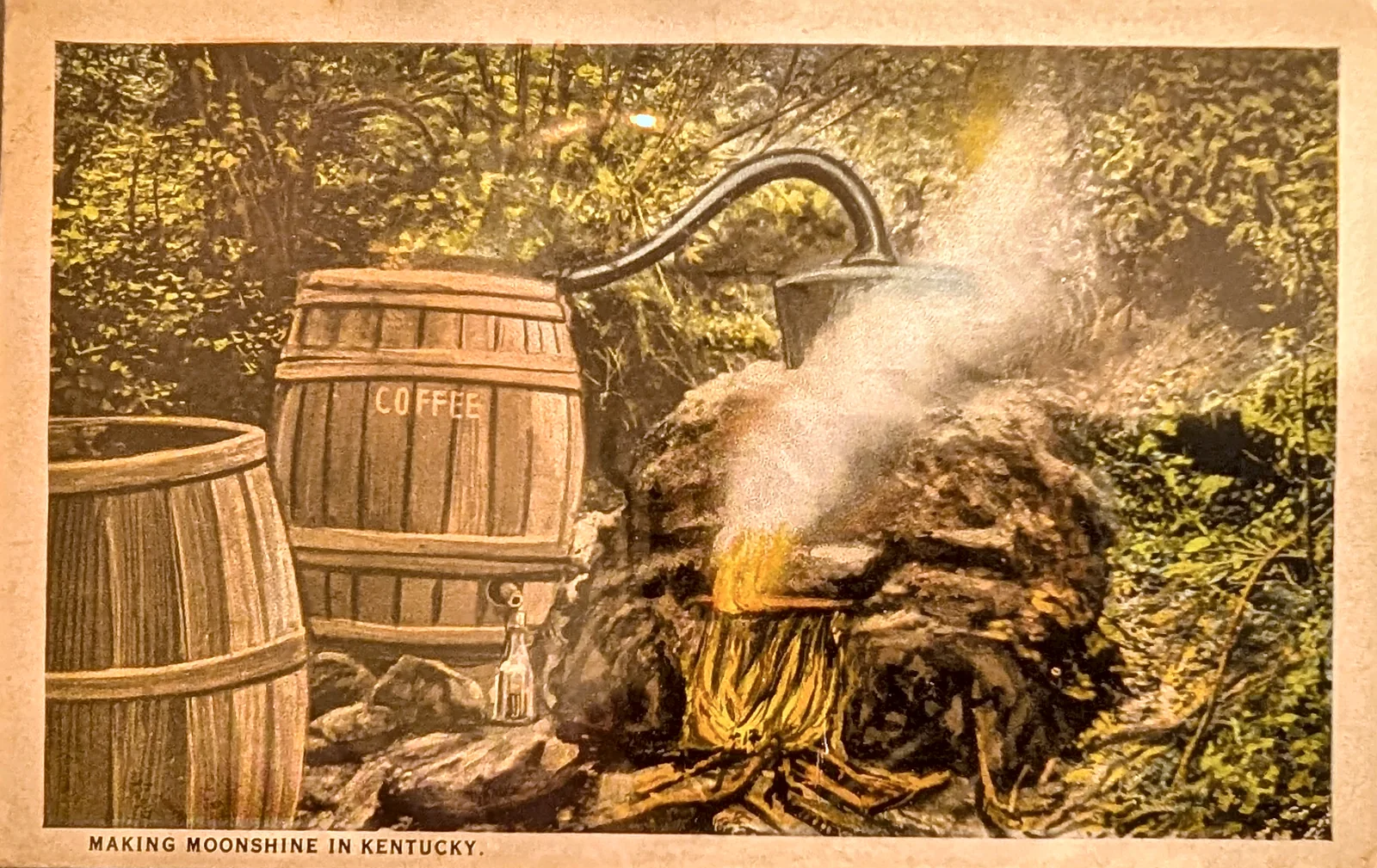
A similar scene in an older style, with a white border. One barrel is marked COFFEE.
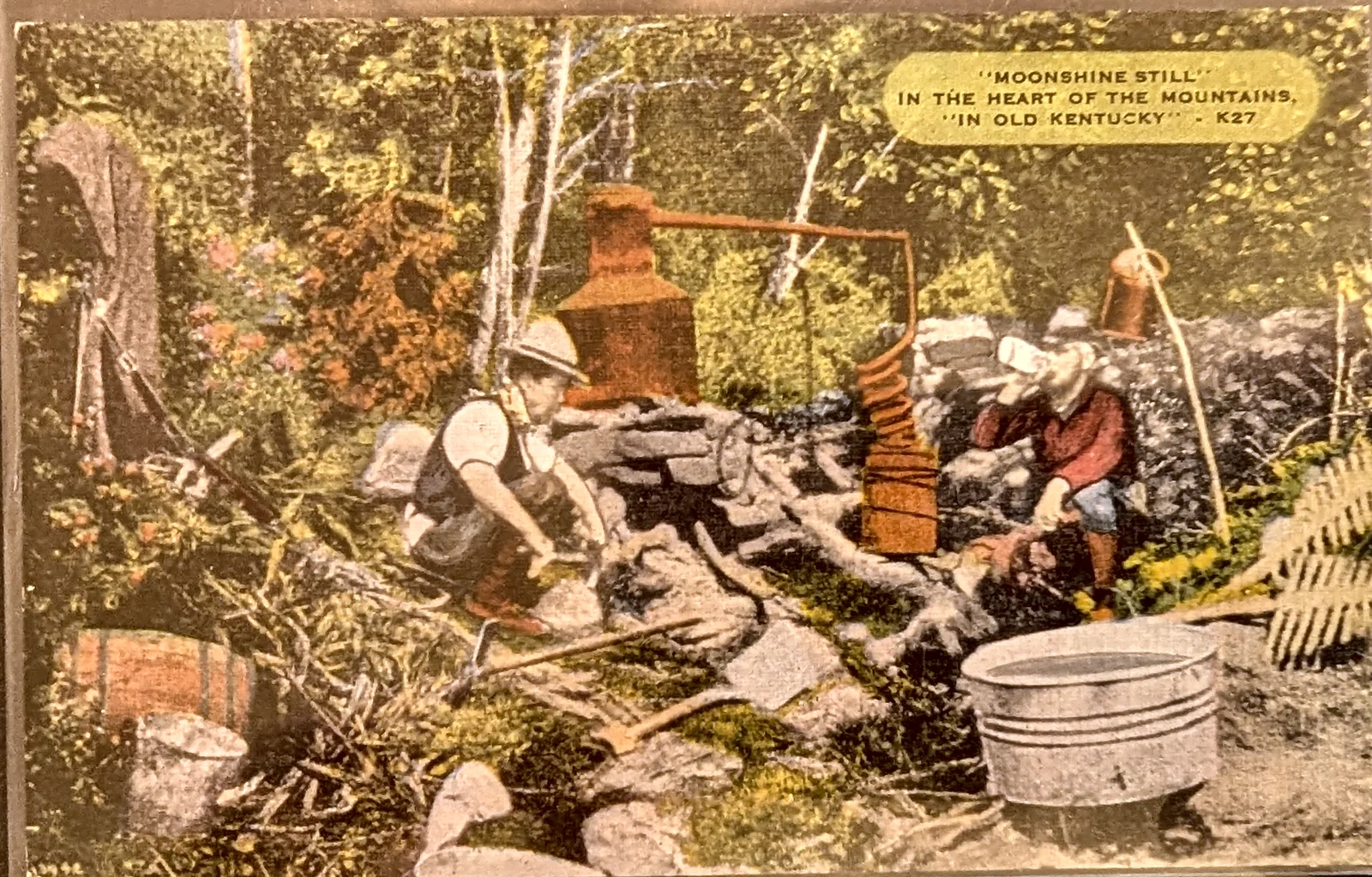
Two men tend a still among the rocks and brush.
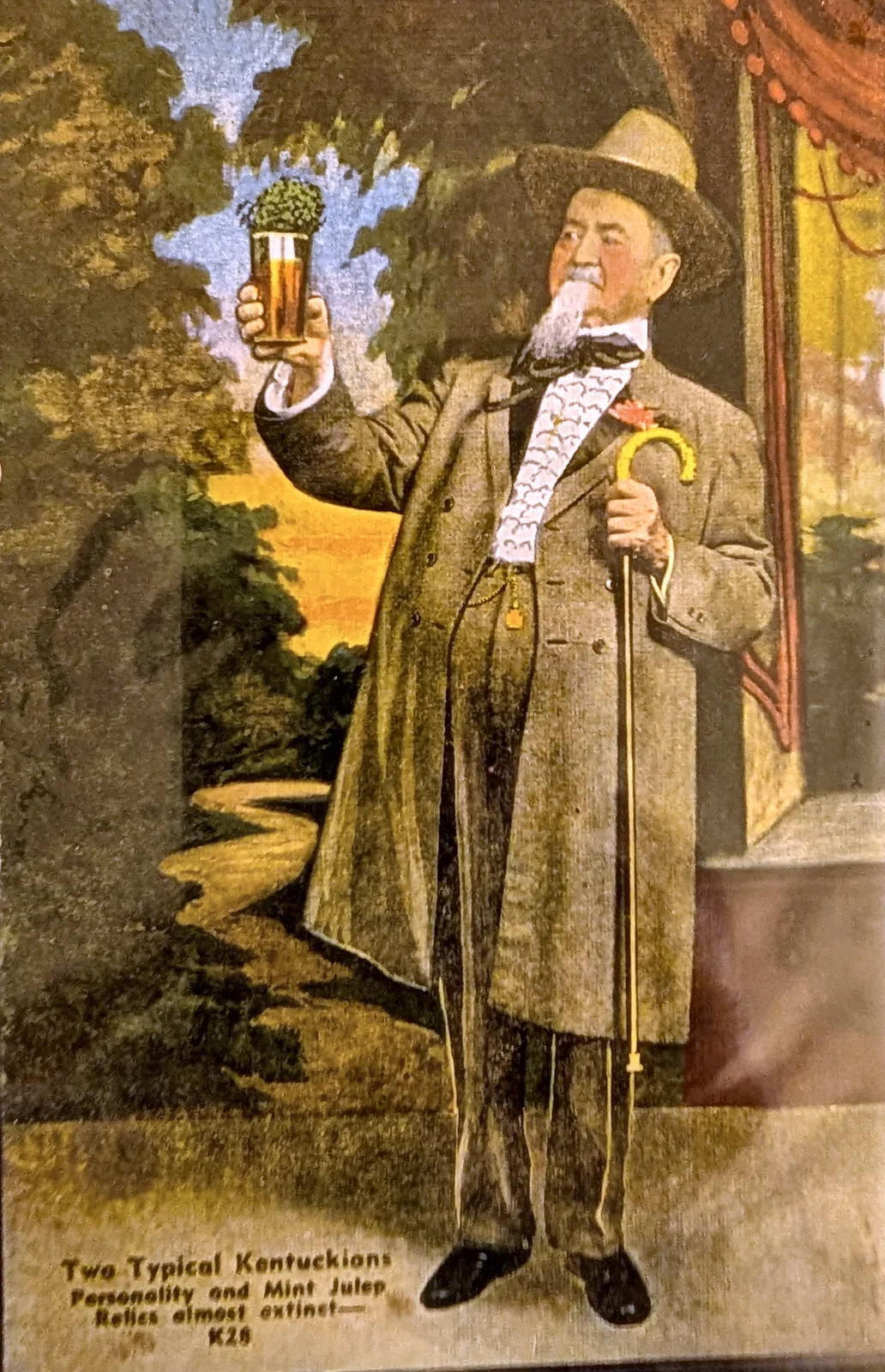
A bearded colonel in a long coat and his mint julep, captioned “Relics almost extinct.”
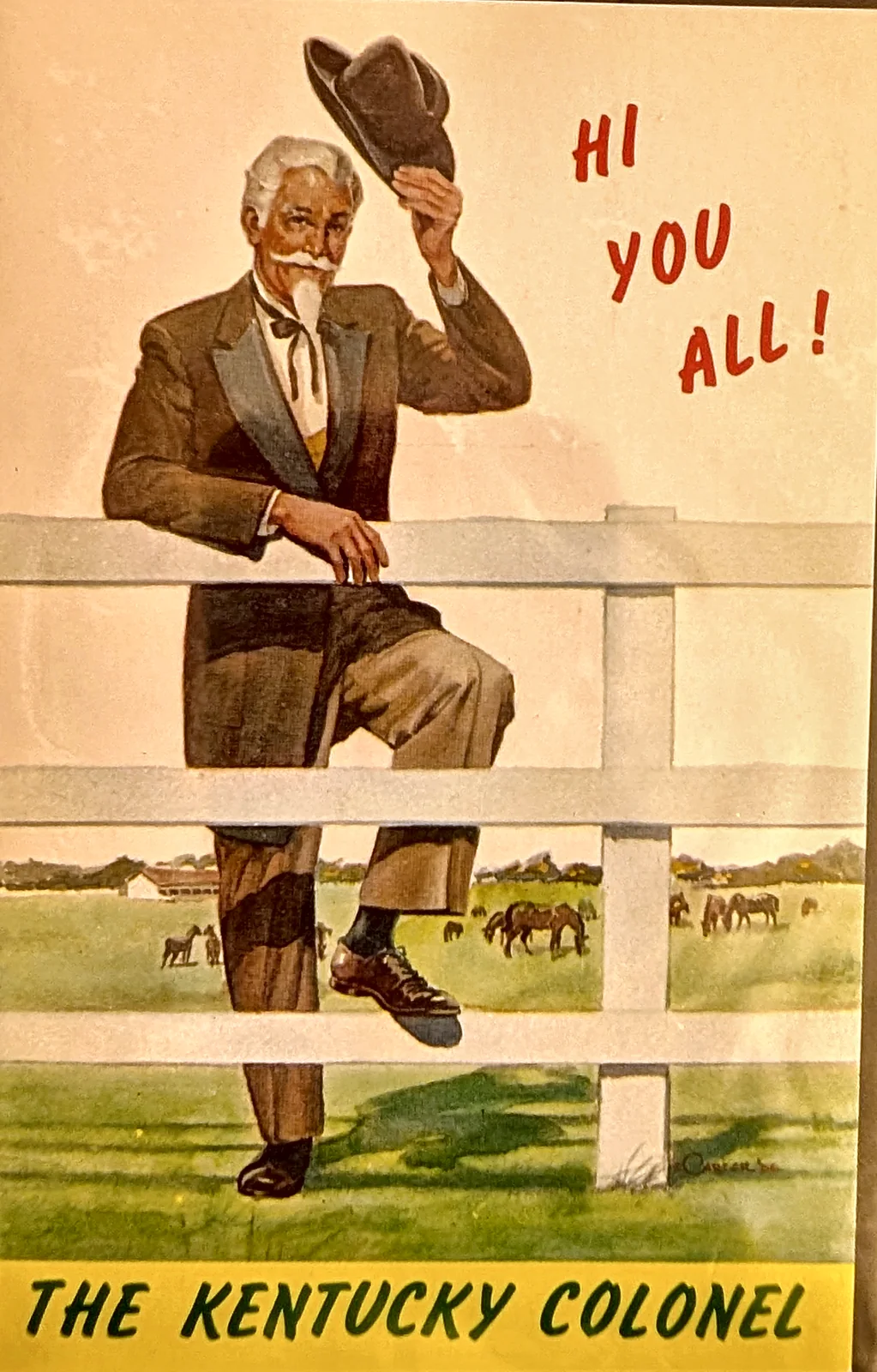
A white-haired colonel tips his hat by a fence, with horses in the pasture behind him.
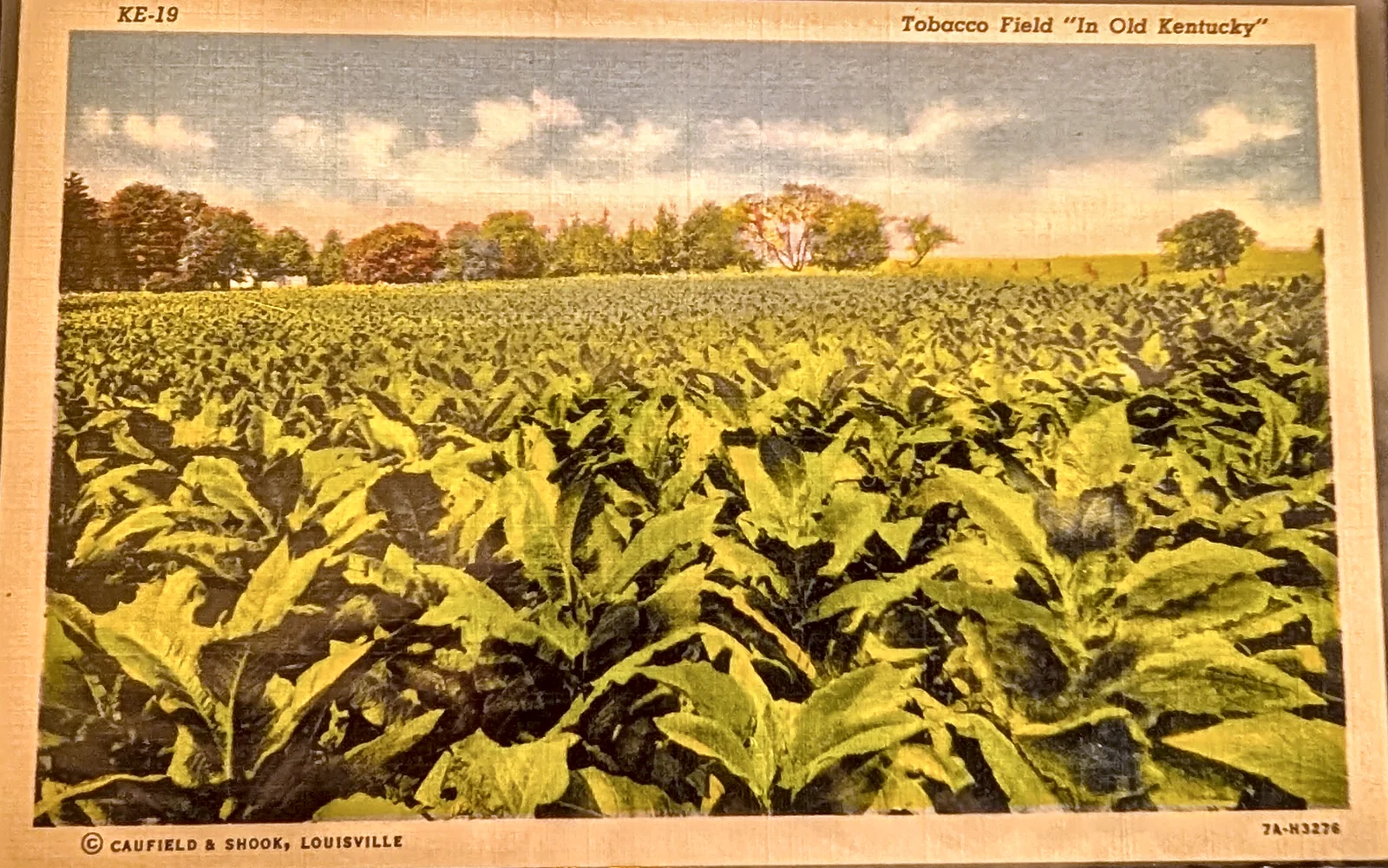
Big tobacco leaves in front and a farmhouse on the horizon.
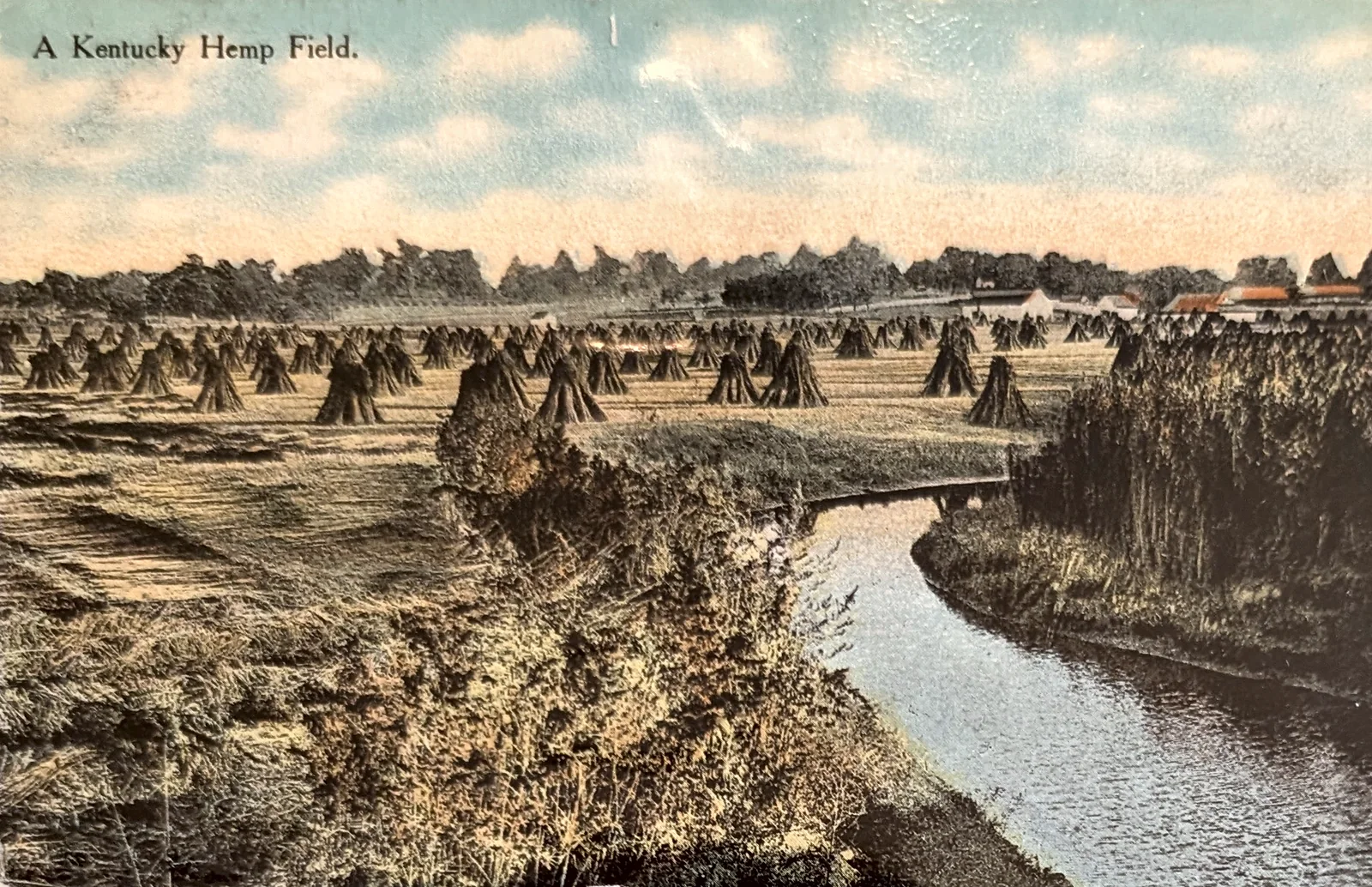
Shocks of hemp standing in rows across the field.
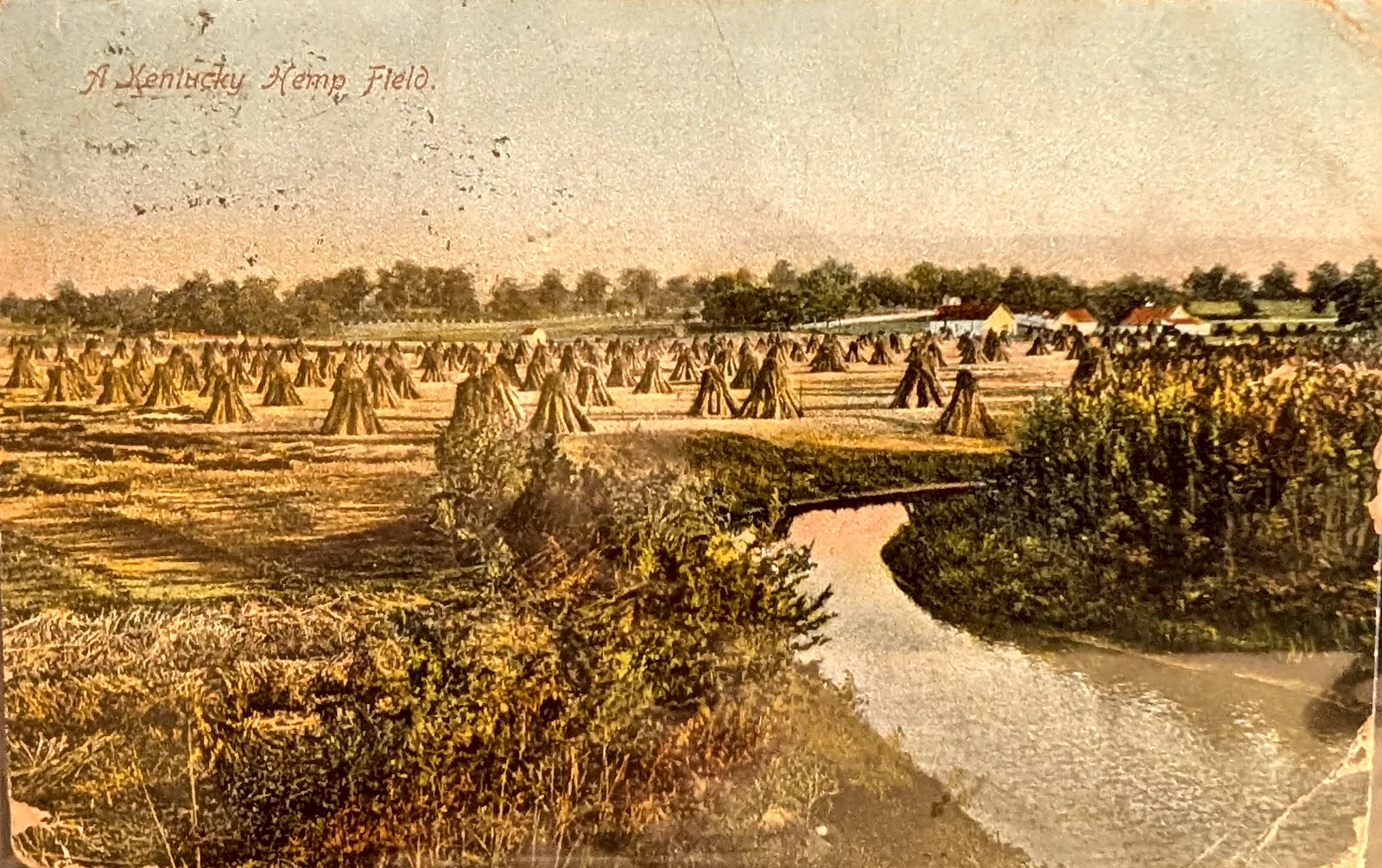
Another hemp field, in softer colours with the title in red script.
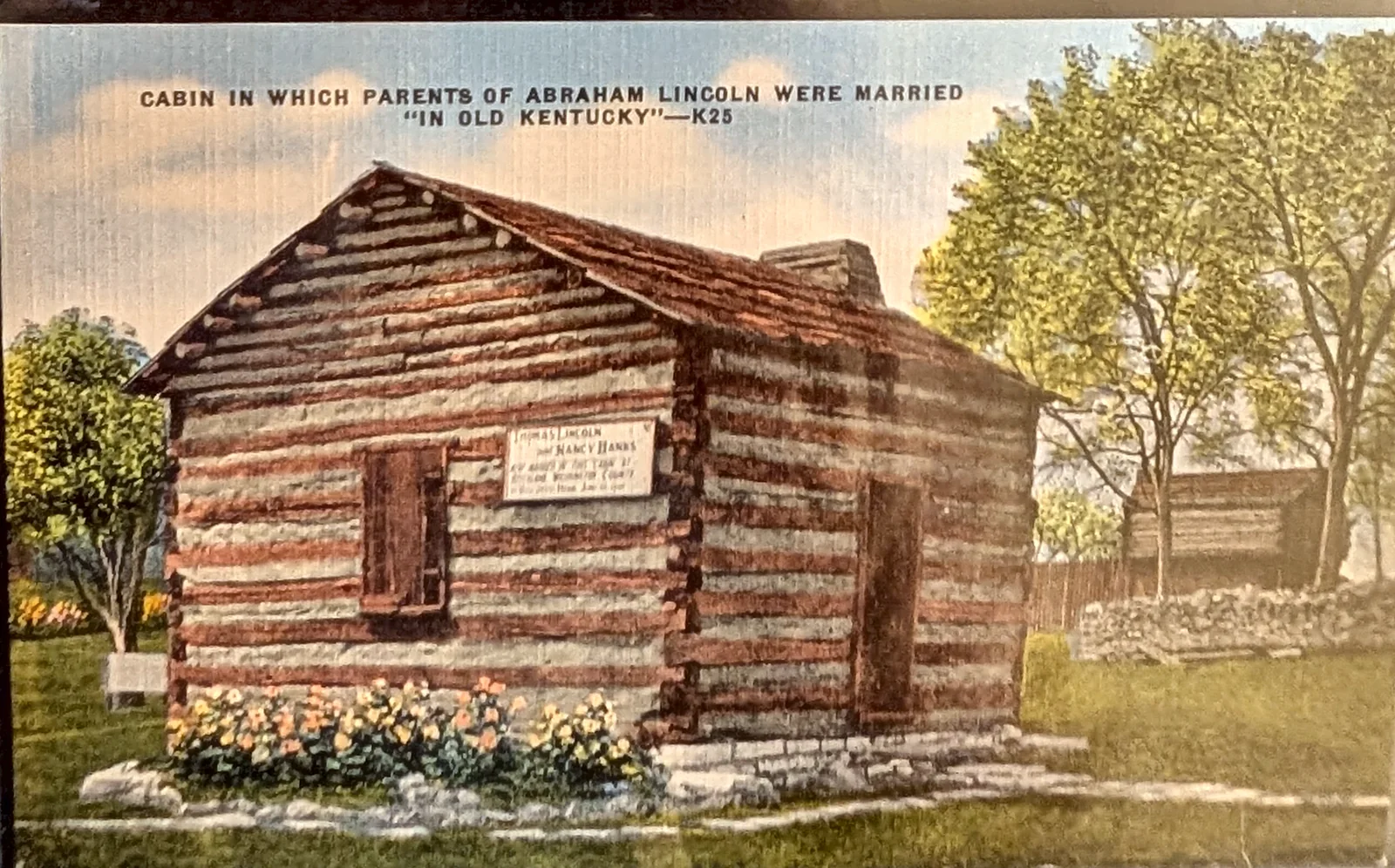
A log cabin with a marker on the front wall.
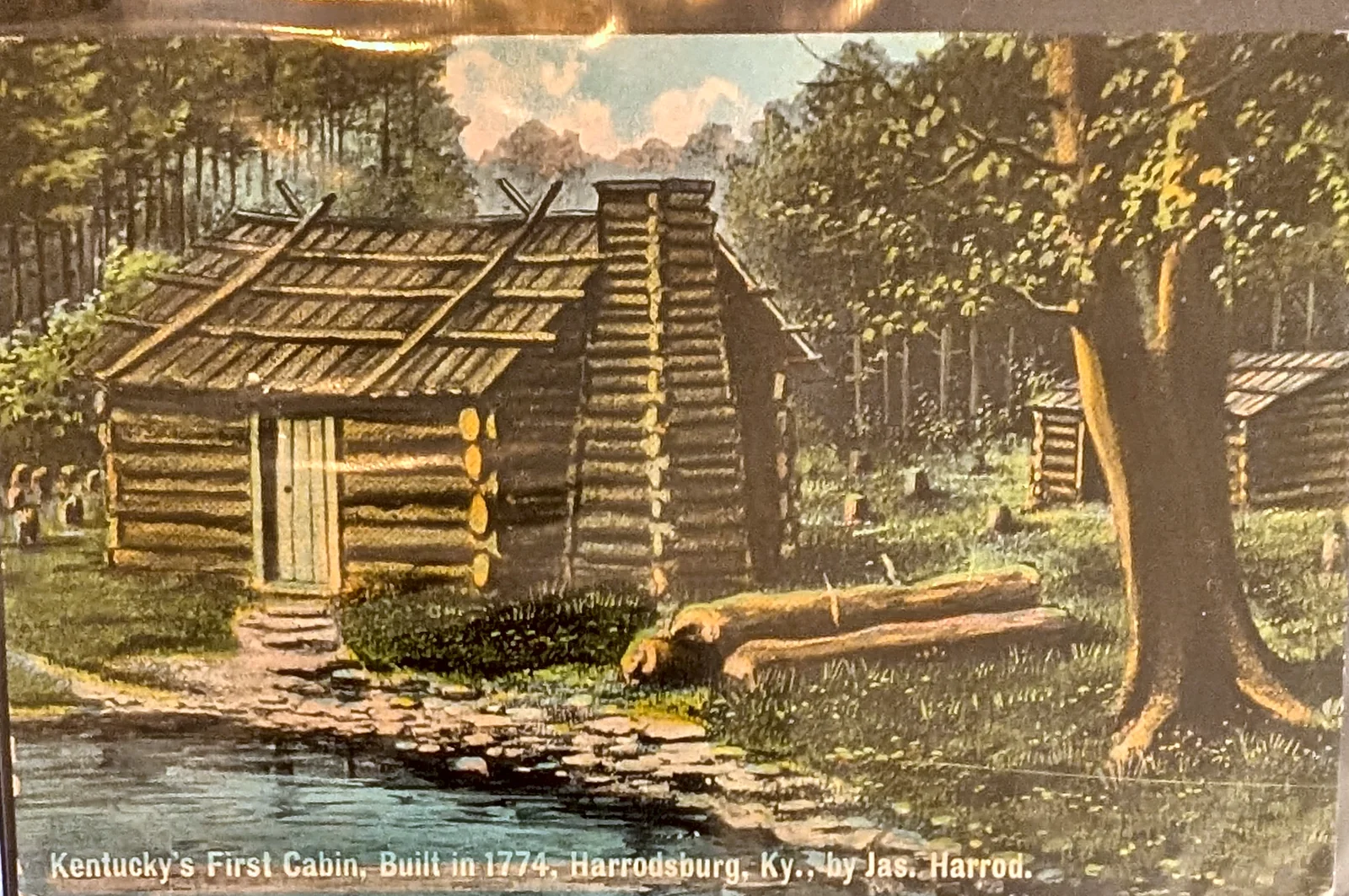
A log cabin by the water under a big tree.
Kentucky Wonders
9 cardsNatural Bridge, Mammoth Cave, Cumberland Falls and High Bridge.
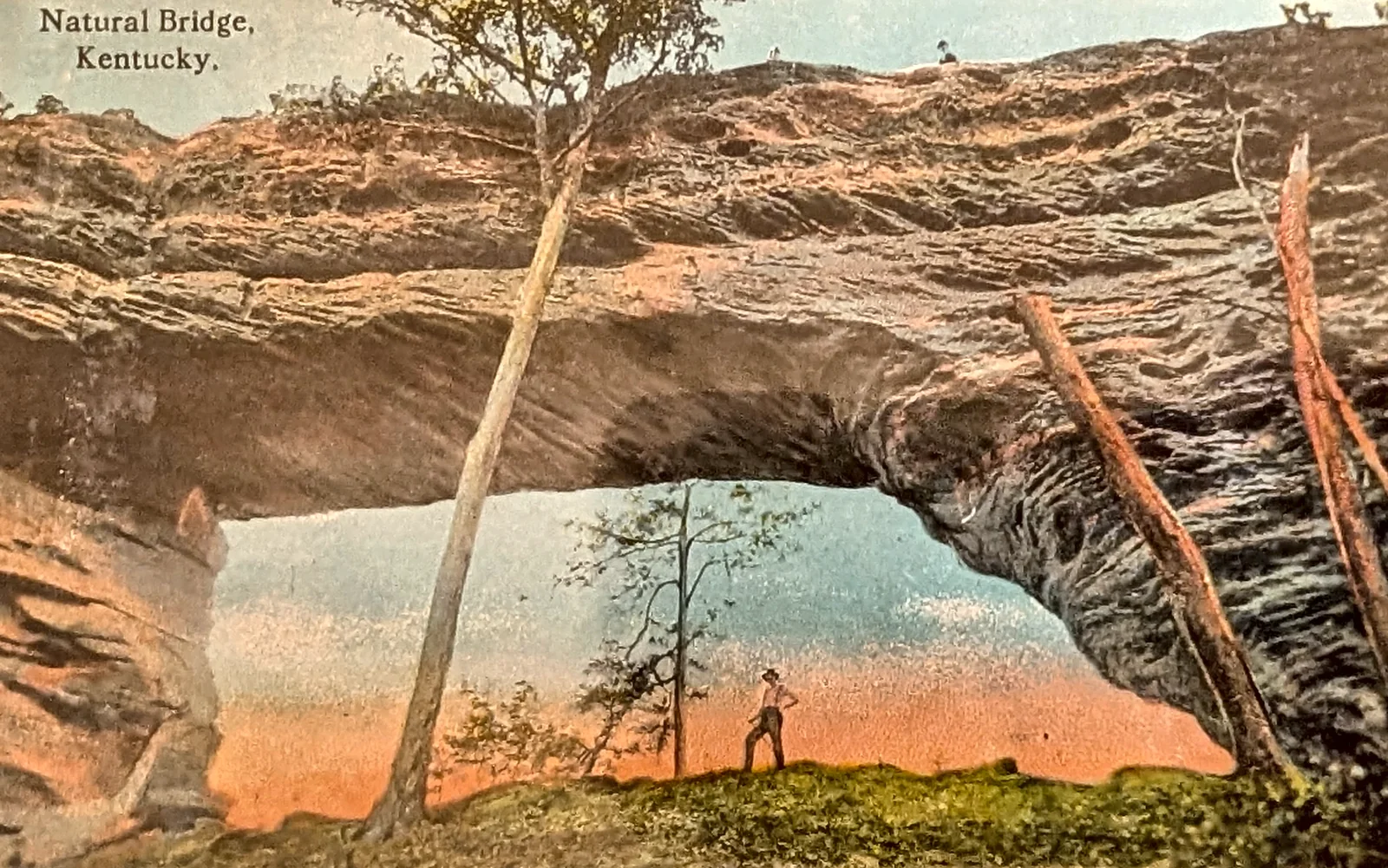
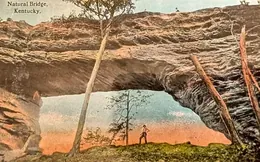
A man stands under the stone arch for scale. He doesn’t take up much of it.
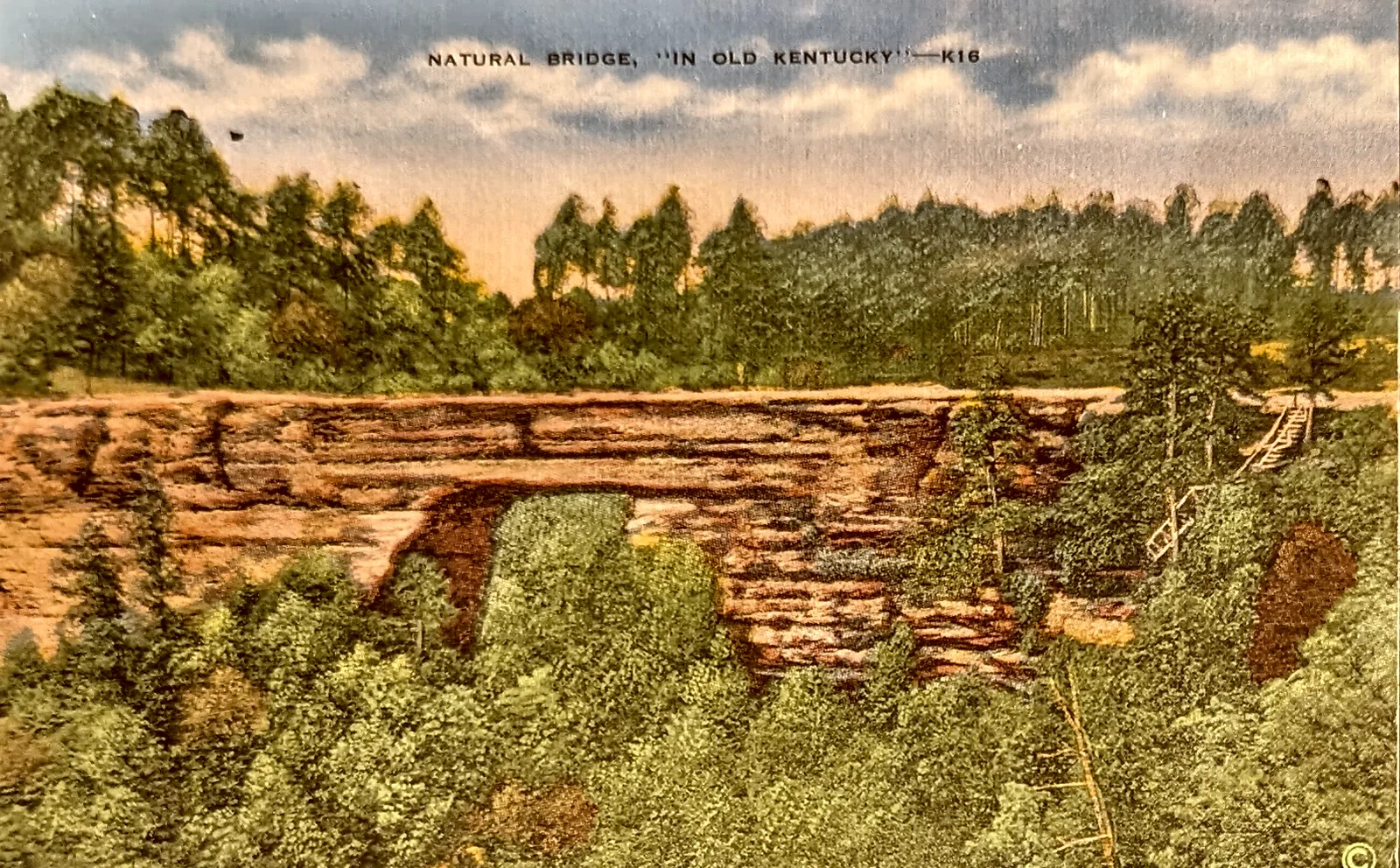
The arch from further off, with pines along the ridge.
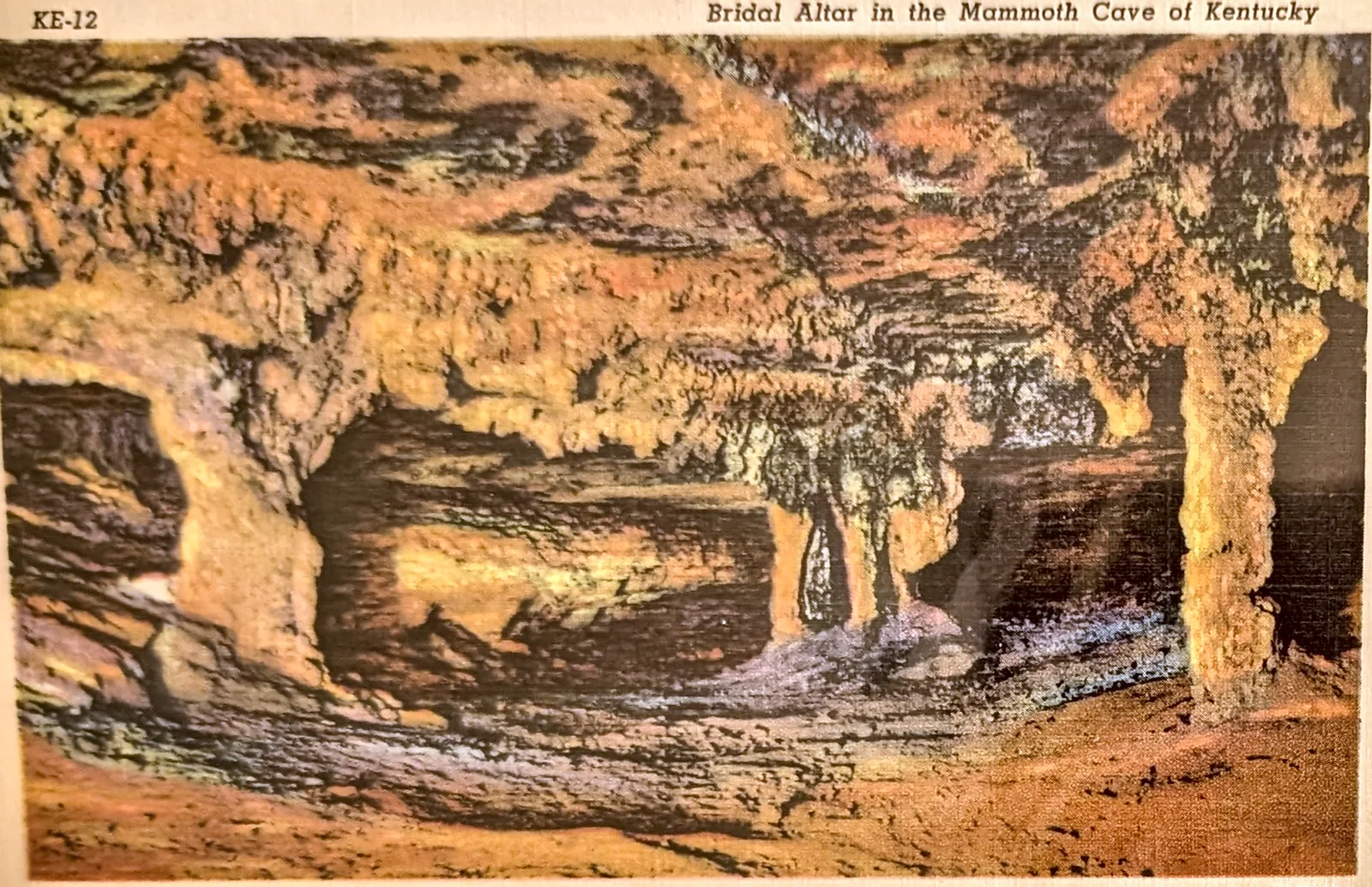
Stone columns form an altar deep in the cave.
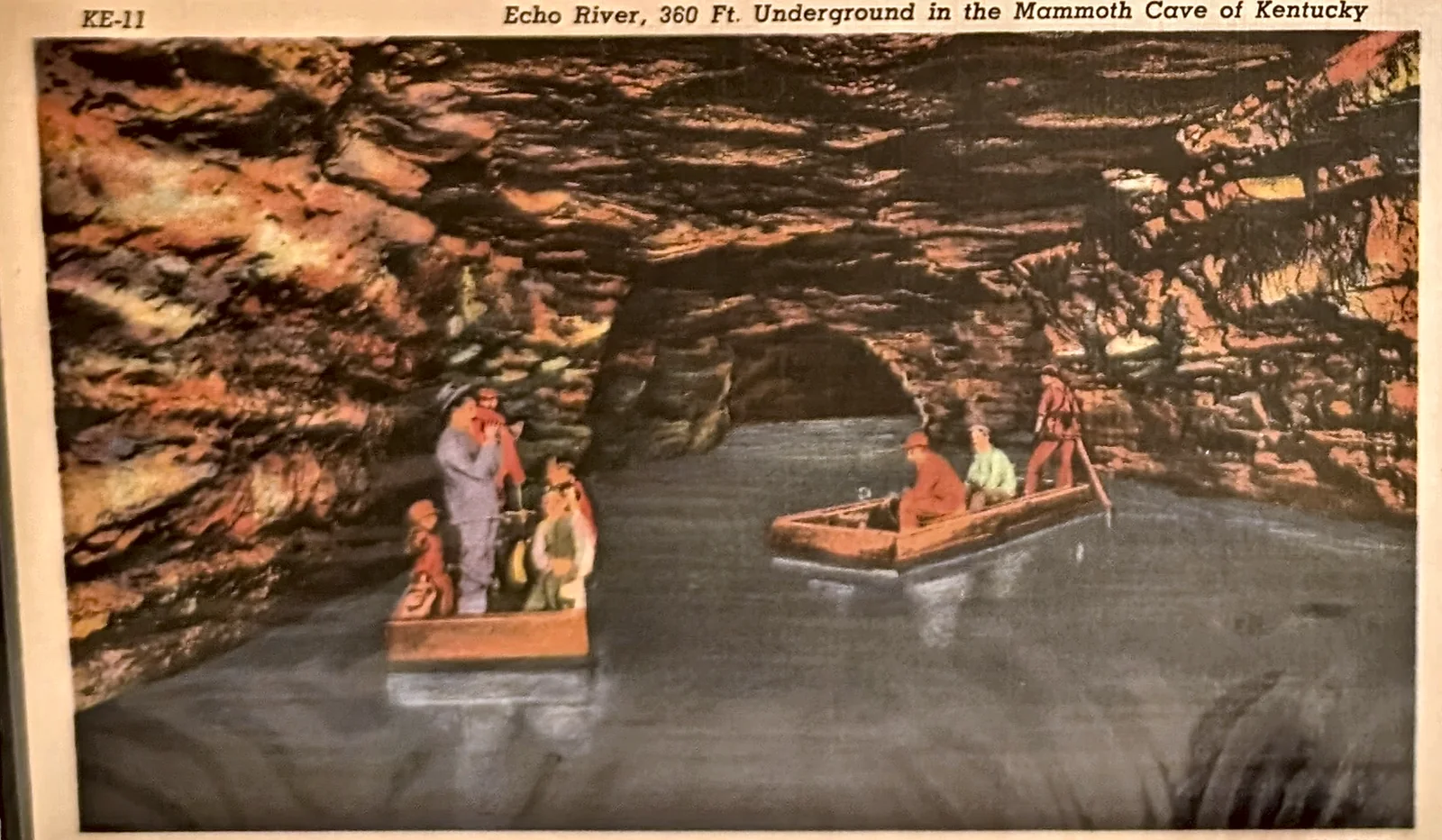
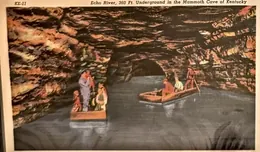
Boats of visitors out on the underground river.
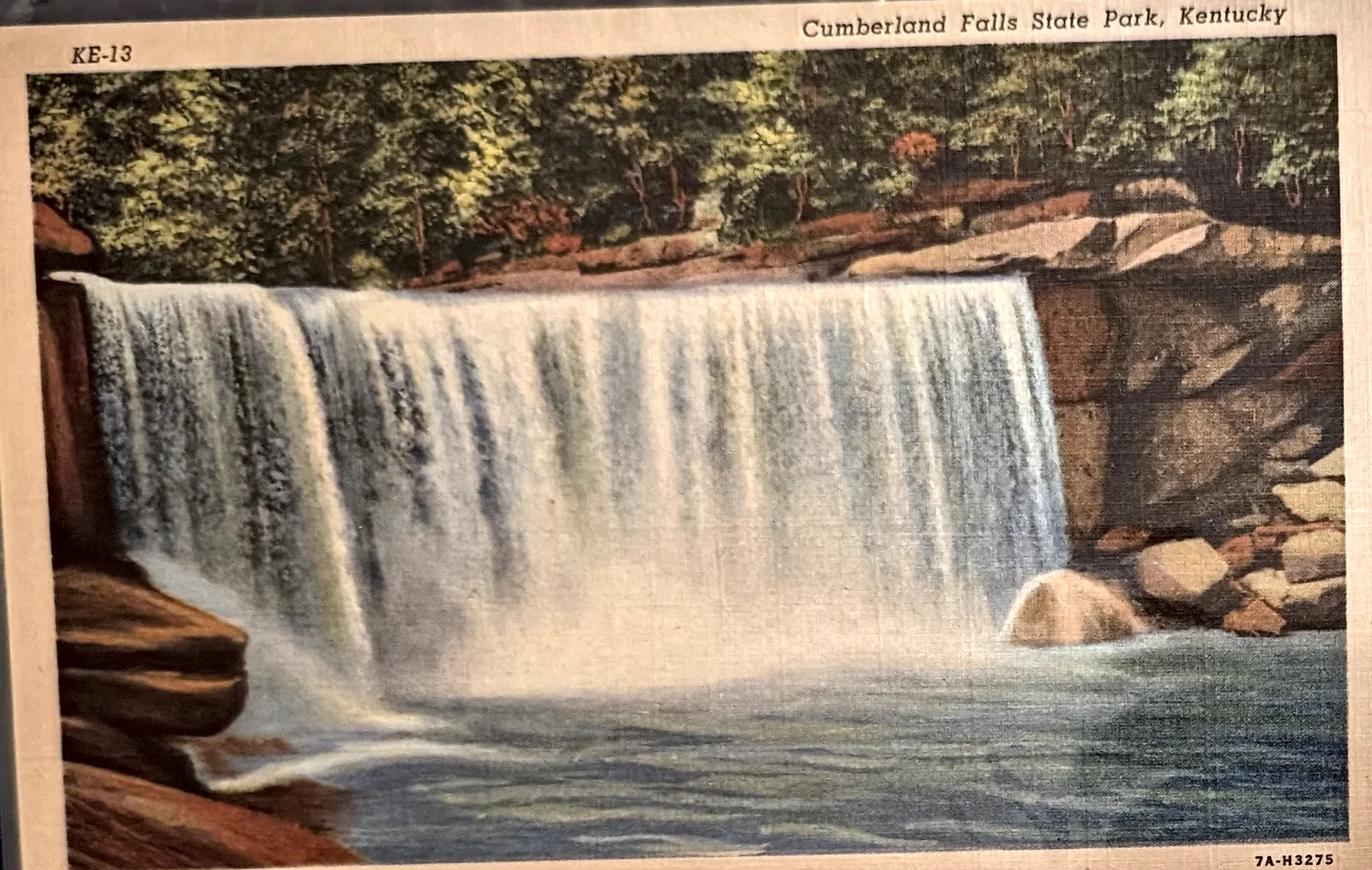
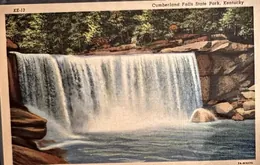
The full width of the falls.
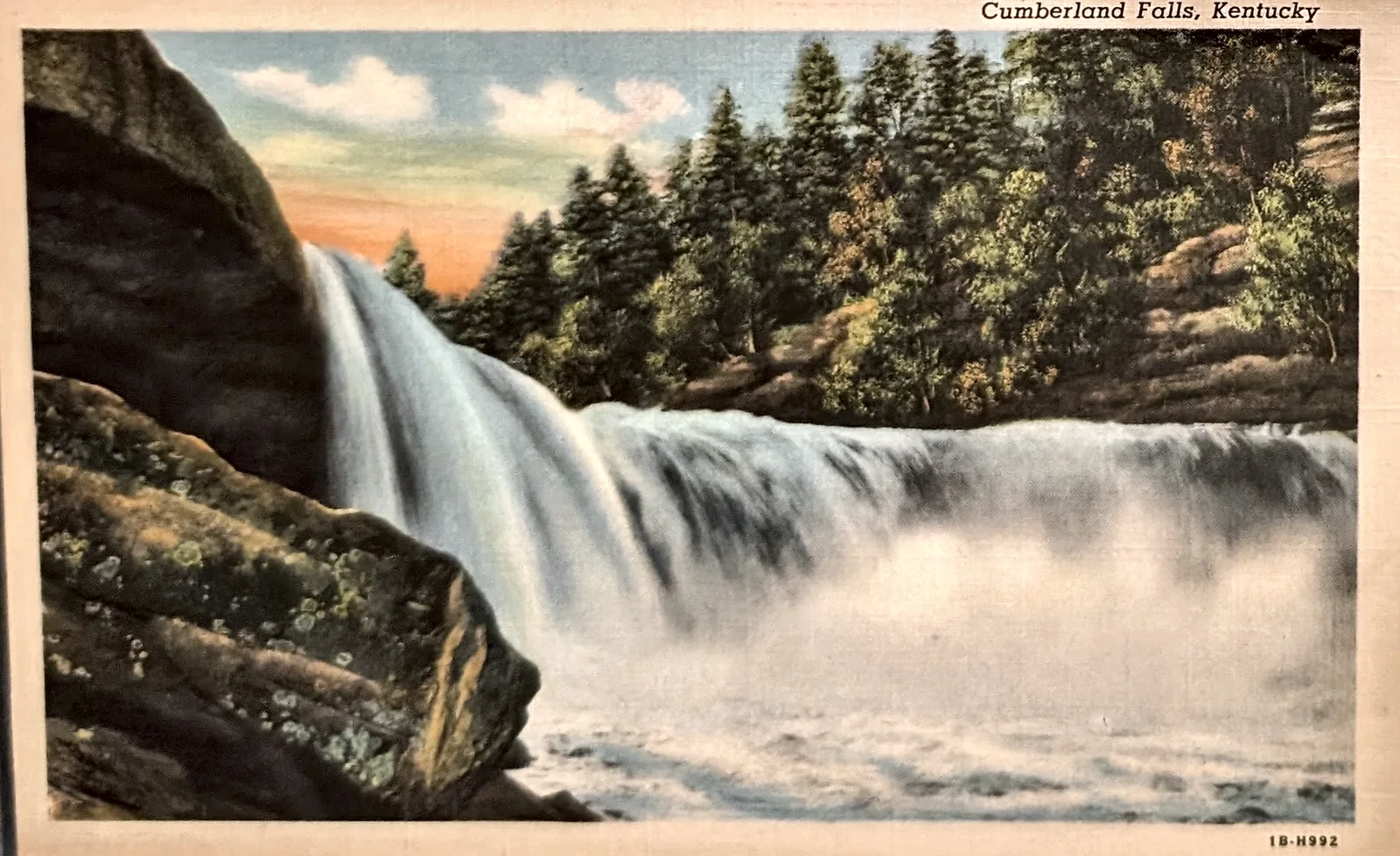
The falls from the side, between the rock wall and the pines.
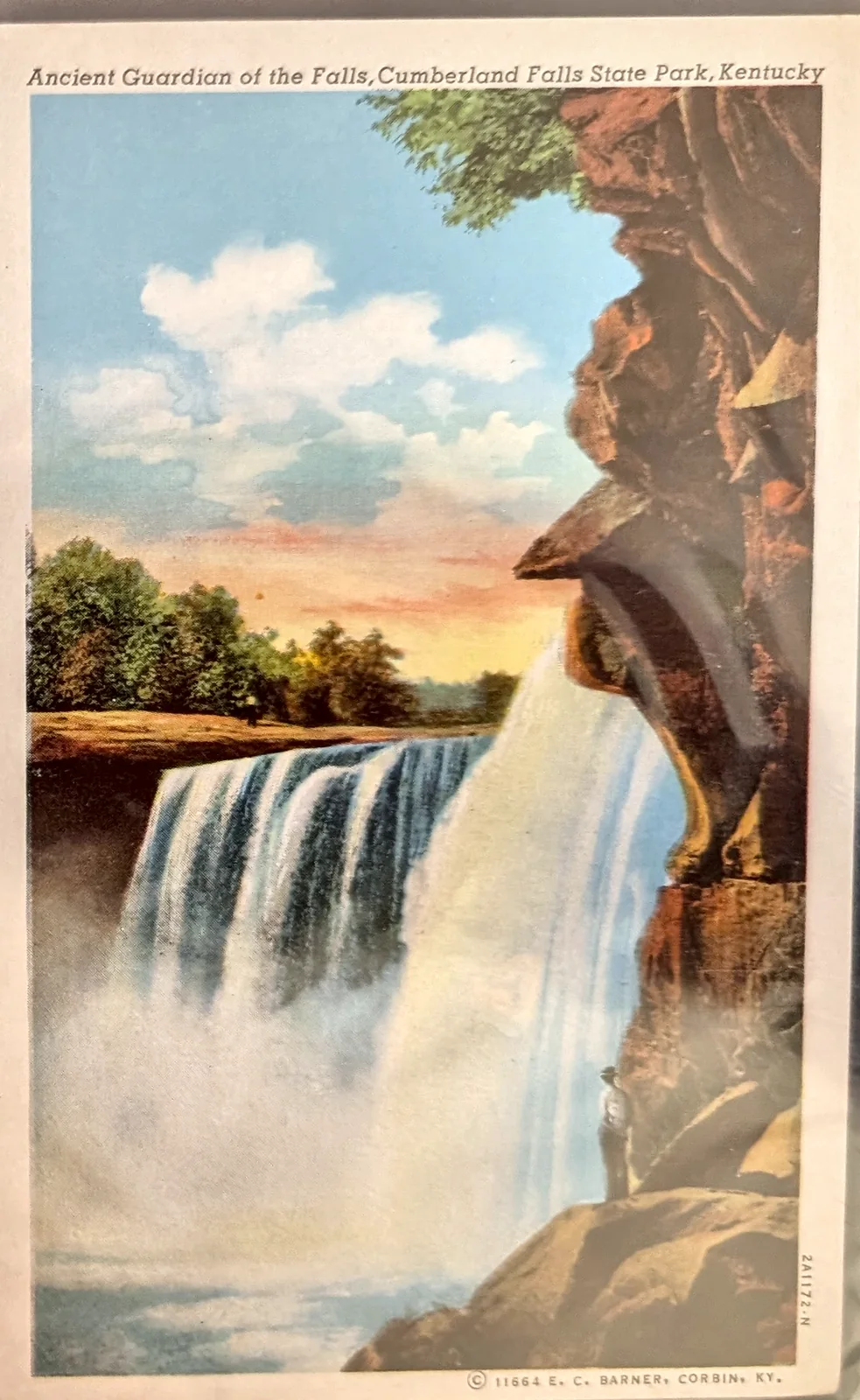
A craggy rock keeps watch over the falls.
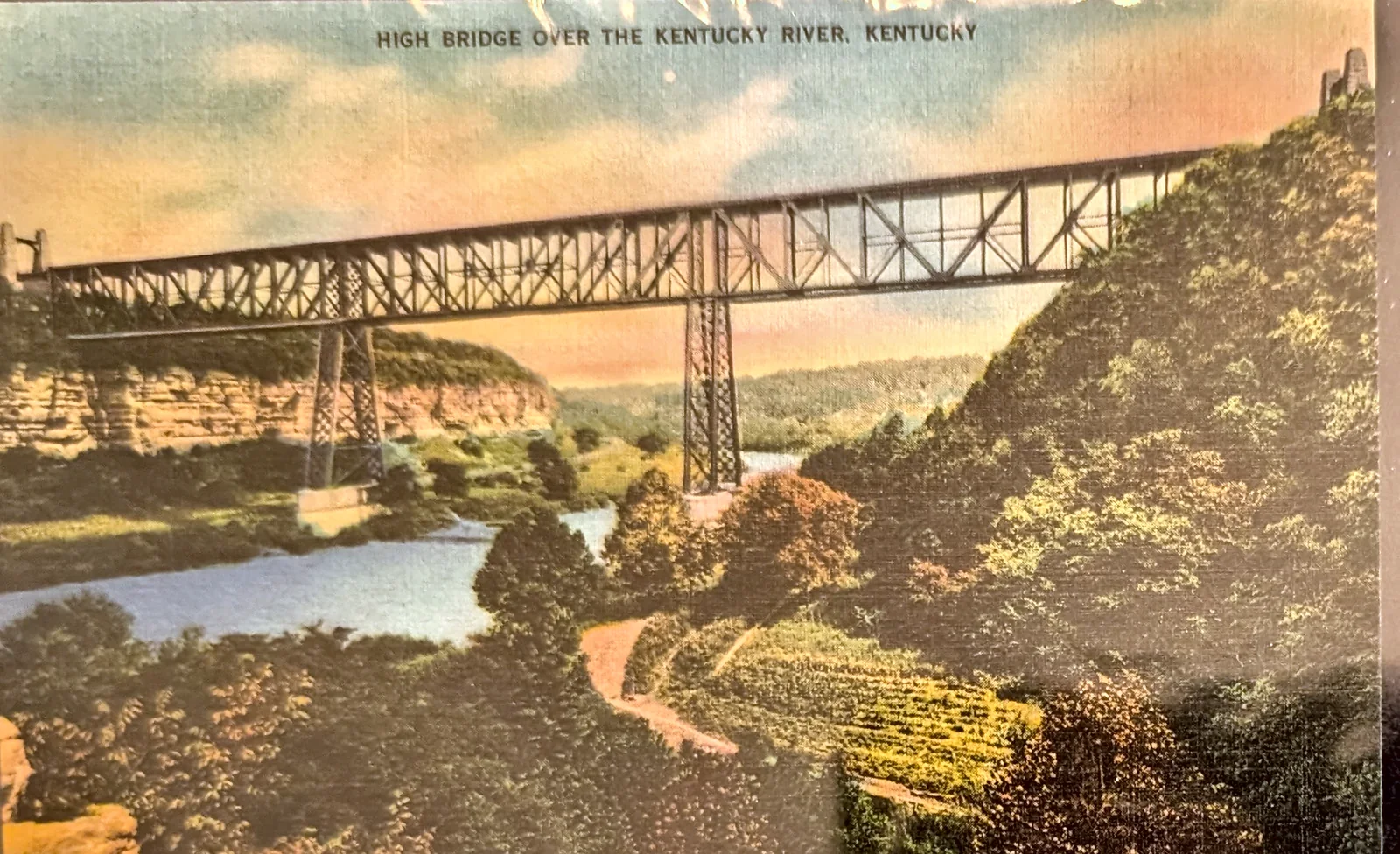
The railroad bridge strung high across the river gorge.
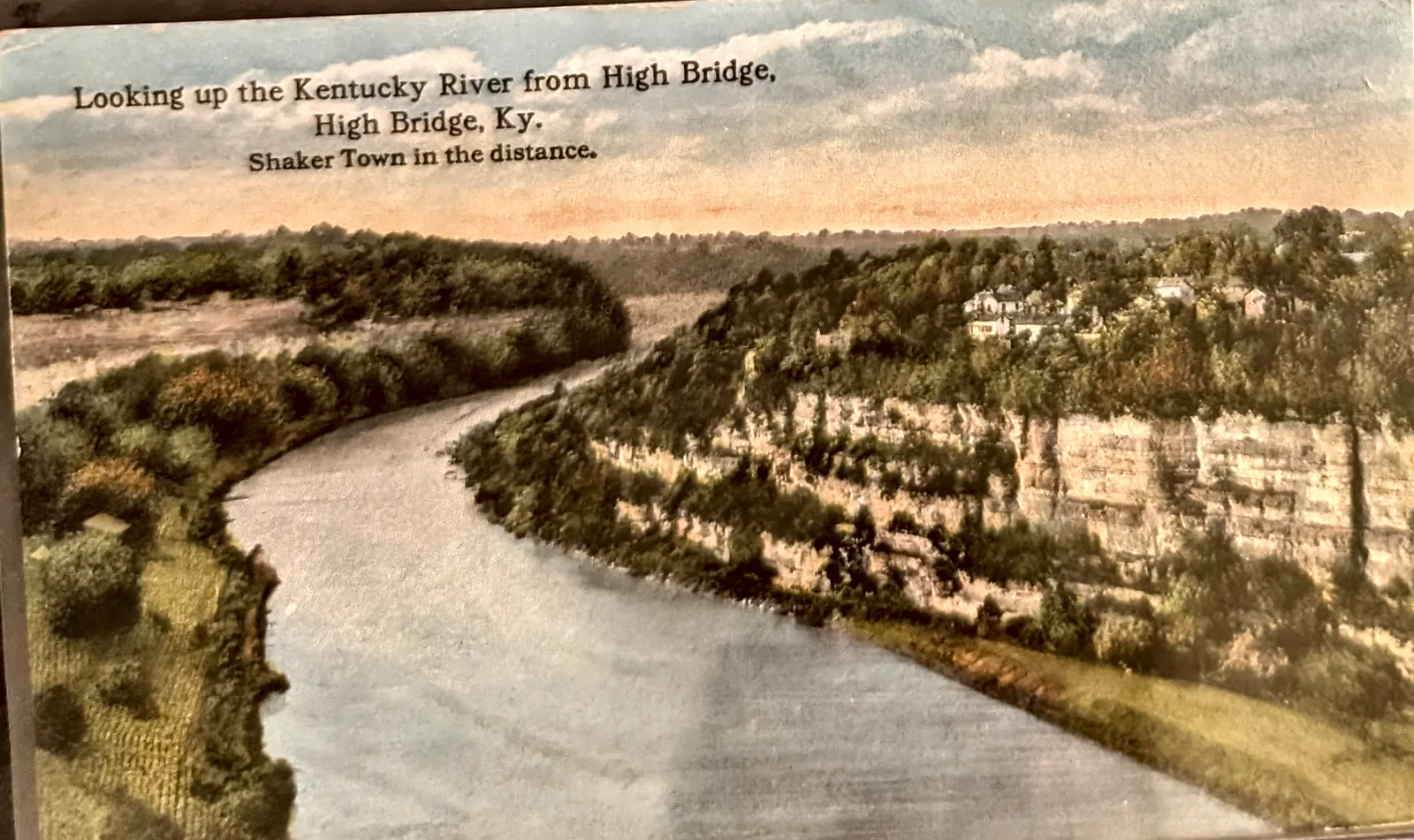
The river bending away between the cliffs.
Louisville & Churchill Downs
3 cardsThe Seelbach and the Downs.
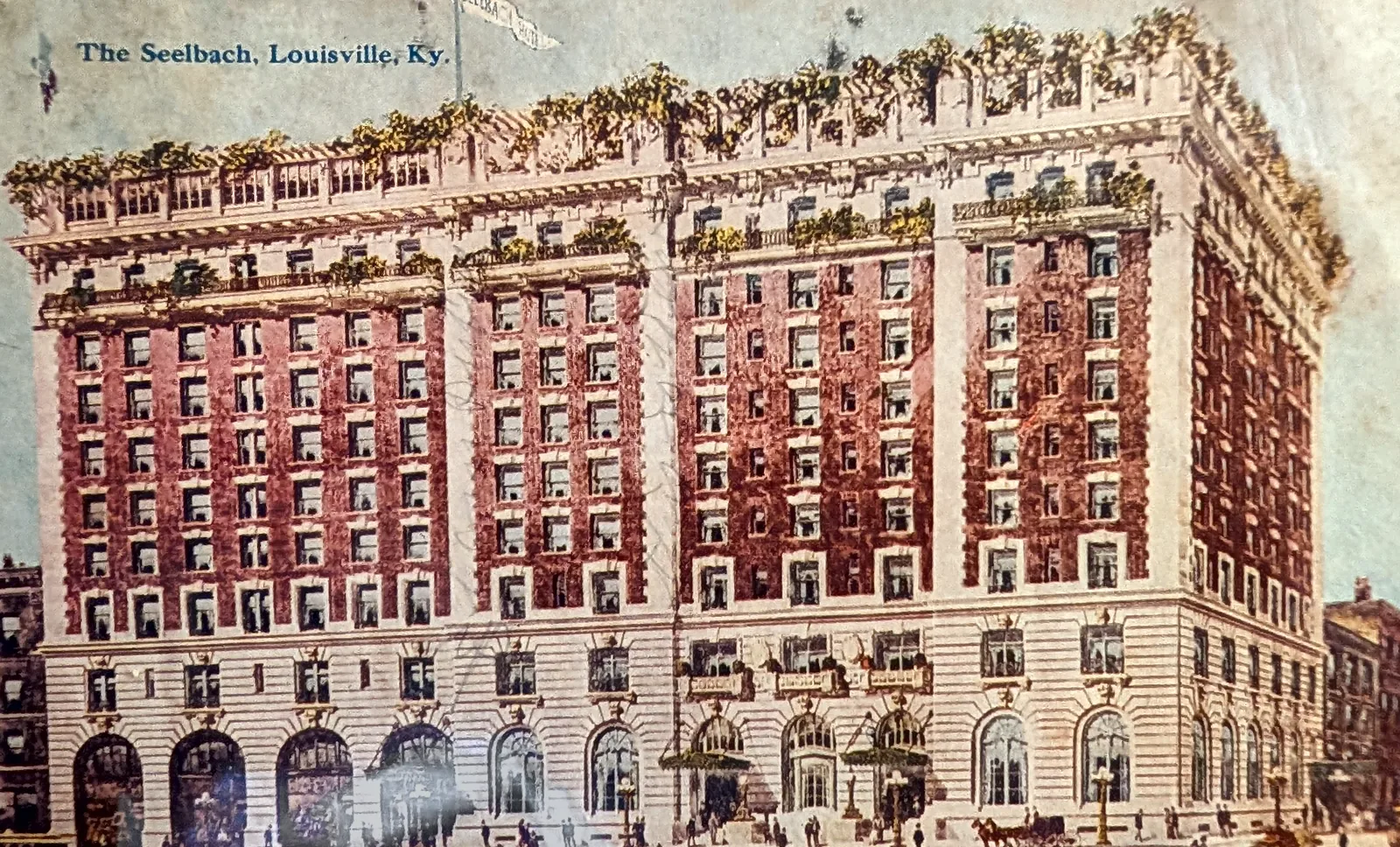
The Seelbach Hotel, which opened in 1905.
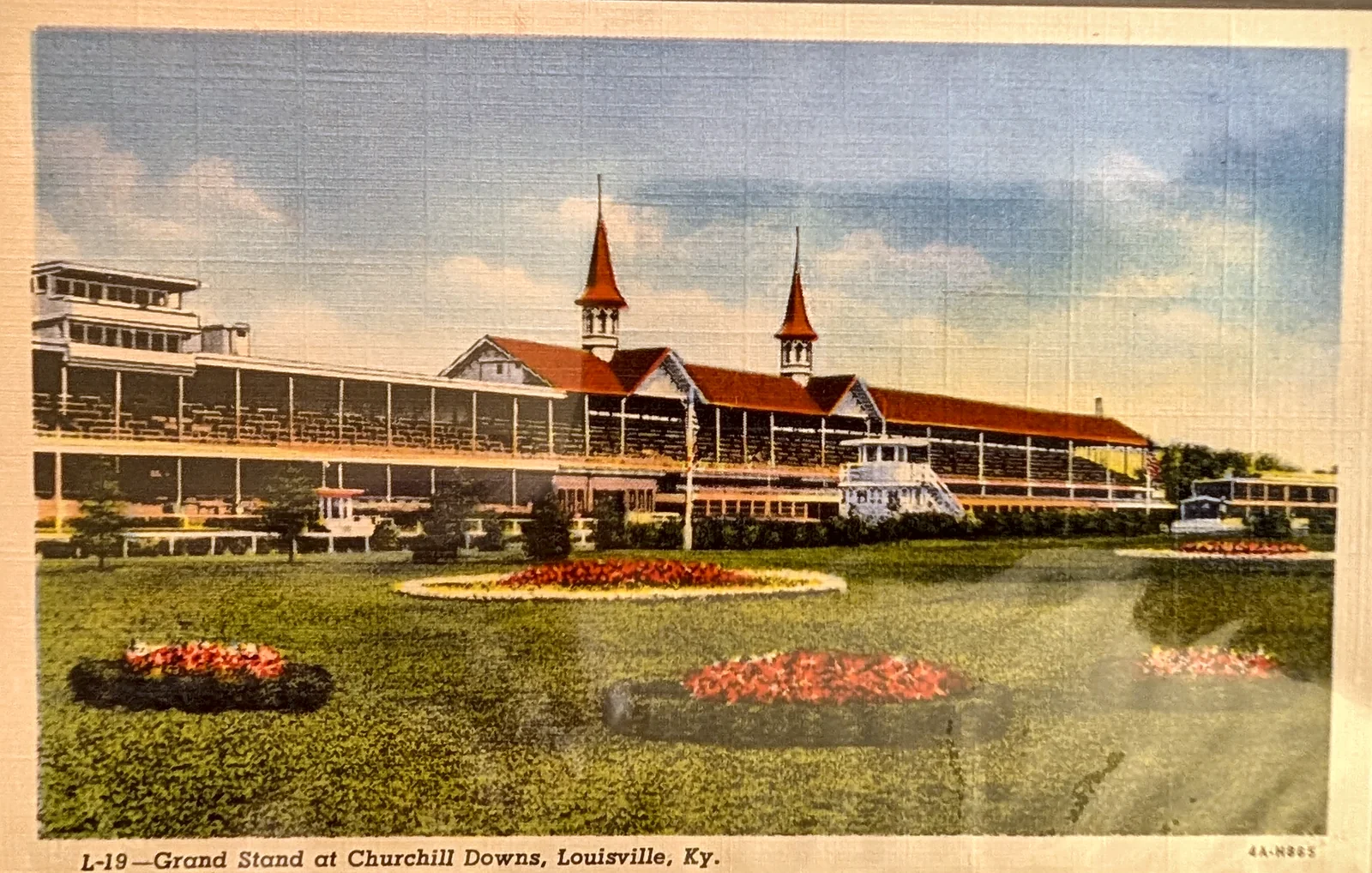
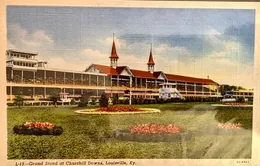
The grandstand and its twin spires, with flower beds in the infield.
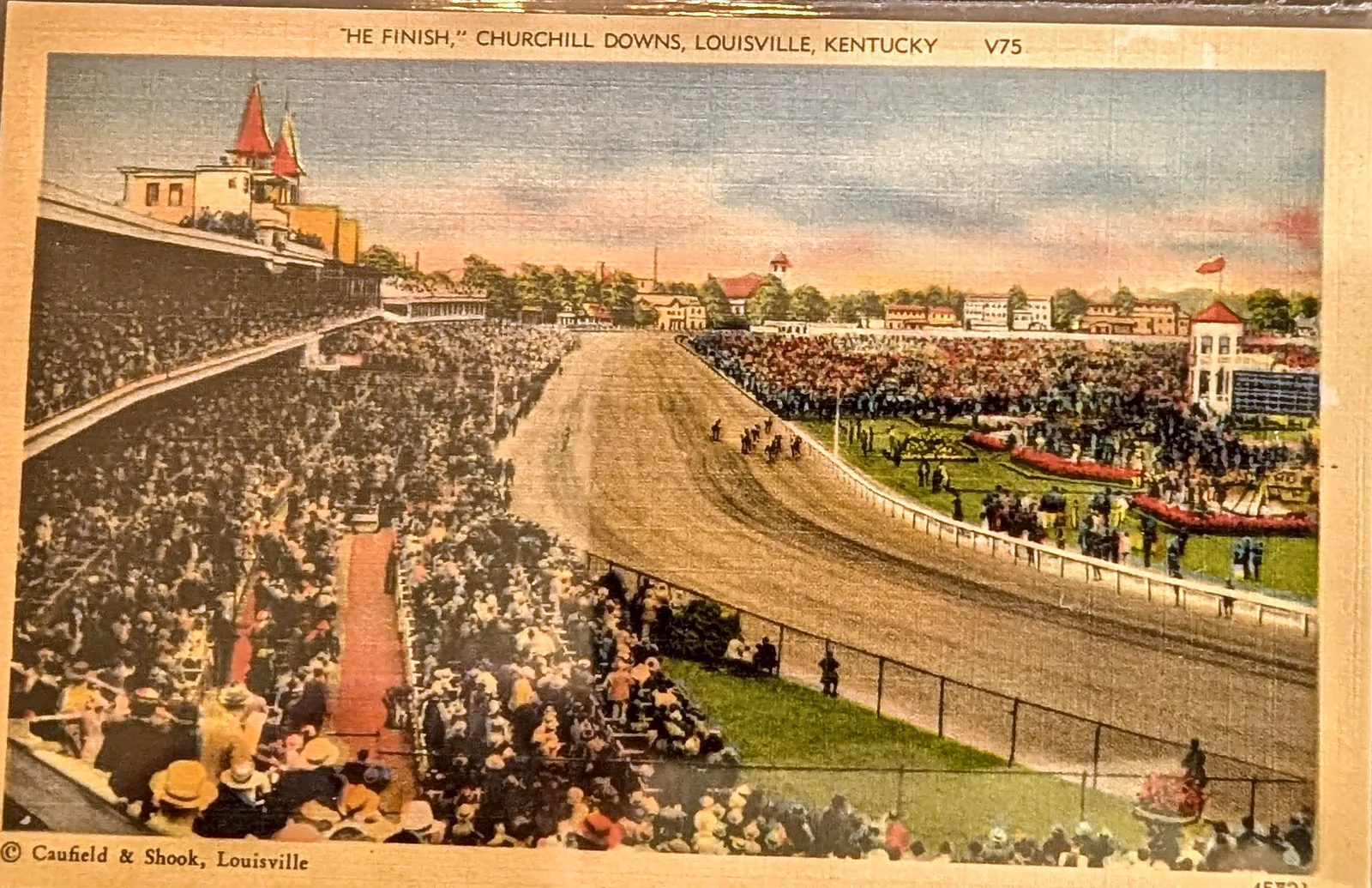
Packed stands and horses coming down the stretch, from high above the crowd.
Around Kentucky & Beyond
4 cardsFrankfort, Fort Knox, a 1905 note to a Frankfort distillery and the bridges to Cincinnati.
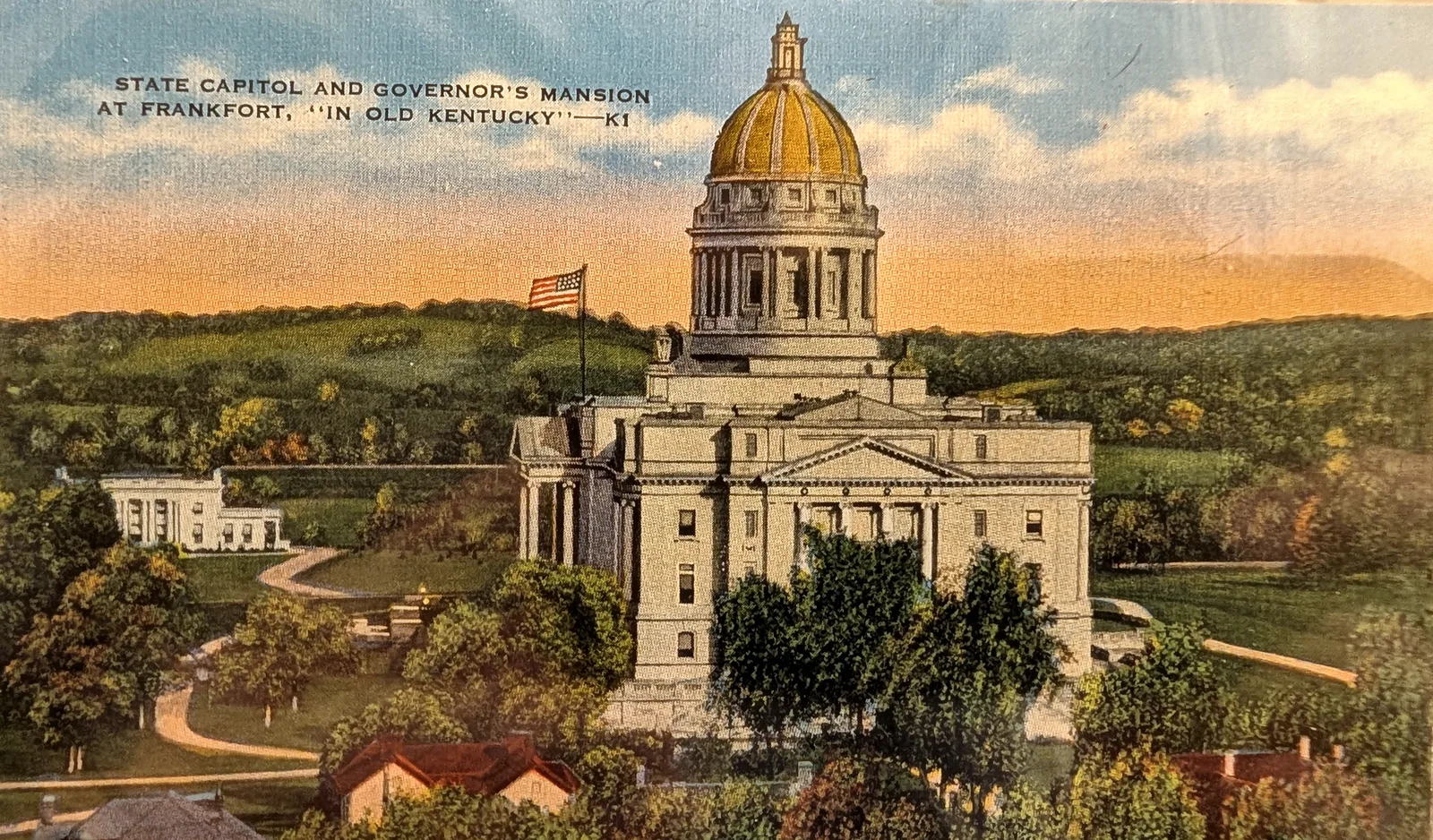
The domed Capitol above the trees, with the Governor’s Mansion to the left.
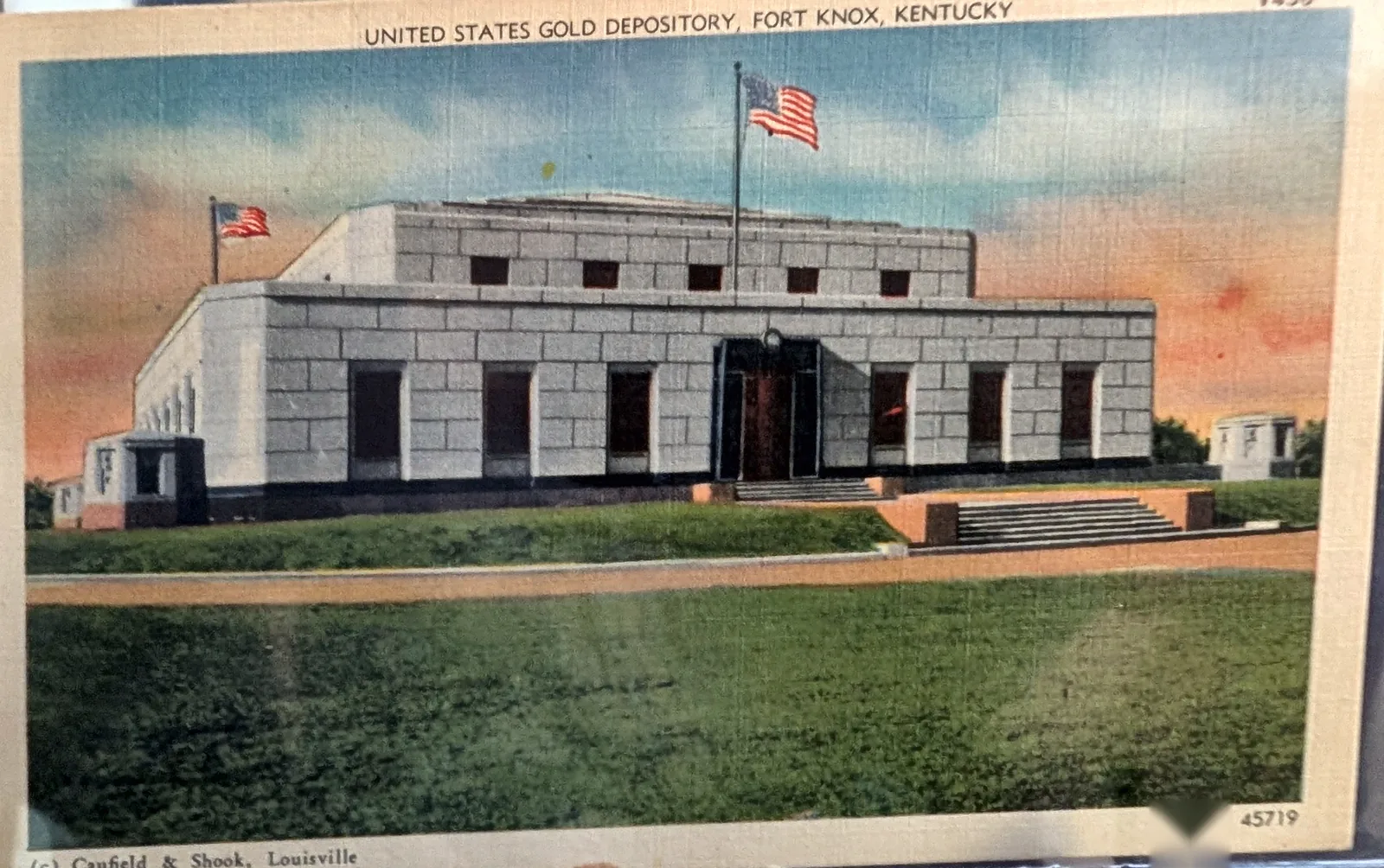
A granite vault with the flag flying, finished in 1936.
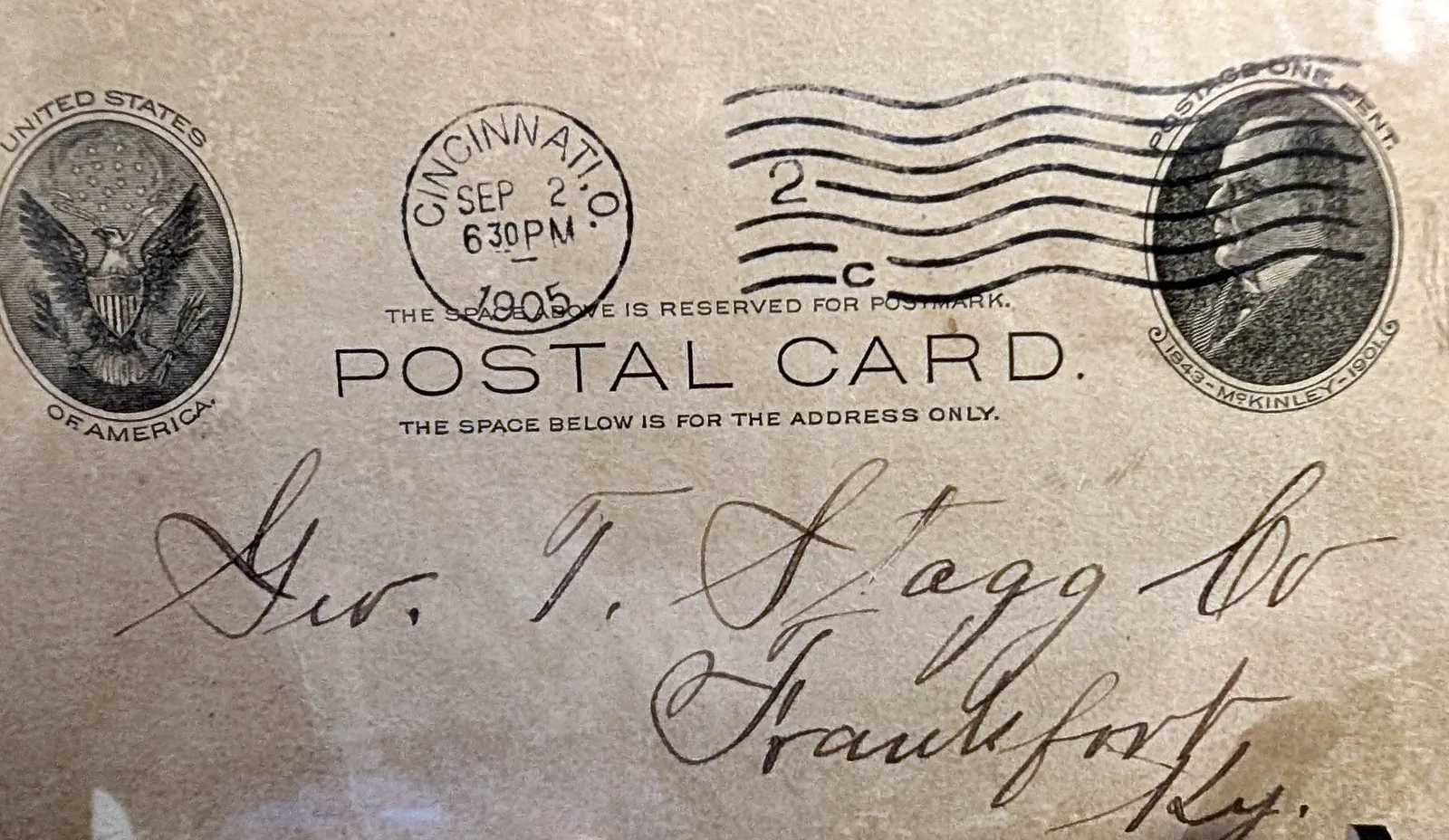
A one-cent postal card sent from Cincinnati to the distillery. Flip it to read the complaint: “Gents, In your letter of Aug 31/05 you wrote me that you sent by express a sample of O.F.C. … I have not as yet received same. Trusting to hear from you immediately…” O.F.C. was a Stagg brand. More Stagg is on the Bottle Cellar’s Stagg Shelf.
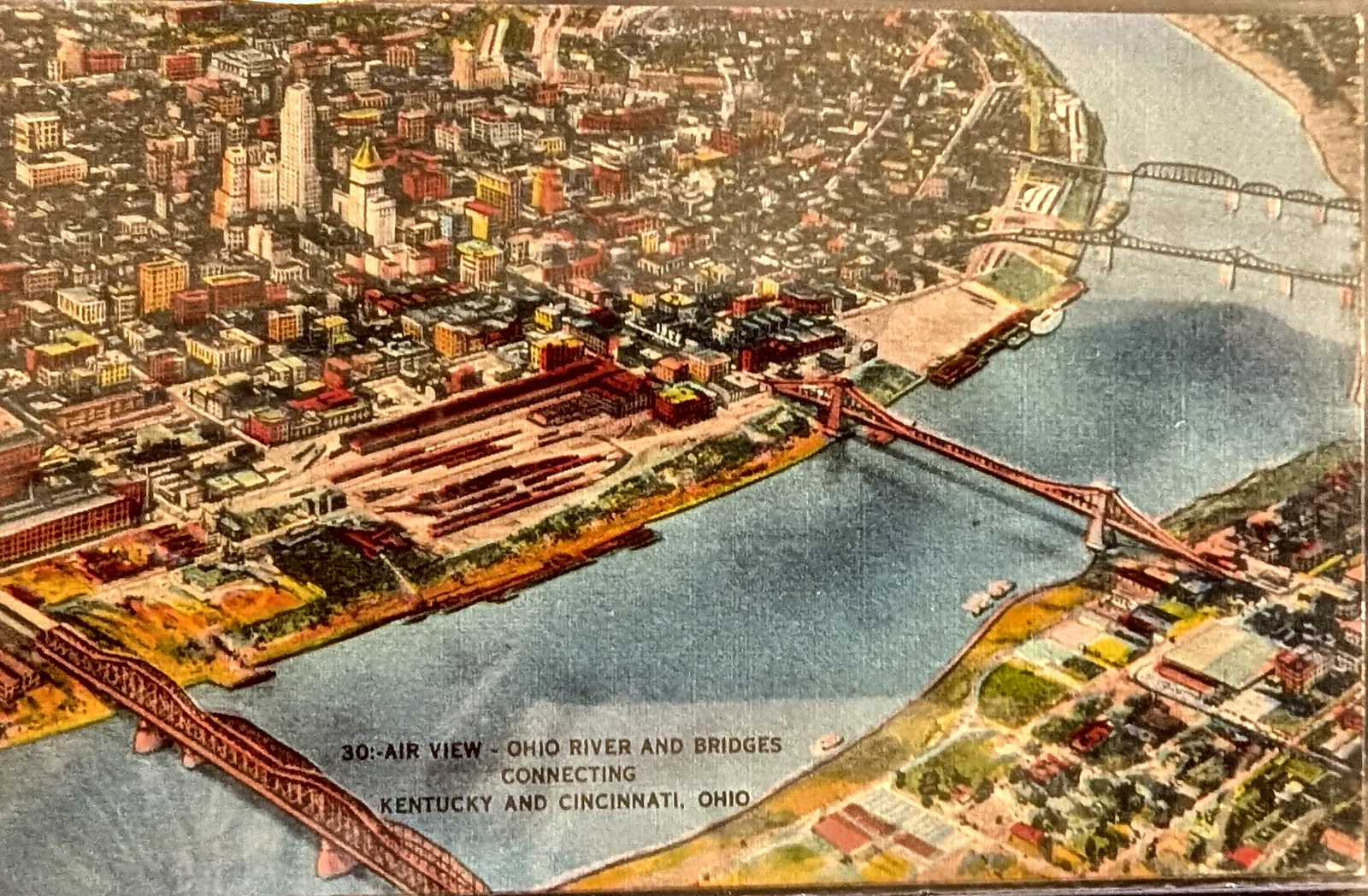
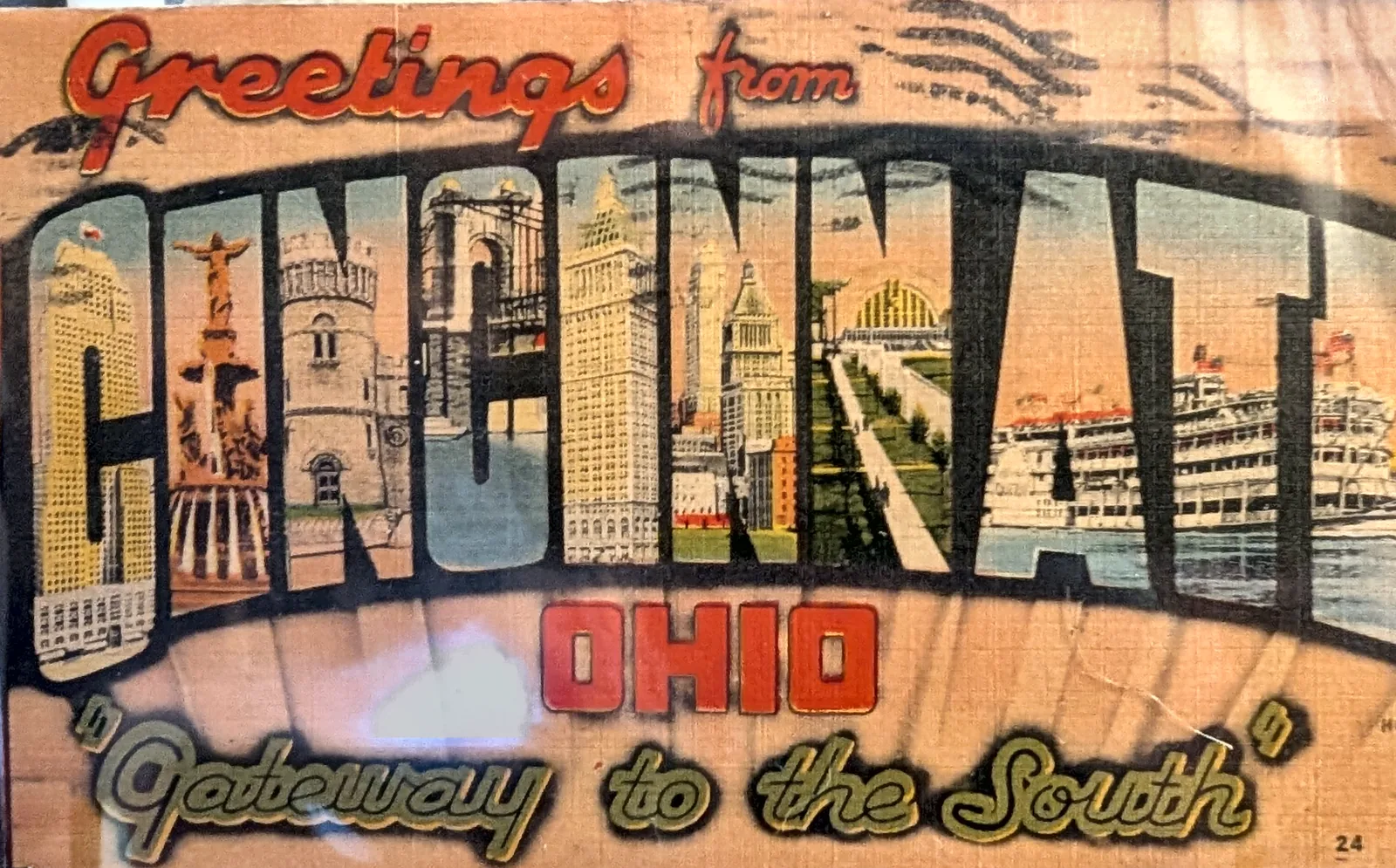
Downtown Cincinnati from the air, with bridges crossing the Ohio from Kentucky.
Family Mail
1 cardKept because of who sent it.
Grandpa Teddy bought this card and mailed it home to Mr. Youie Shaw in Carlisle, Ky. Flip it to read: “Dear Helen, Just a line… fine O.K. and [no] snow at all. I’m on my way home… now & saw this card & thought I’d send it. Saw some pretty watches in the windows but are awful high. I’d think you’d rather have a ring & a pretty band for your watch. …” It’s signed “(Love to all of you) Teddie.” See Teddy’s sketches
Mailed
1 cardSomebody else’s mail that came with the collection: a written back, a stamp and a postmark.
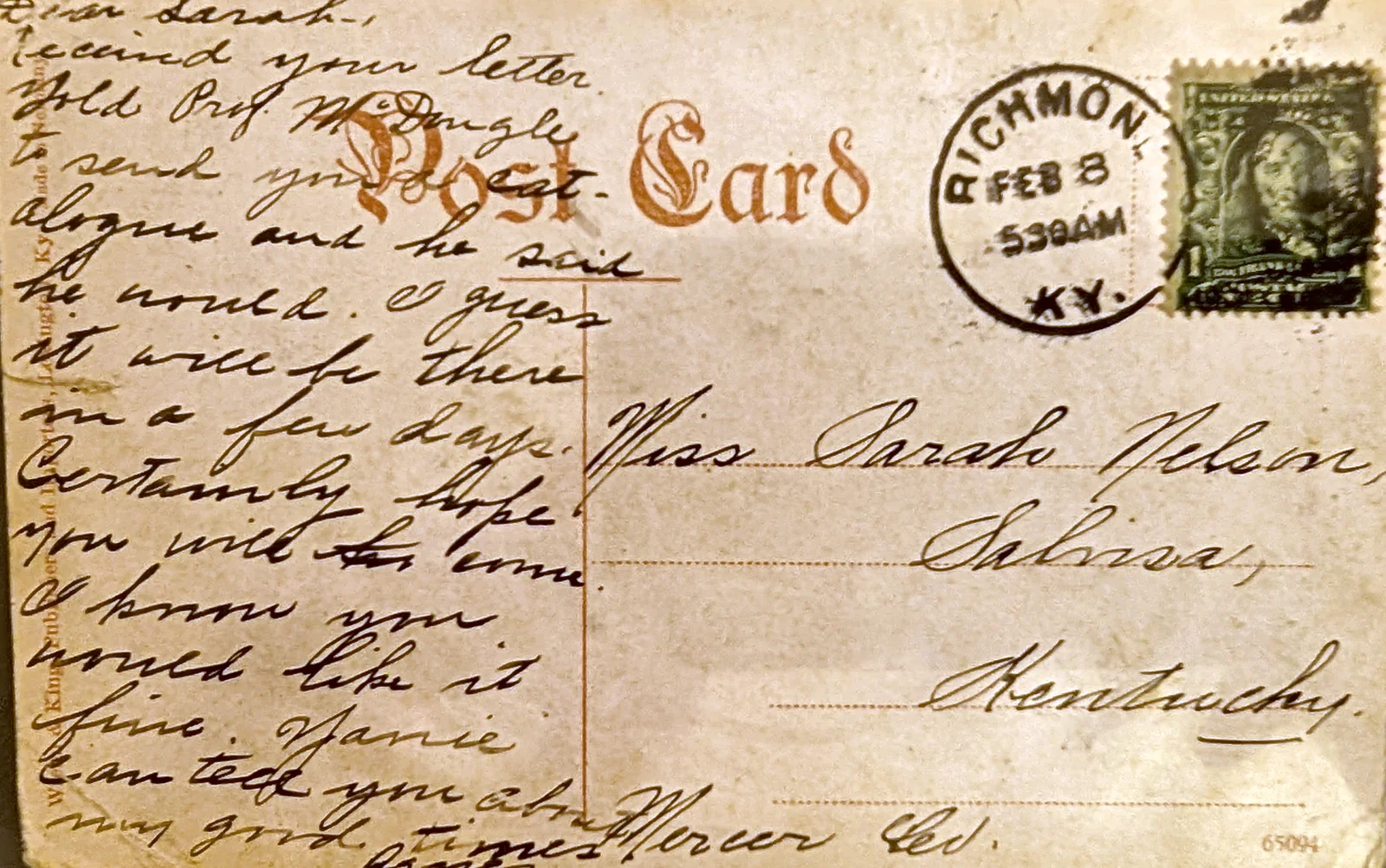
Written edge to edge in ink and mailed to a Miss Sarah in Mercer Co., Kentucky. The year on the postmark and most of the message are too faint to read with confidence, so it isn’t transcribed. Only the back came with the lot.
Comic Cards
10 cardsThe ones that got a laugh at the mailbox.
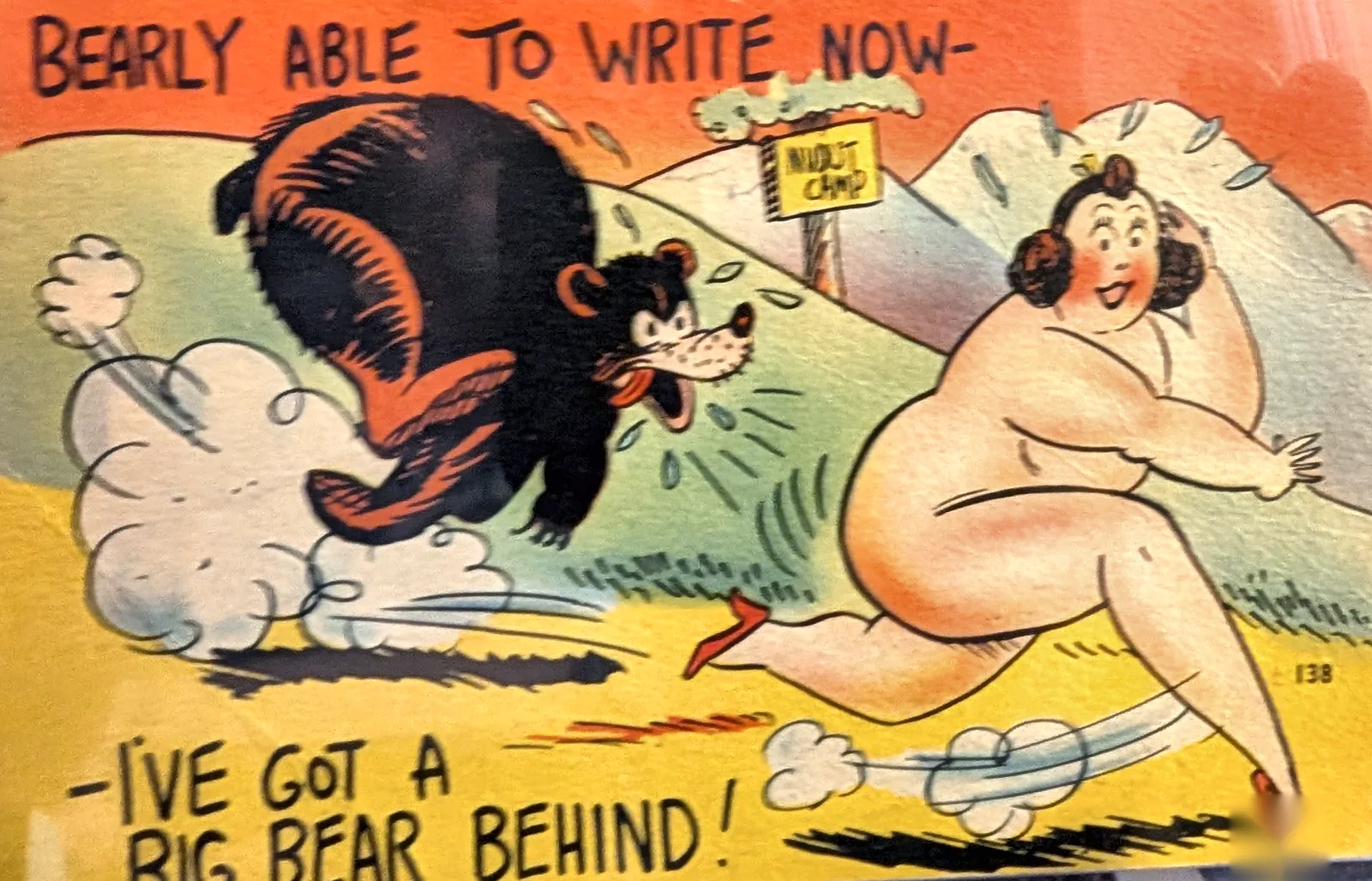
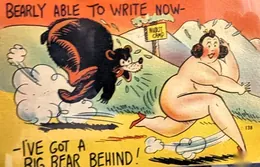
A bear on her heels, at a full run.
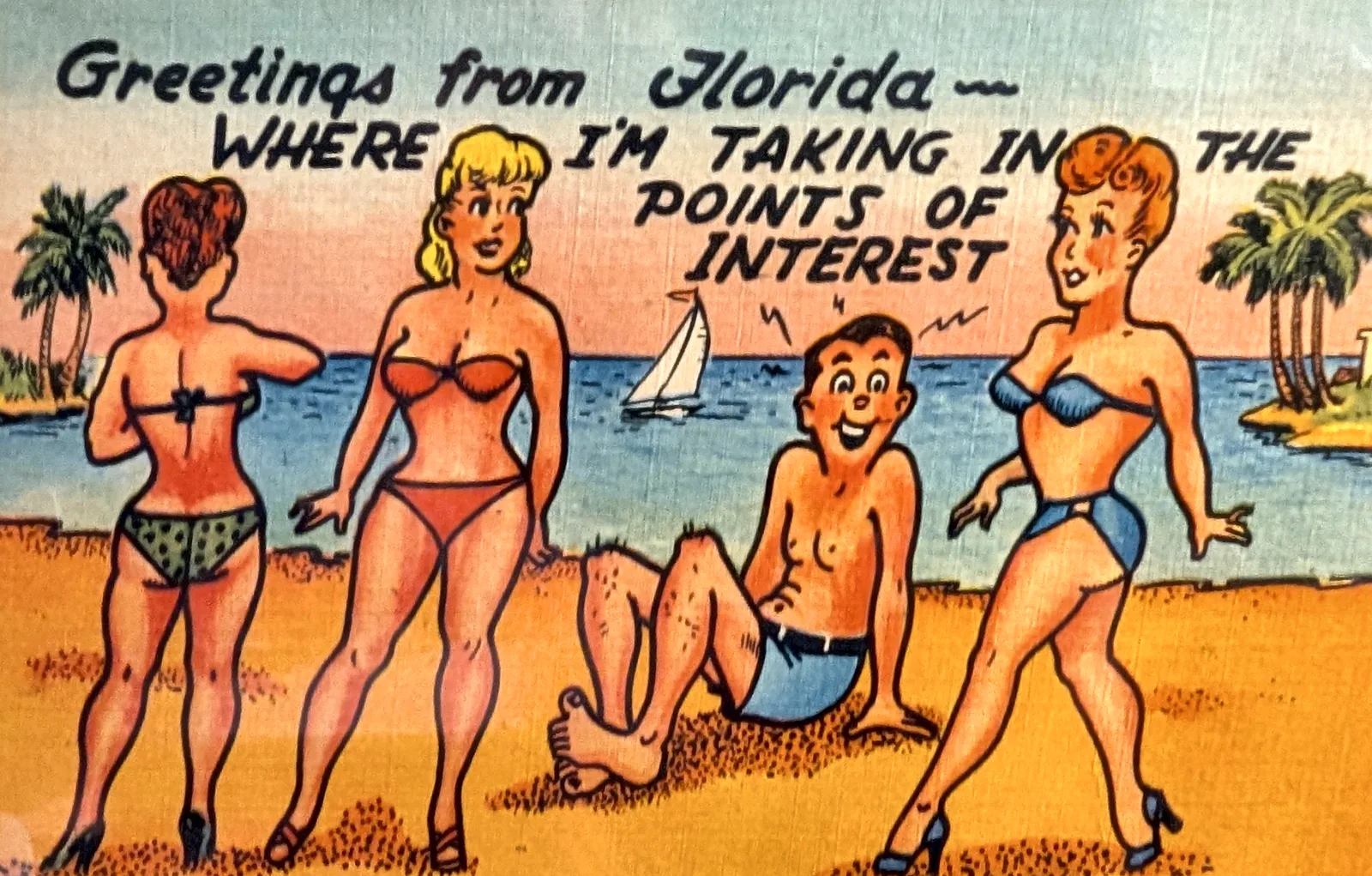
A fellow on the beach, admiring the scenery.
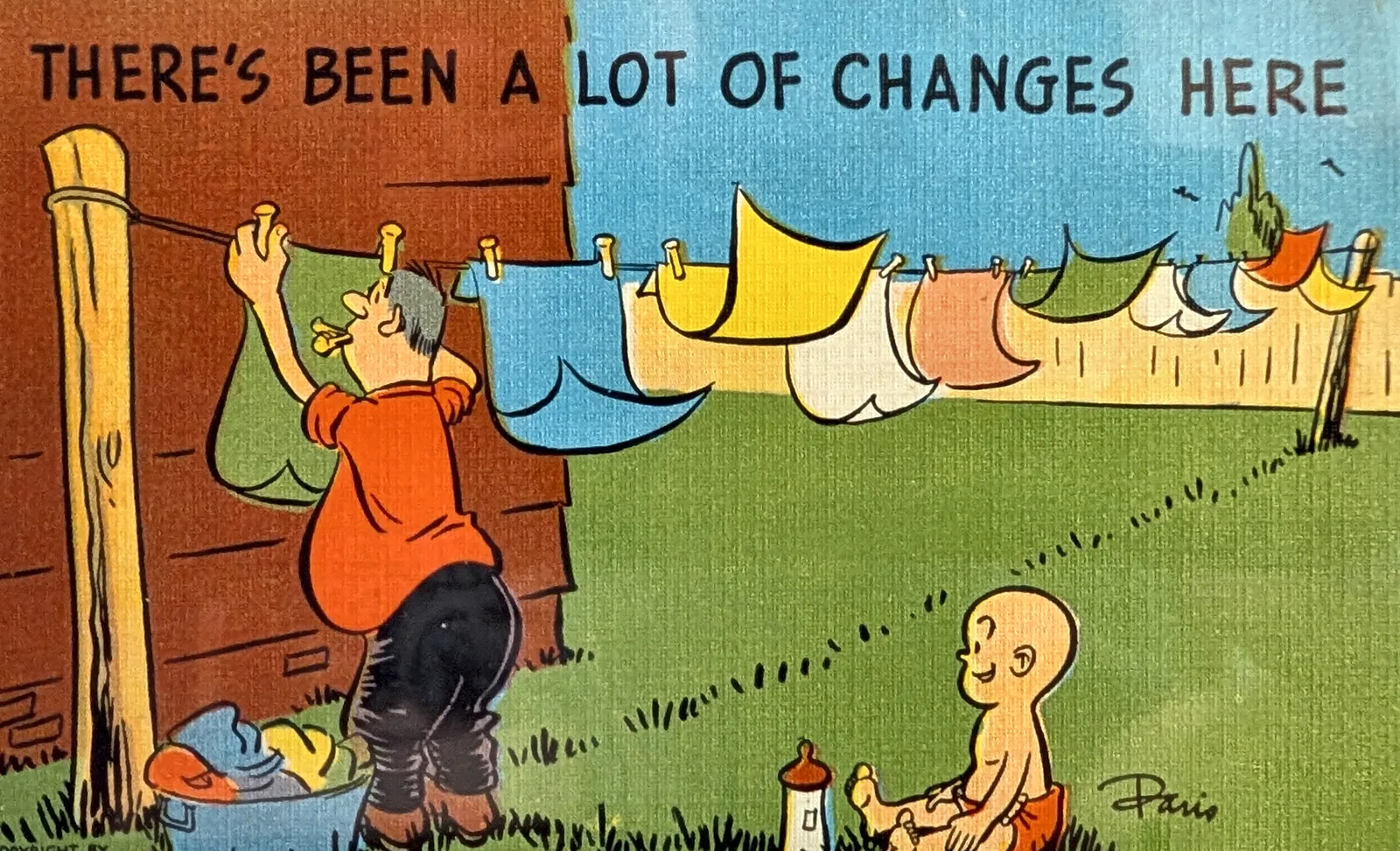
A full clothesline and a brand-new baby.
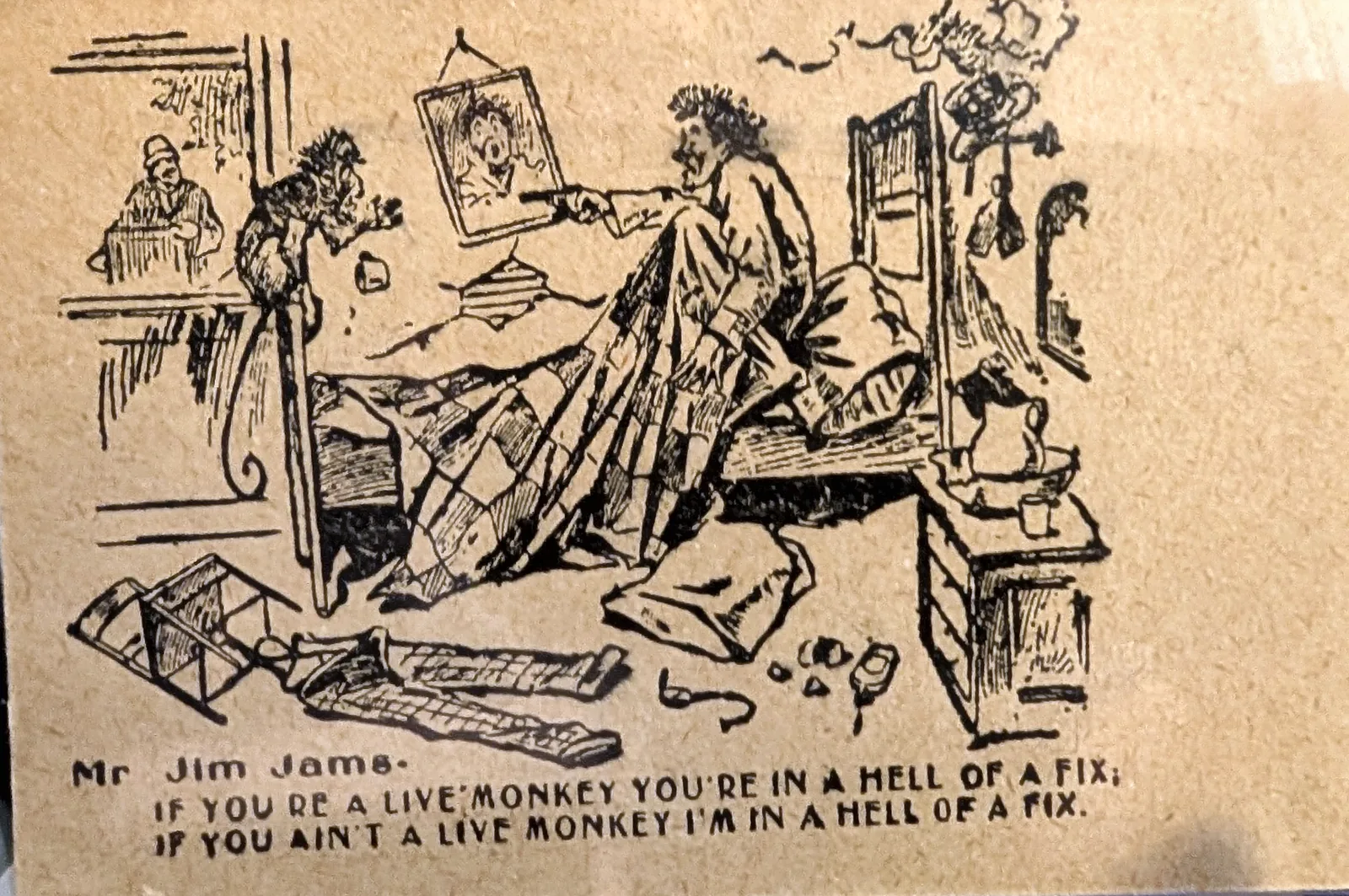
A wrecked bedroom and a wild-eyed man.
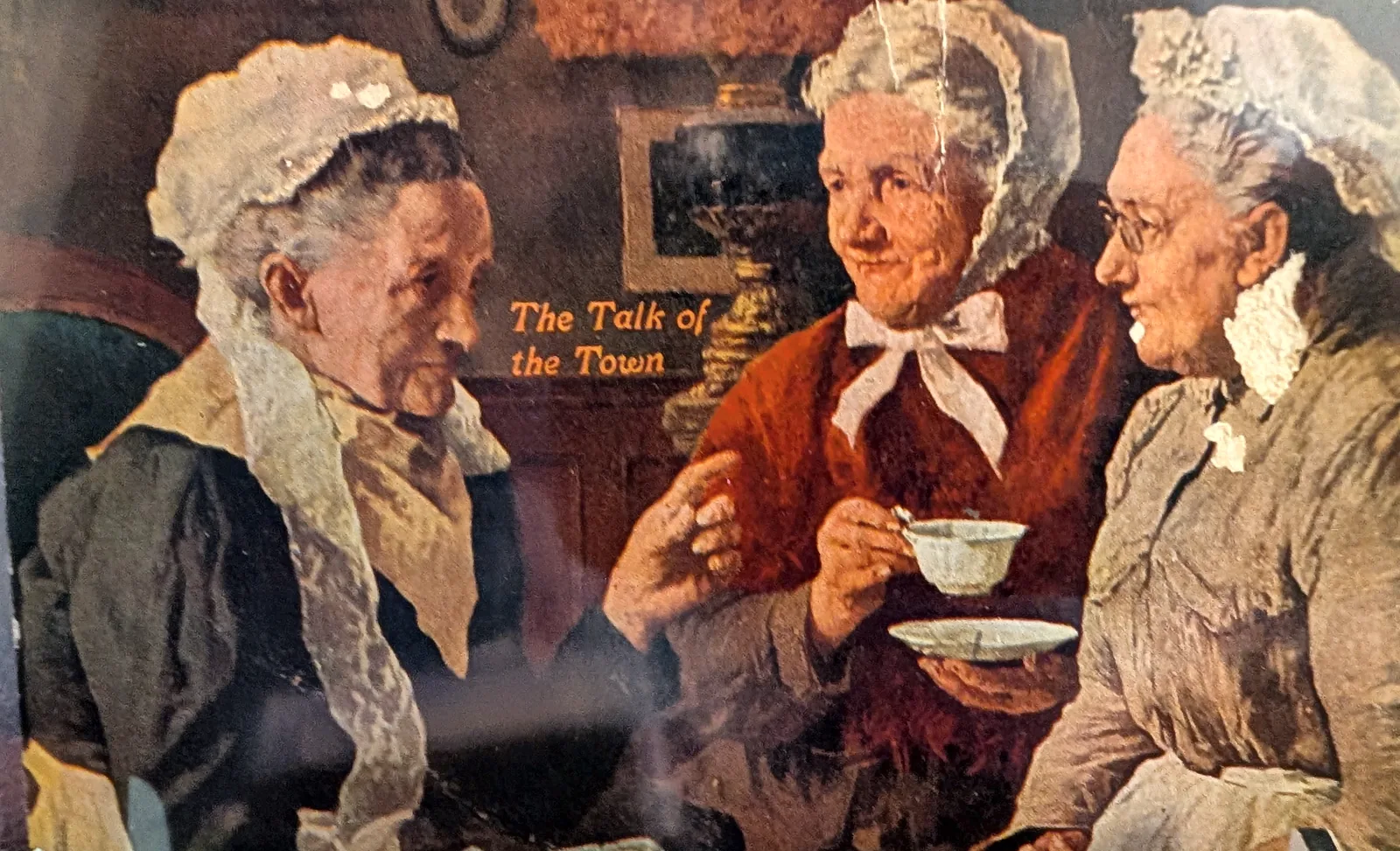
Three ladies in bonnets, a teacup and a good story. It shares a name with the family restaurant in Carlisle.
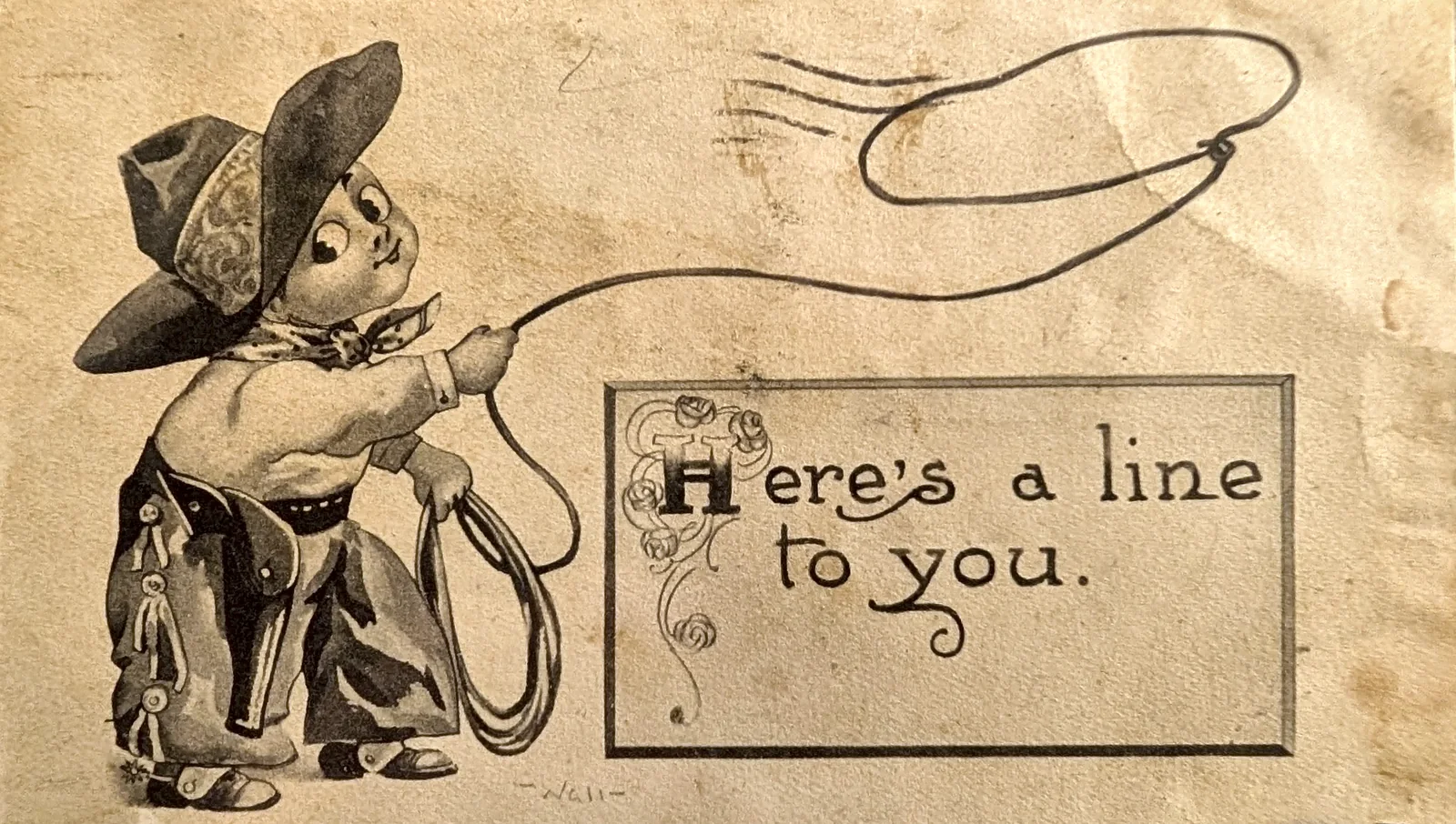
A little cowboy in a big hat throws his lasso across the card.
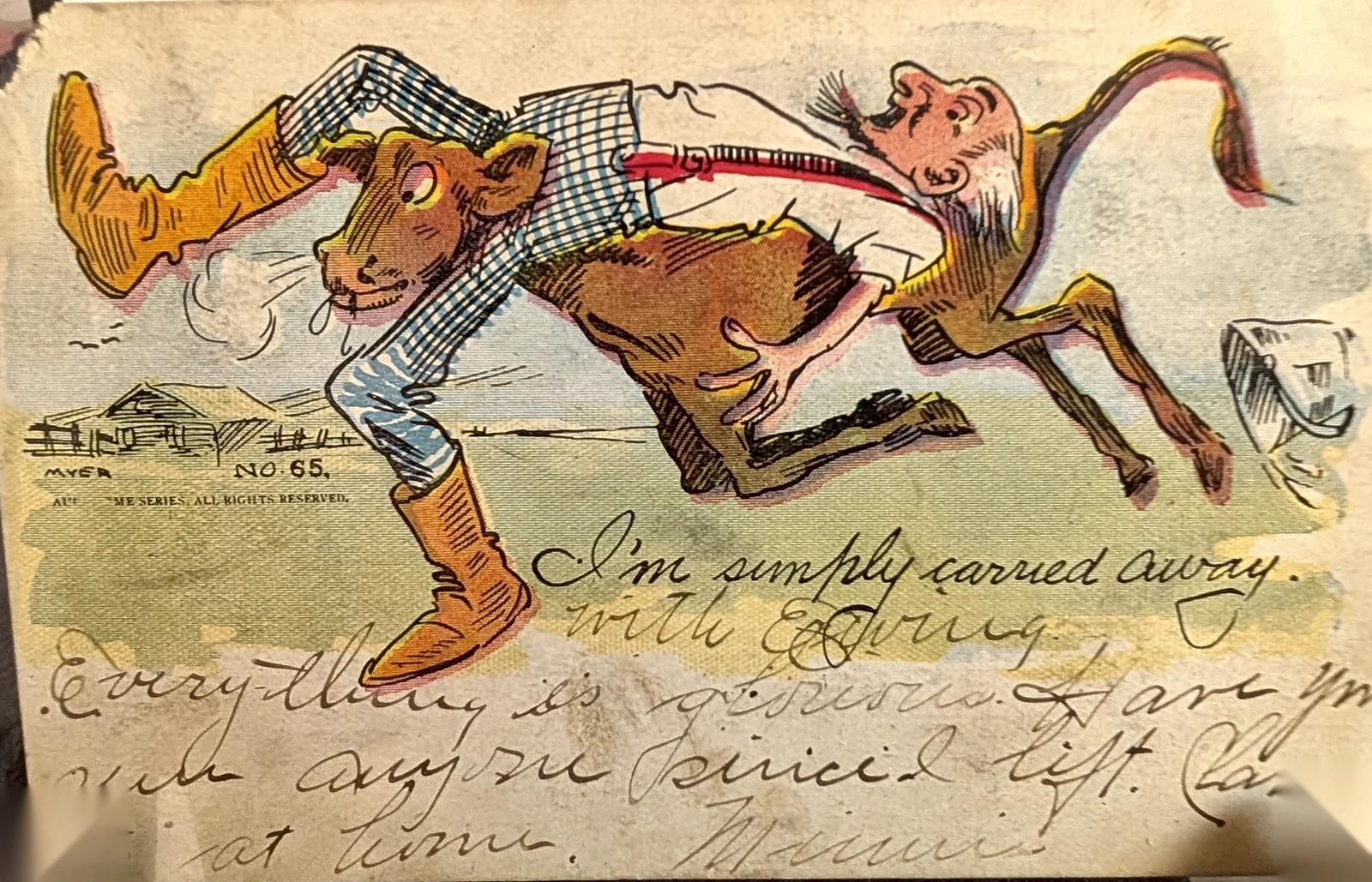
The picture is the joke. Underneath, the sender wrote in ink: “… Everything is glorious. Have you seen anyone since I left … at home.” The names are too faint to read with confidence.
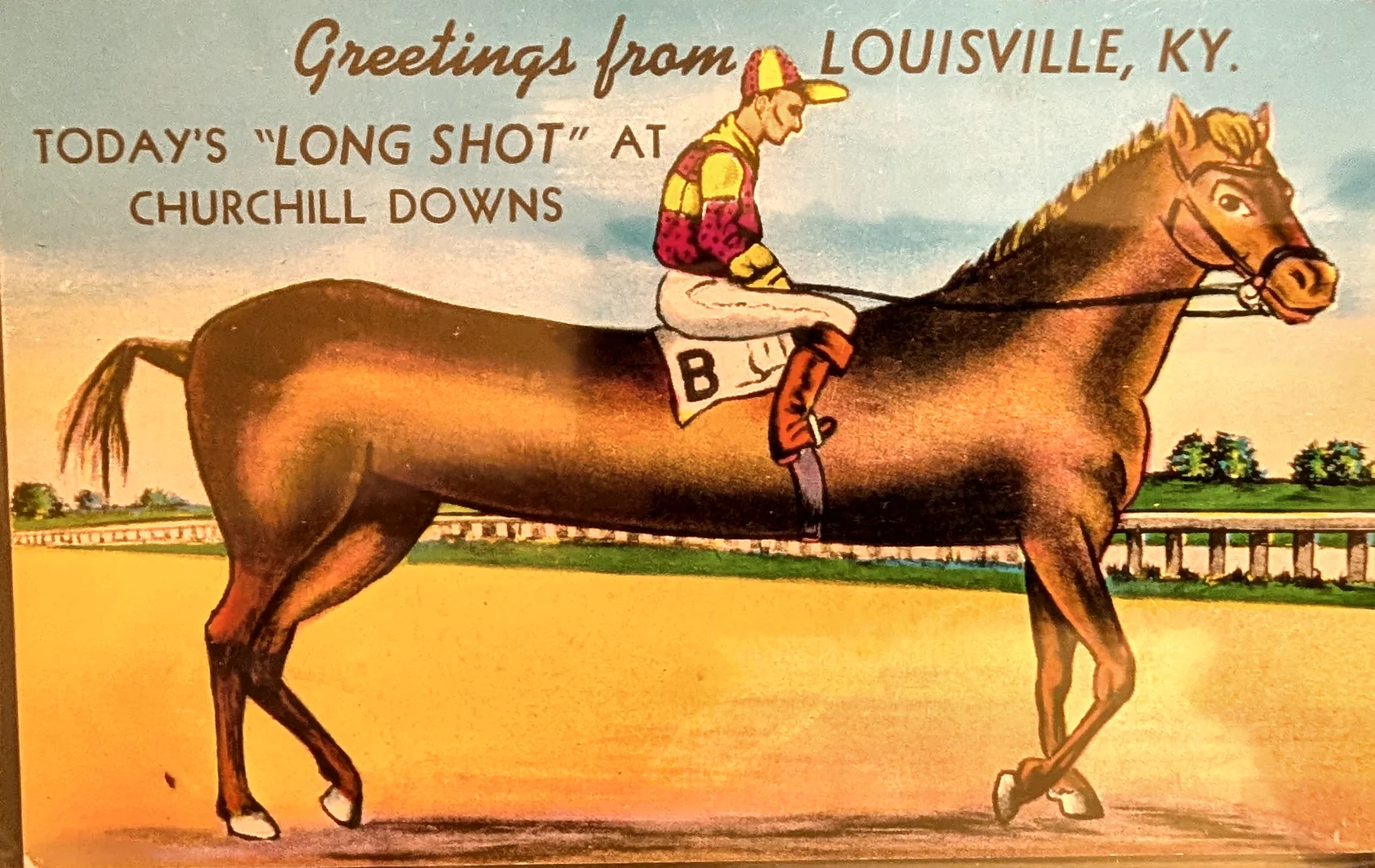
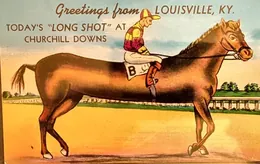
A racehorse stretched to about twice its proper length, jockey and all.
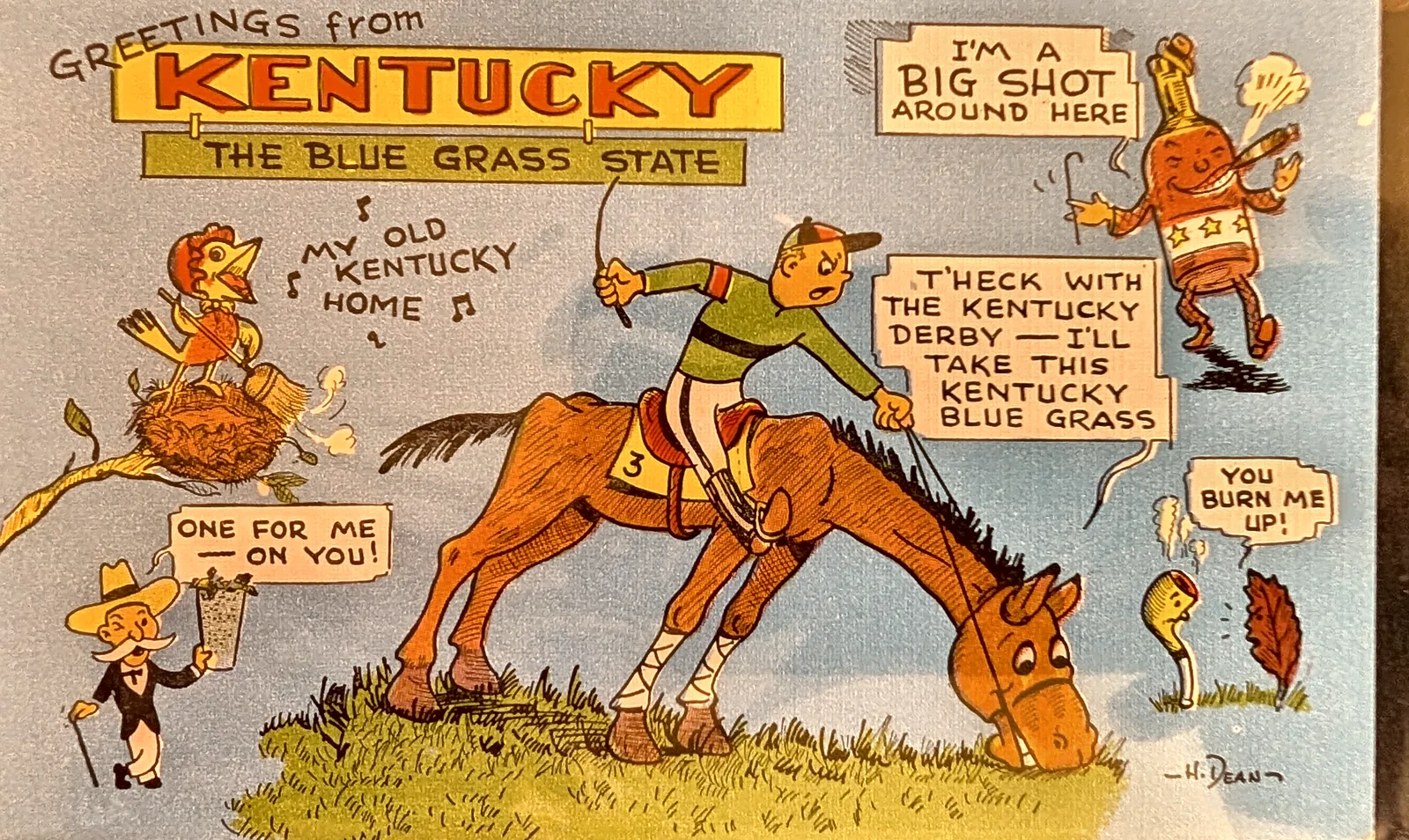
A jockey’s horse stops to graze: “T’heck with the Kentucky Derby—I’ll take this Kentucky blue grass.” A bottle brags “I’m a big shot around here,” and somebody in the corner sings “My Old Kentucky Home.”
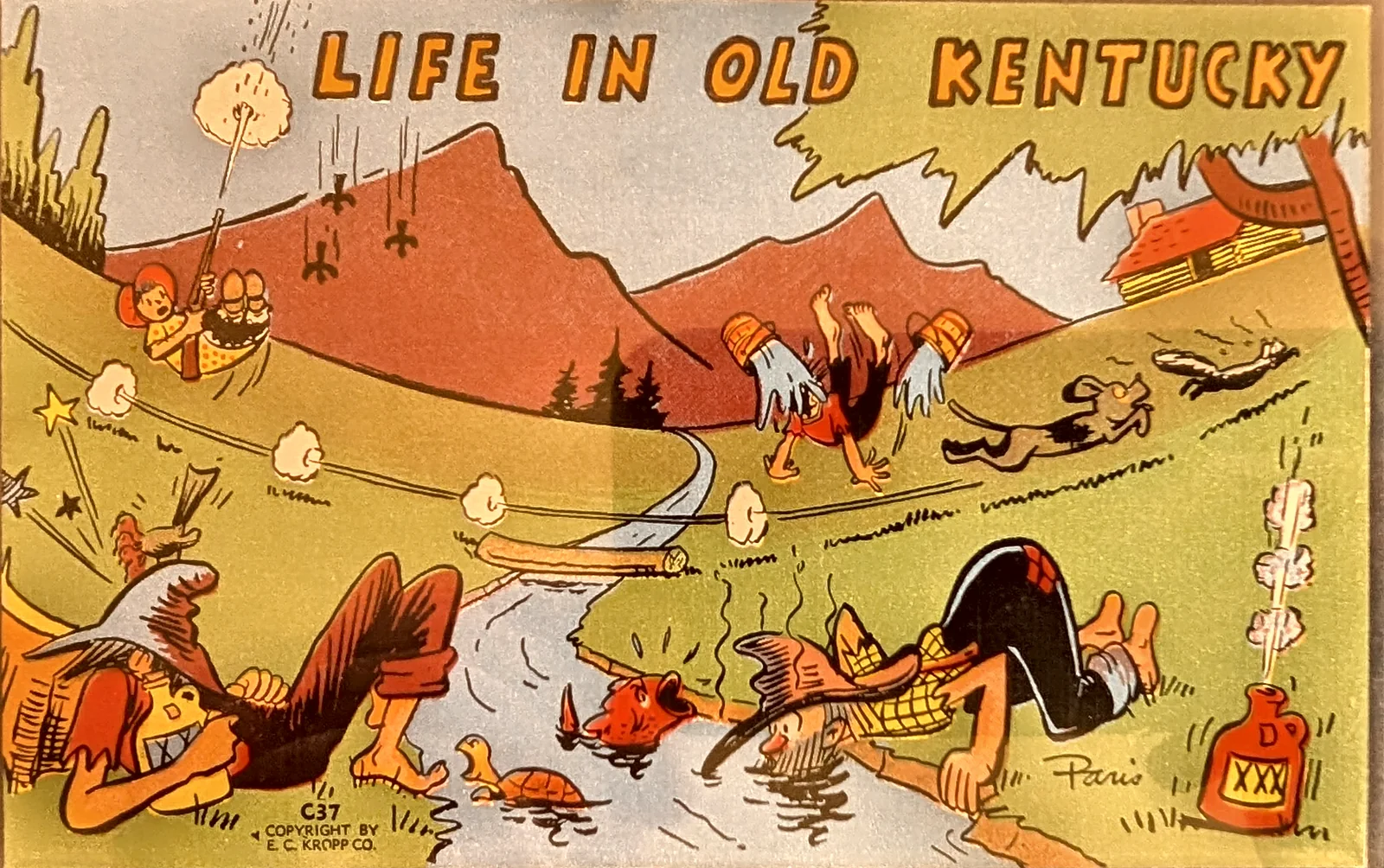
A mountain feud in full swing, with gunfire, flying hats and a jug marked XXX.