The Plate Wall
License plates retired from the highway and bolted to the risers, one step at a time. Mind your feet.
Open · Full service · No plates soldNearly every plate here hangs on a back-stair riser; the Arkansas and Missouri plates were photographed on a sill. They’re sorted Kentucky first, then the ’76 plates, then the rest of the road, oldest first, then the two from abroad. Tags record only what is stamped or printed on the tin. Tap a plate to give it a little swing.
34 plates on this page. Plates on the wall that are partly out of frame in the photos aren’t counted (yet). The Michigan ’76 peeking in at the edge of the lower-stairs photo is already here.
The old staircase photo on the front hall also shows Tennessee, Alabama, South Carolina and New York plates. They’ll be counted once they’re photographed up close.
Kentucky
Bluegrass tin first. County plates lead off (Bourbon, Nicholas, Fayette), then the rest of the Kentucky tin. Ten plates and counting.
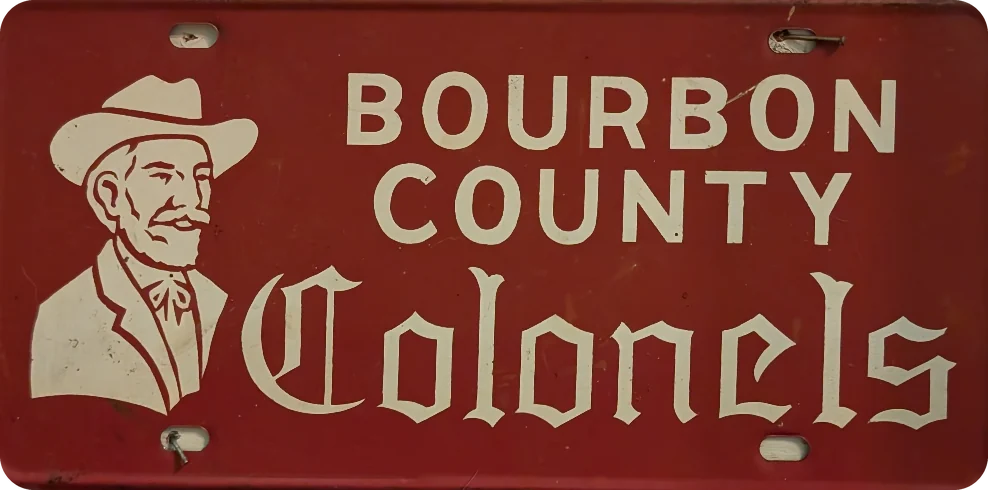
Red tin, a colonel in his hat and string tie, and some proper blackletter. It hangs first.
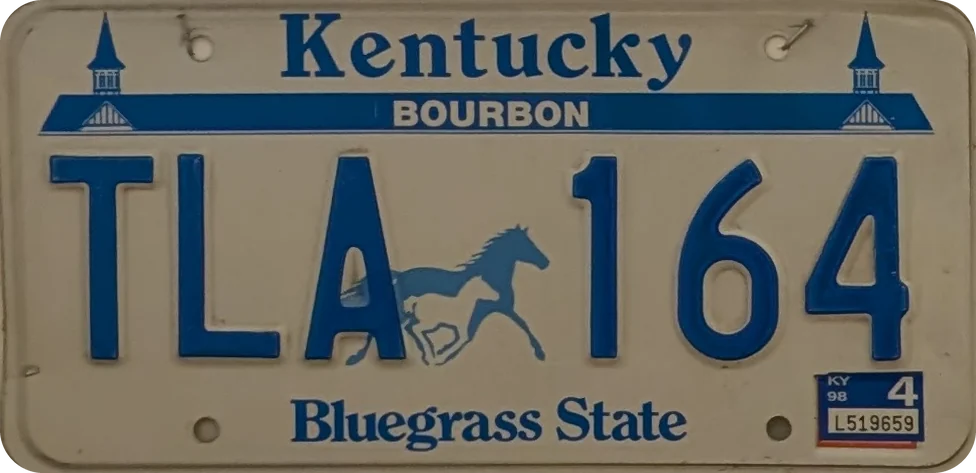
Two spires up top and a running horse tucked in among the letters.
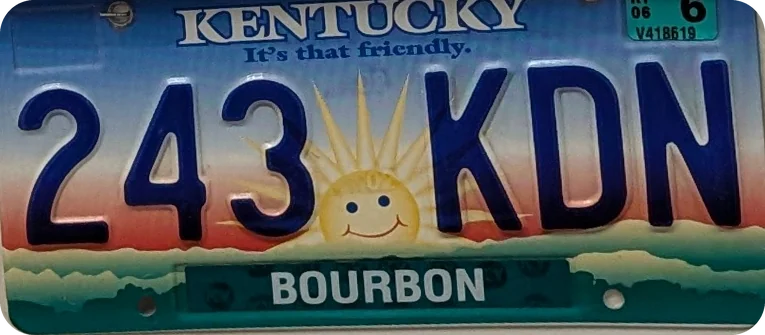
A smiling sun coming up over green hills, in full color.
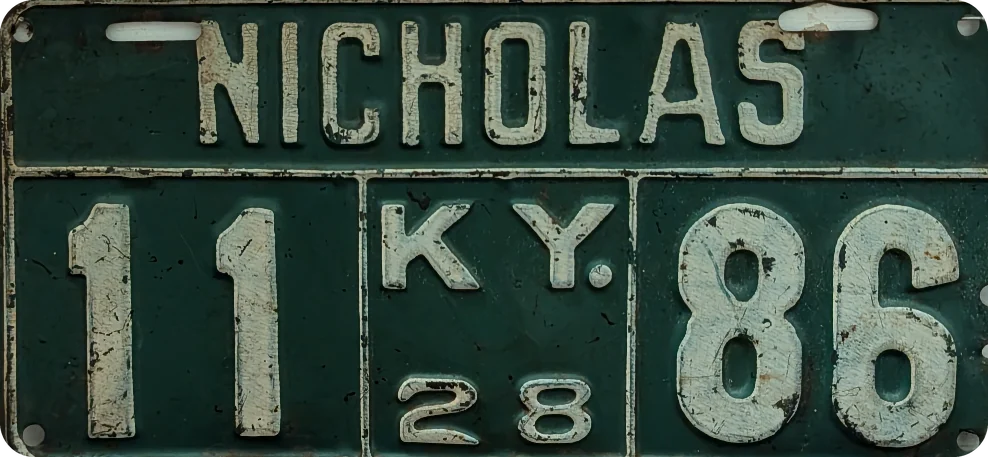
Green paint, white numbers and the county name across the top, split into panels like a little ledger.
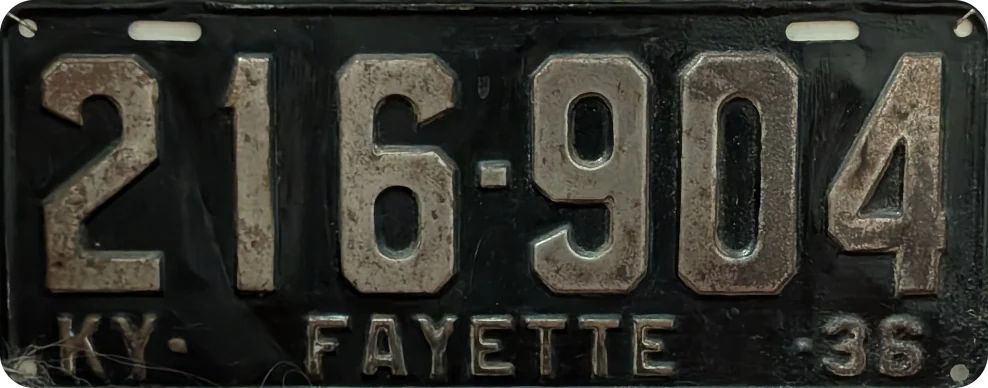
Black tin with silver numbers, worn bright where the paint gave up.
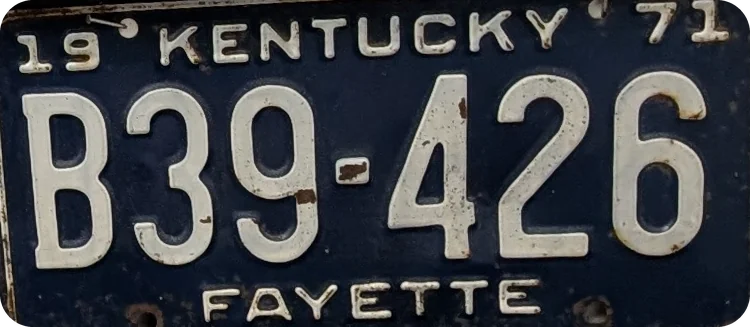
Navy tin, white numbers, and the year split around the state name.
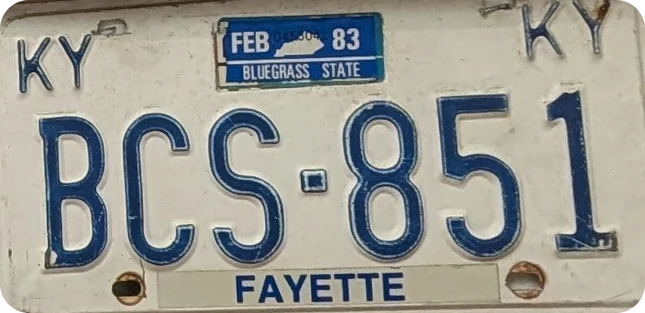
White tin with blue numbers, KY stamped in both top corners.
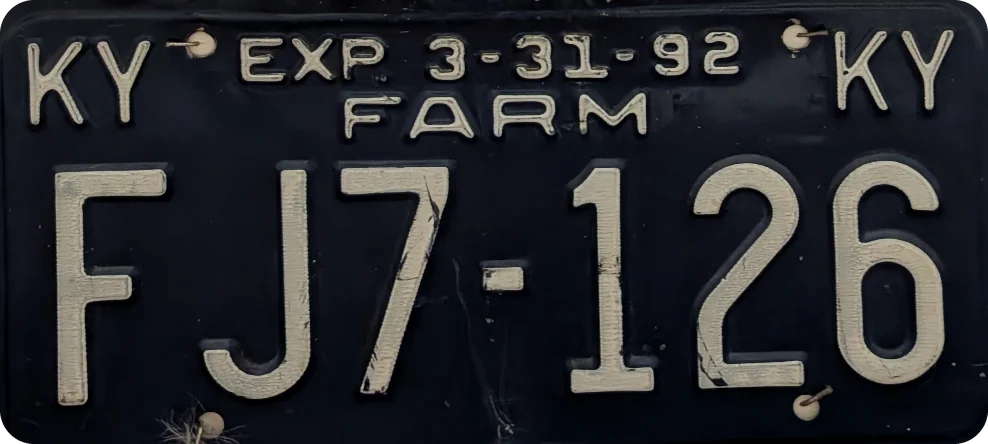
A working plate. It says FARM right on it and has the scuffs to prove it.
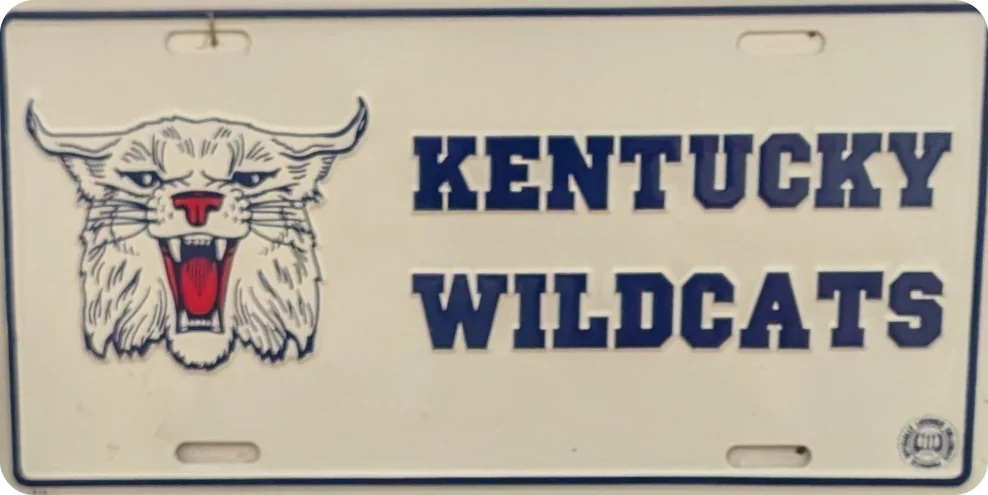
A front-bumper plate for game days. The cat is mid-snarl.
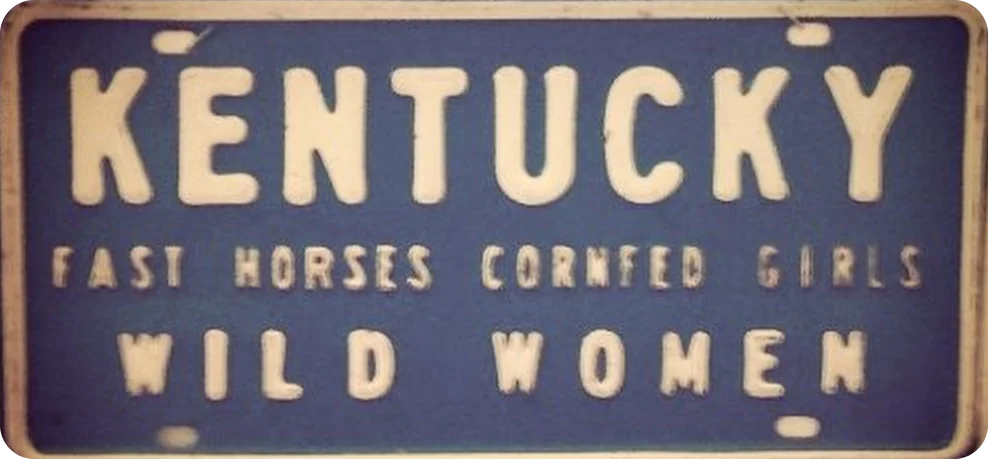
The state’s unofficial motto, more or less. This one gets around.
see it on the truck in the Driveway →Bicentennial ’76
Stars, stripes and a big curly 76. In the run-up to 1976, plates got patriotic, and Colorado had a centennial of its own to celebrate.
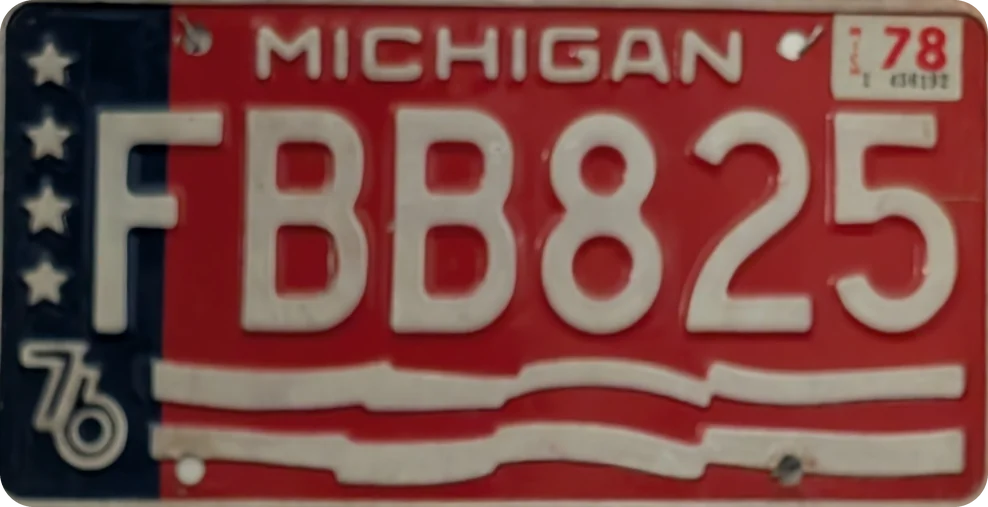
Flag-waving tin: four stars down the blue side, two white stripes rippling across the red.
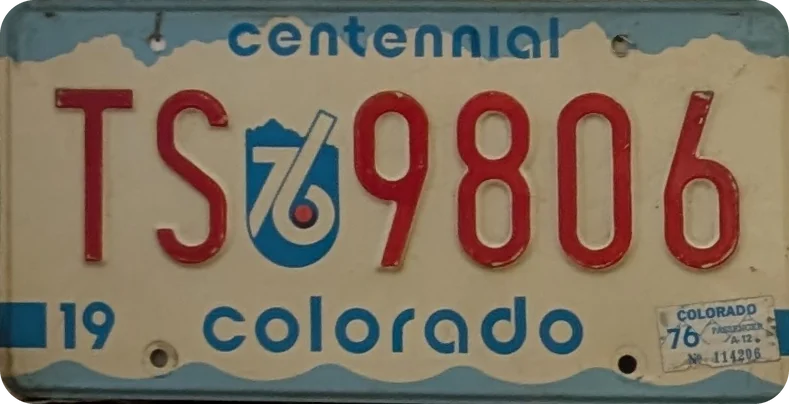
A big 76 in the middle of the number. Colorado became a state in 1876, so its ’76 was a centennial.
The Rest of the Road
Out-of-state tin, oldest stamped year first. Plates with only a sticker date follow, and the ones with no date at all bring up the rear. Some of these hang on the top risers, where the stair tread hides their bottom edge.
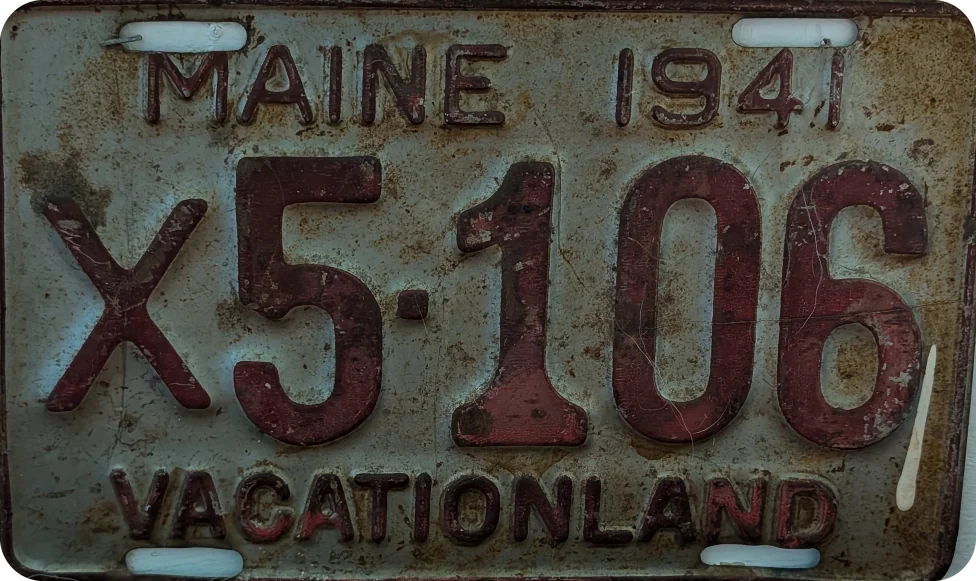
The oldest stamped year on the wall, and it looks every bit of it. A close-up finally shows the bottom line.
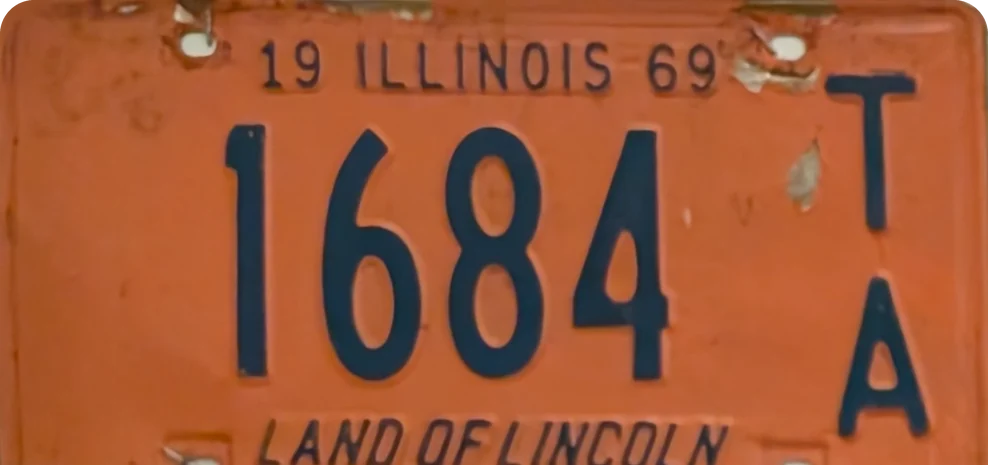
Orange and navy, with the letters stacked up the right side.
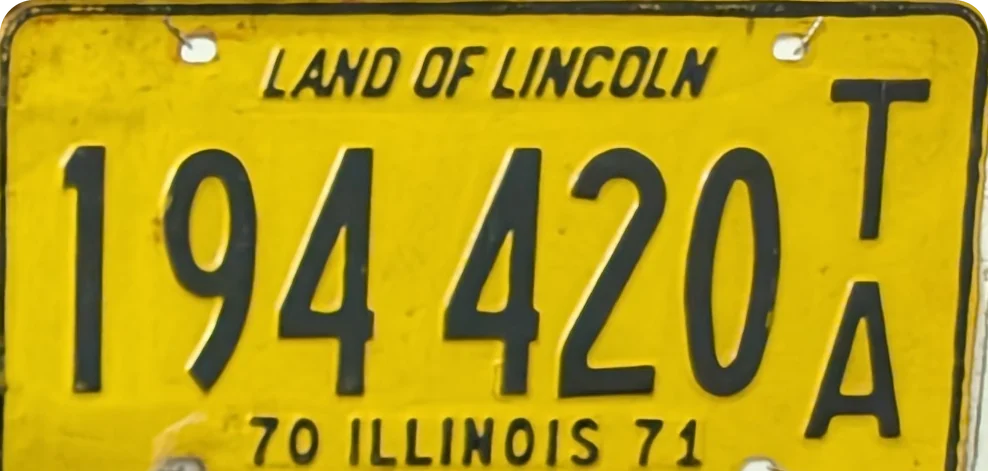
Same state, next model year, colors flipped to yellow and black. Hung next to its cousin.
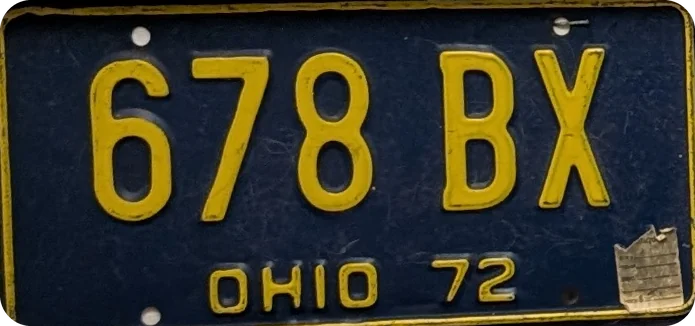
Navy tin with gold letters. The same plate shows up in the old staircase photo in the front hall.
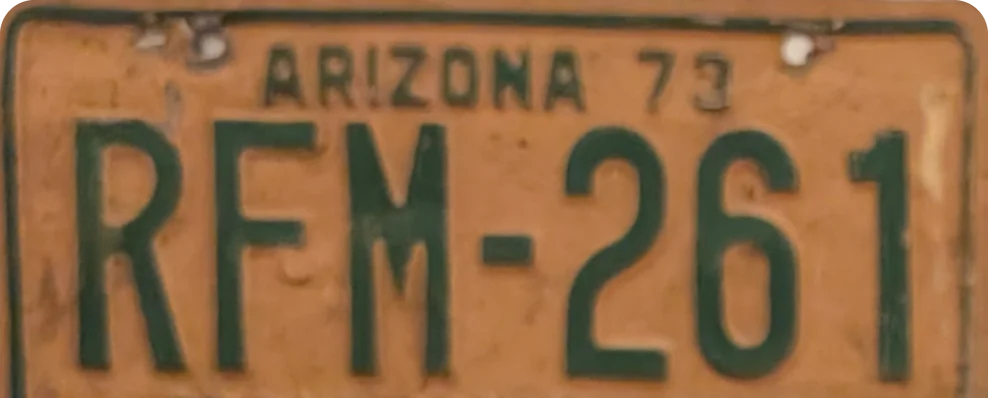
Desert-colored tin with green letters, faded the way things fade in the sun.
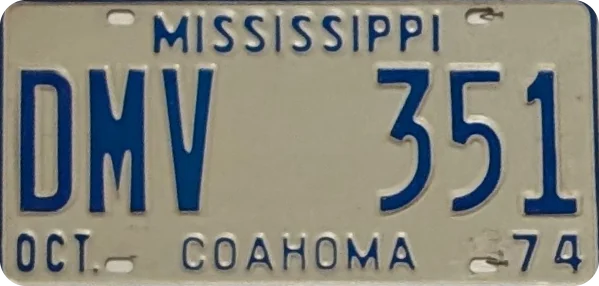
Blue on white, with the county name stamped right across the bottom.
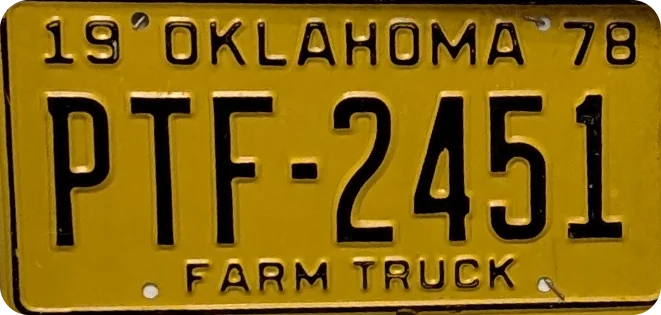
Black on yellow. The Kentucky farm plate has company.
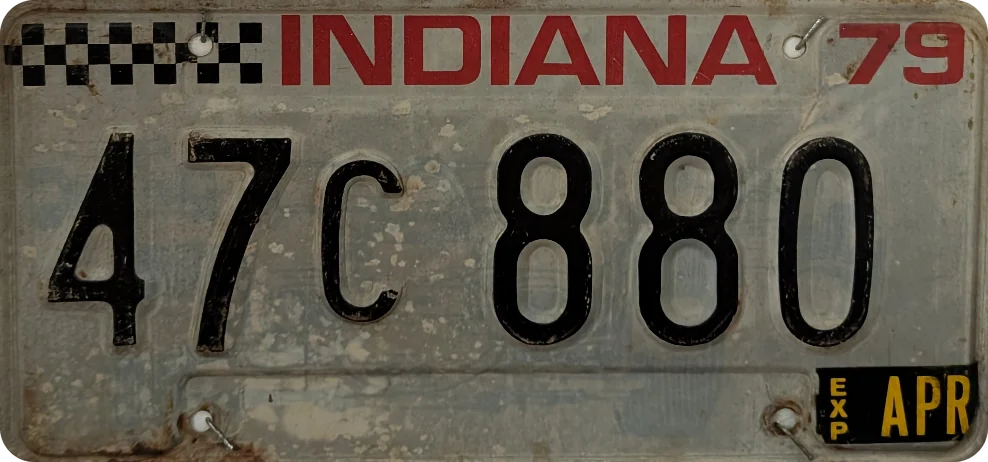
A checkered flag across the top corner. Fair enough for Indiana.
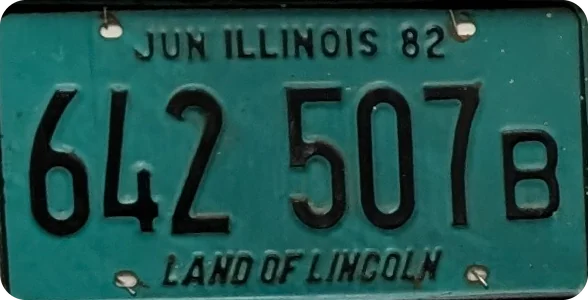
Teal tin, black numbers. The third Illinois plate on the wall.
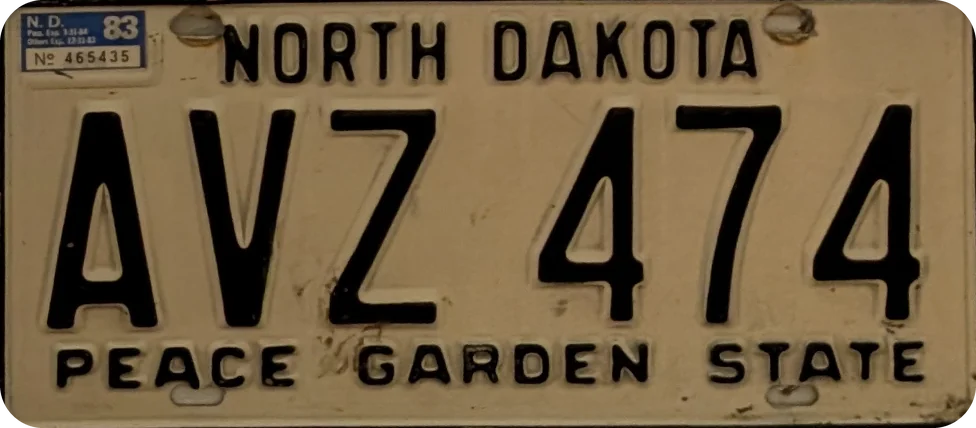
Black on cream, big and plain.
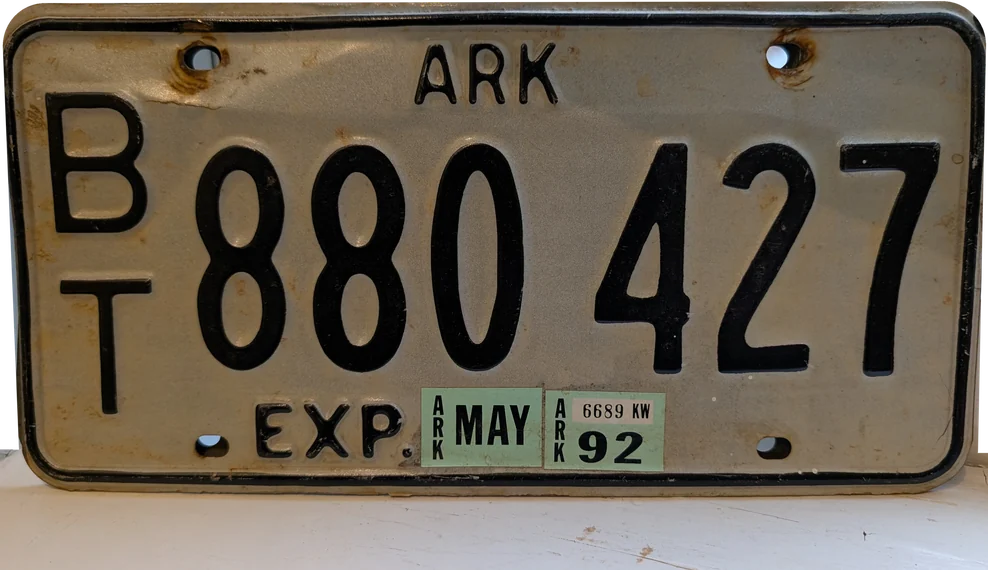
Black on silver, with the expiration stickers lined up after EXP.
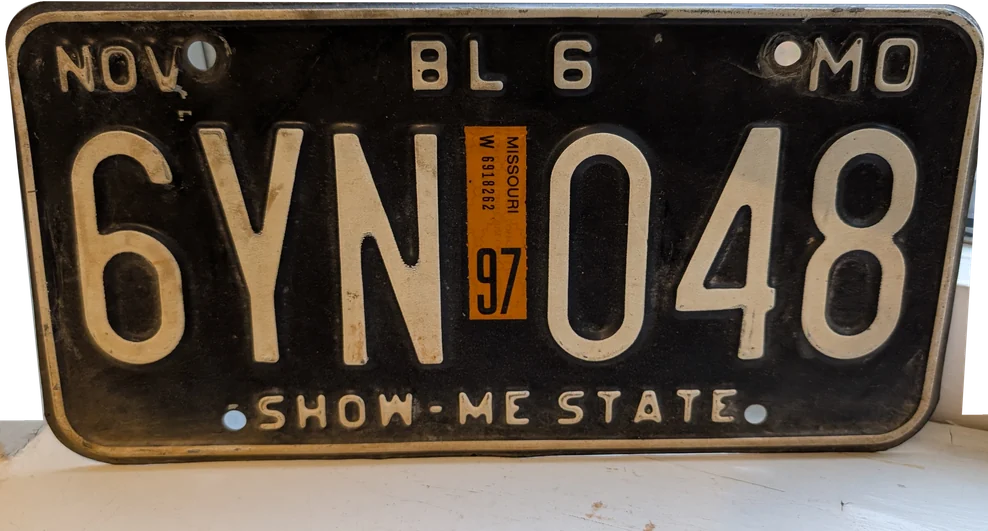
White on black, with the month stamped right into the tin.
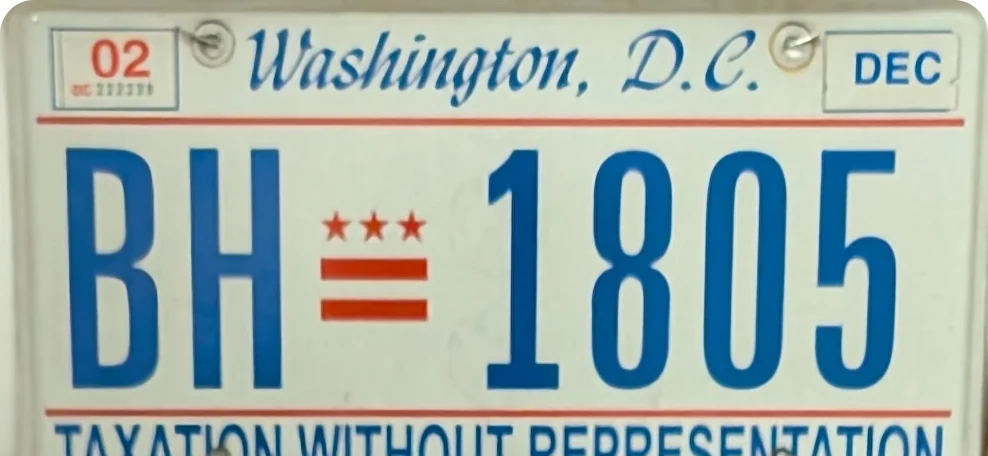
Not a state, and it says as much along the bottom.
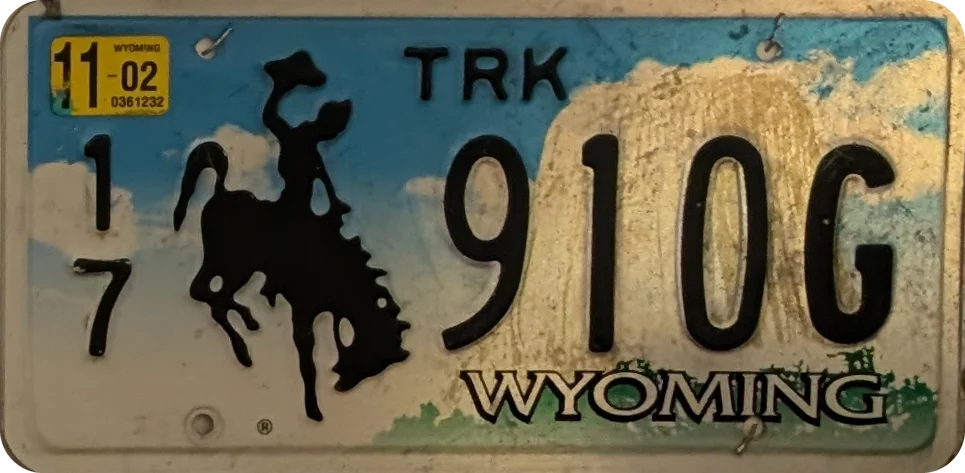
The bucking horse and rider, against a sky full of clouds.
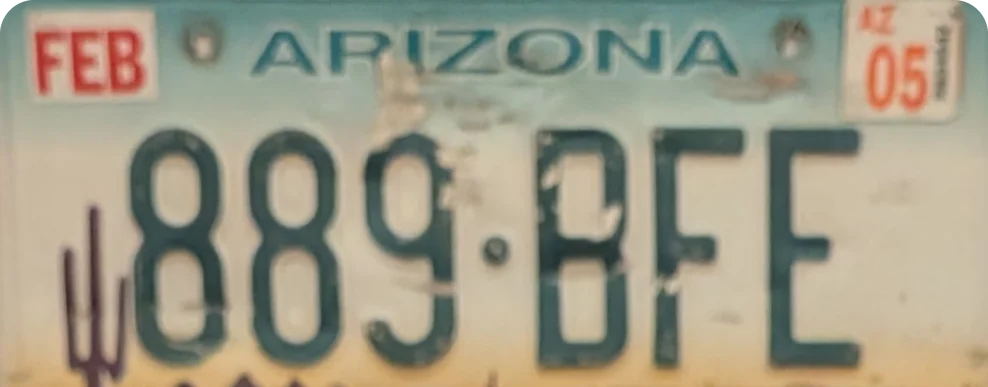
A saguaro and a sunset fade. Arizona shows up twice on the wall.
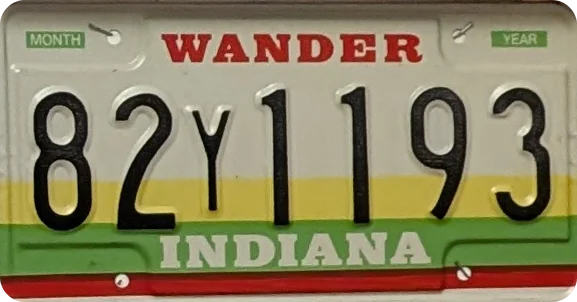
Red, yellow and green stripes across the bottom. Indiana shows up twice.
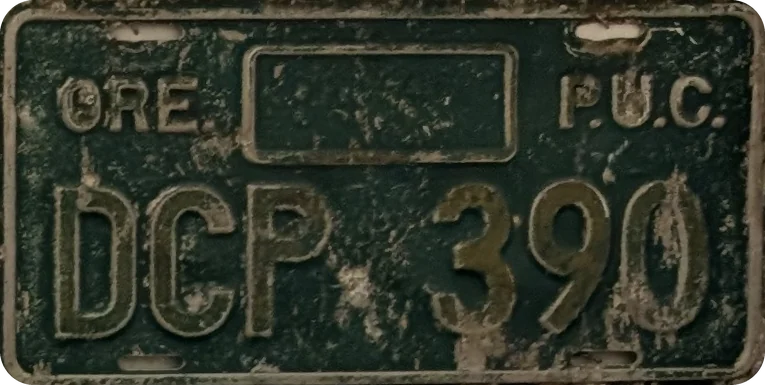
Green and well weathered, with an empty frame stamped between ORE. and P.U.C.
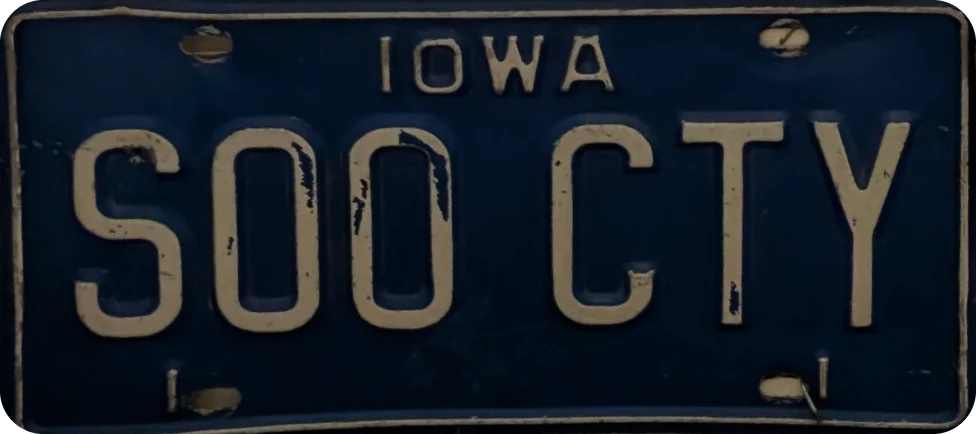
Read it out loud.
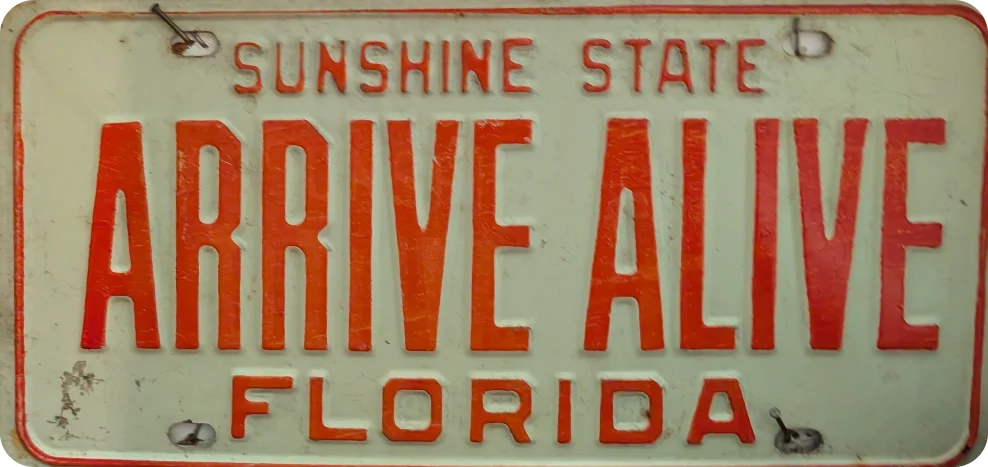
No year on this one, just good advice in big red letters.
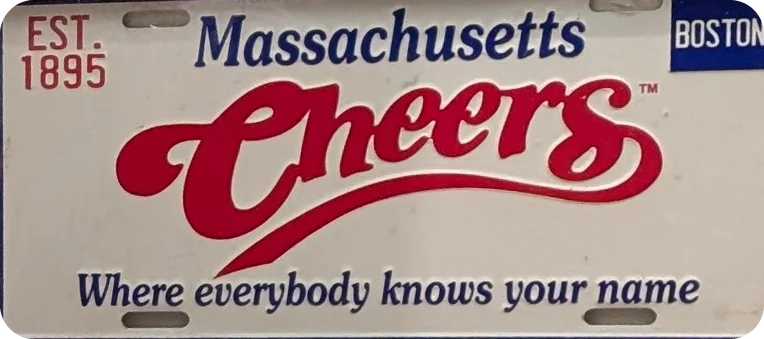
A novelty plate. The 1895 is the bar’s, not the plate’s.
From Abroad
Two plates from well past the state line: Victoria, in Australia, and a long German plate on the bottom step.
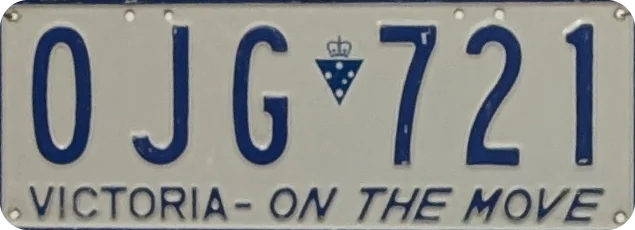
Blue on white, with a little crown over a triangle of stars between the letters and numbers.

A long, narrow European-size plate. The seal on the blue strip reads Deutschland · Germany
around an eagle.
The Back Stairs
The whole climb, riser by riser, as the plates actually hang.
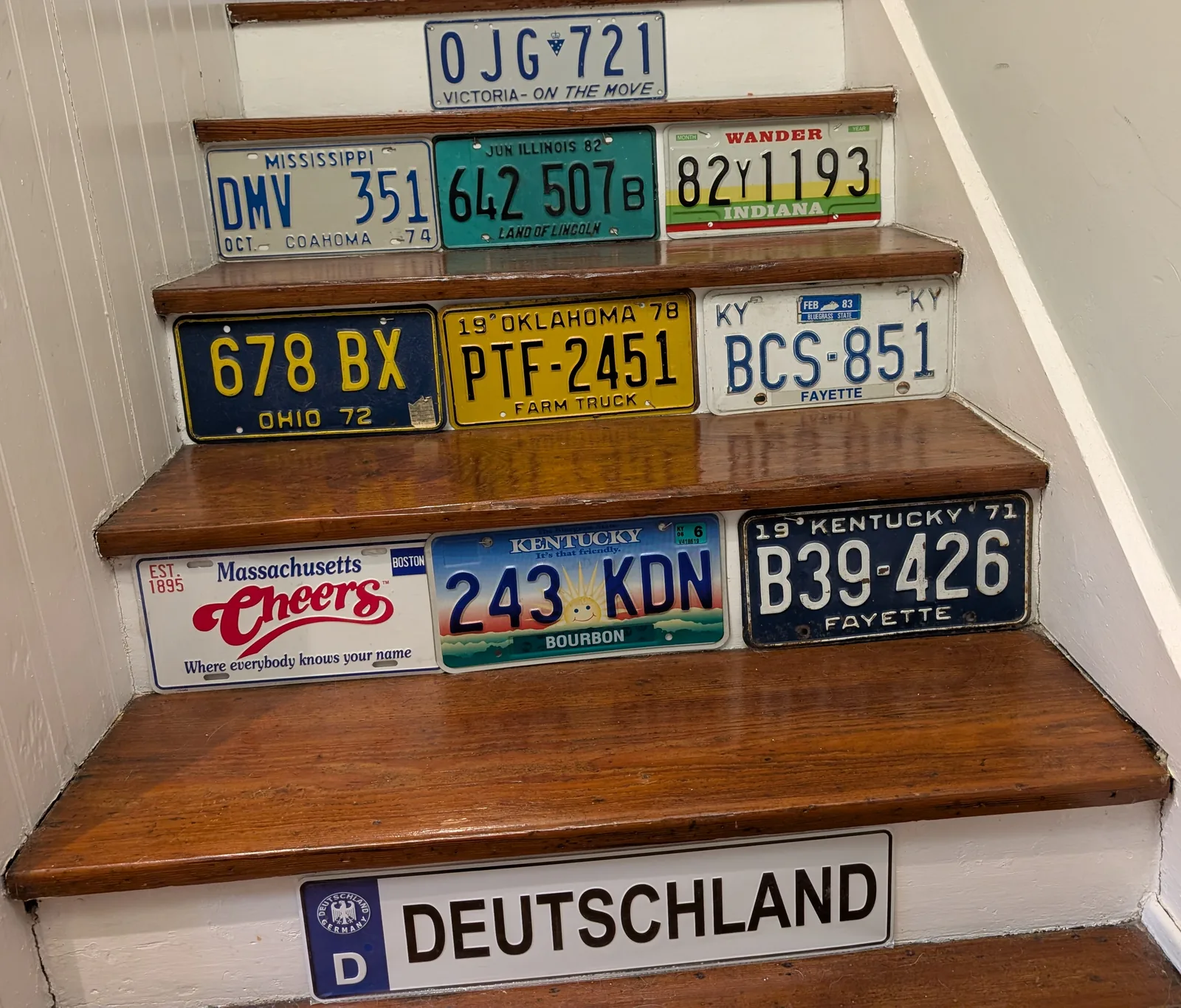
Victoria up top; then Mississippi, Illinois and Indiana; Ohio, Oklahoma and Fayette; Cheers, Bourbon and Fayette ’71; and Deutschland on the last riser.
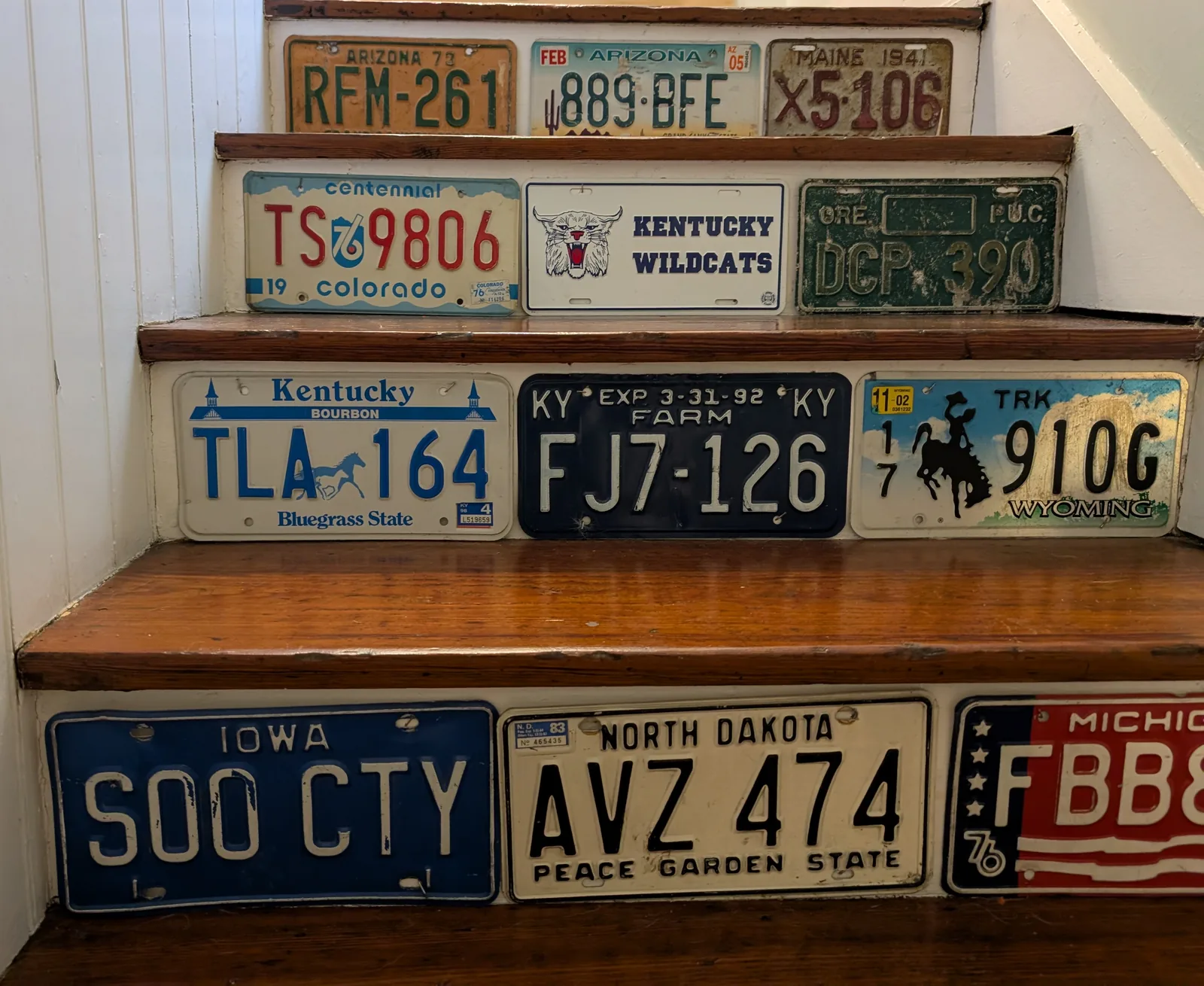
Arizona, Arizona and Maine 1941 under the top tread; Colorado, the Wildcats and Oregon; Bourbon, the farm plate and Wyoming; then Iowa, North Dakota and the edge of the Michigan ’76.
The Stairwell Map
A Denoyer-Geppert Visual-Relief school pull-down map hangs where the plates climb: the United States, with Hawaii, Alaska, Puerto Rico and the Panama Canal Zone in insets.
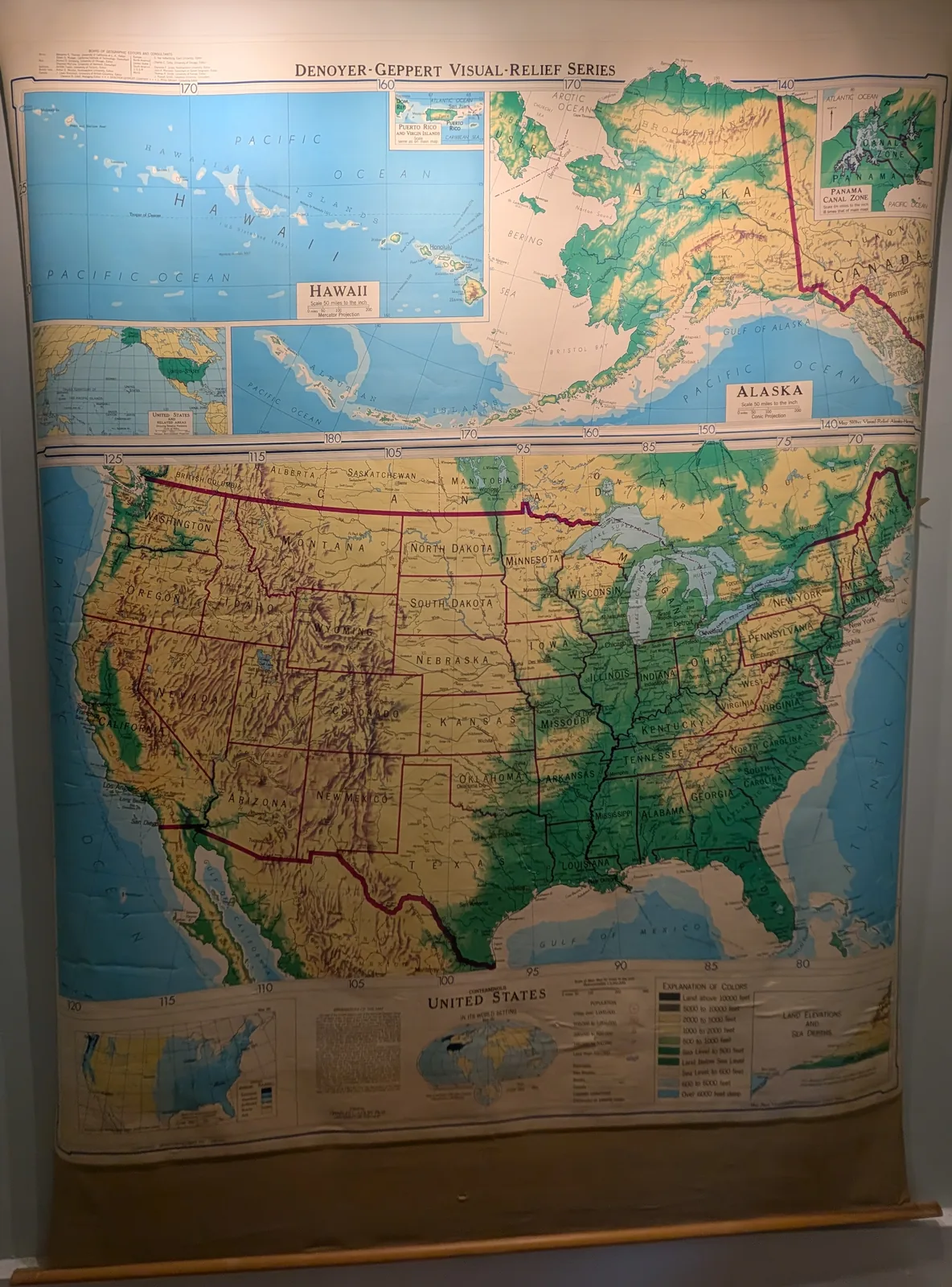
Green lowlands, tan uplands, and a wooden bar at the bottom to pull it down by. A good place to check where the plates came from.
Unregistered
The plates are on the wall. The real stories haven’t been filed yet, so the Motor Department filed these instead.
Unofficial Citations
- The plates count every footstep on the back stairs. The count never quite matches the number of people in the house.
- The Florida plate keeps telling visitors to arrive alive. The residents feel a little singled out.
- The Wildcats plate is said to growl at anyone who takes the stairs two at a time.
- The Fast Horses, Wild Women plate was once written up for speeding. While bolted to a stair.
None of this is on record. The plates stay bolted and the tally keeps counting.